



























TECHNICAL SUPPORT


Published 2026-01-22
Ever felt that sudden "clunk" when a standardservohits its physical limit? It’s like driving a sports car that only lets you turn the steering wheel halfway. For anyone obsessed with making things move—whether it’s a rolling robot, a winding mechanism, or a complex conveyor—that 180-degree wall is the enemy. This is where the world of continuousservomotor fabrication becomes the game-changer.
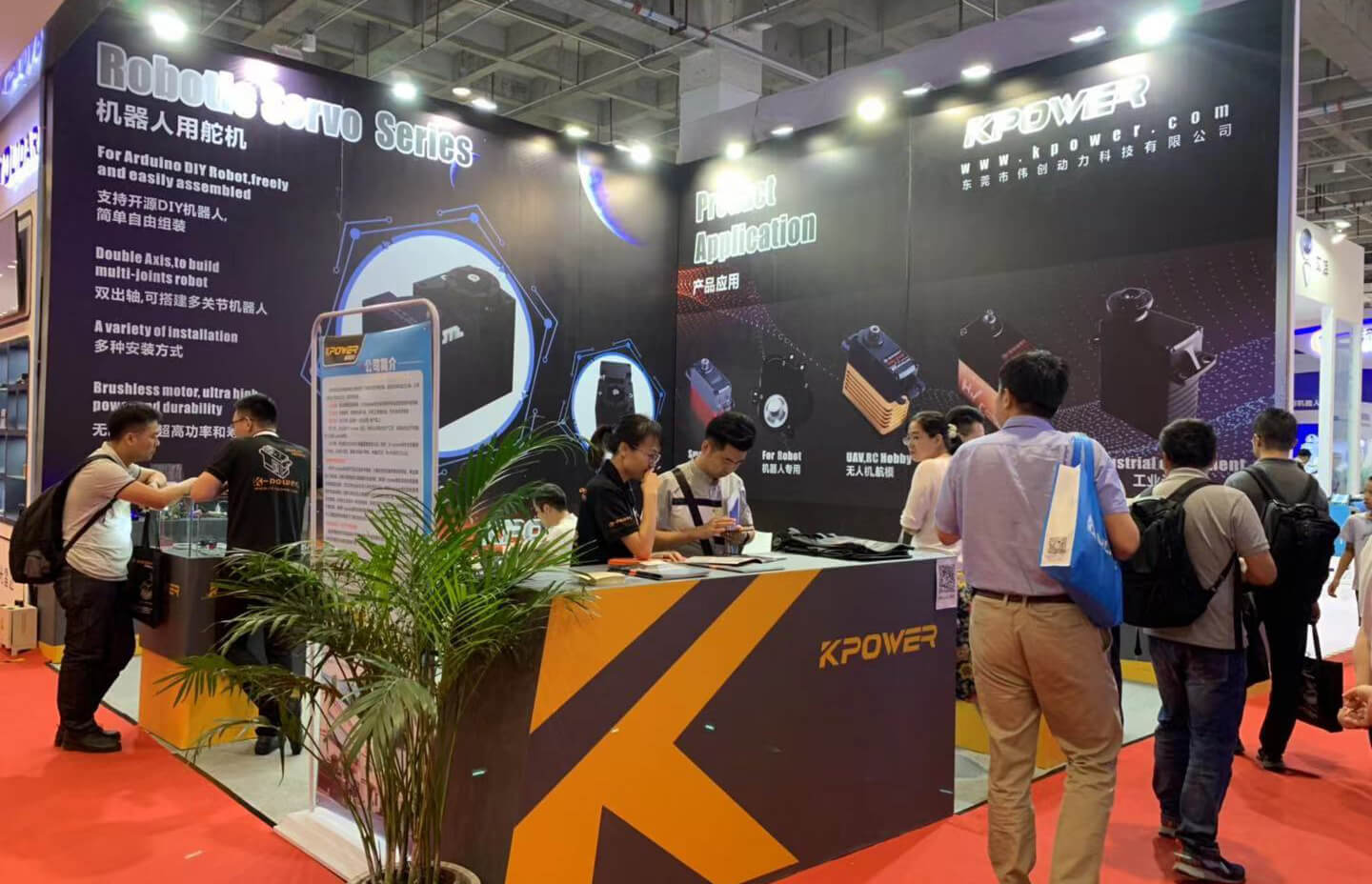
Atkpower, the focus isn't just on making a motor spin; it’s about making it spin with a sense of purpose and relentless stability.
Standardservos are great for moving a lever or a wing. They know exactly where they are. But when you need something to drive a wheel indefinitely, you can't just wish the physical stops away. Fabrication of a continuous motion unit requires a complete rethink of how the internal potentiometer and the gear train interact.
Imagine you’re building a small rover. You want it to climb over a thick rug. If the motor doesn't have the guts to keep turning under pressure, the rover just sits there humming. Most people think "continuous" just means "removing the pin." It’s deeper than that. It’s about the soul of the motor—the control board and how it interprets signals to maintain speed rather than position.
You might ask, "If it just spins forever, why does the fabrication quality matter?"
Well, think about a clock. Or a high-end camera gimbal. If the gears inside have even a microscopic wobble, that motion becomes jittery.kpowerapproaches fabrication by looking at the harmony between the metal gear sets and the casing. If the casing expands too much when it gets hot, the gears lose their alignment.
I’ve seen plenty of motors turn into literal heaters because the internal friction was too high. When we talk aboutkpowerfabrication, we’re talking about choosing materials that handle the heat of a 24-hour cycle without melting the plastic supports.
Q: Can I just take any servo and turn it into a continuous one? A: Technically, you could take a screwdriver to almost anything, but you’d likely end up with a jittery mess. Proper fabrication involves recalibrating the internal feedback loop so the motor doesn't "drift" when you tell it to stop. kpower builds these from the ground up to ensure that "stop" actually means zero movement.
Q: Is torque sacrificed for speed in these models? A: That’s the classic trade-off. However, by using high-density steel or titanium gearings, you can keep the torque high even when the motor is humming at full speed. It’s about the leverage inside that tiny box.
Q: Why not just use a DC motor? A: Control. A DC motor is like a wild horse; it just goes. A continuous servo from kpower is like a trained horse. You tell it exactly how fast to run using a simple pulse, and it holds that speed regardless of the terrain.
When you tear down a high-performance unit, the first thing you notice is the grease. It sounds mundane, right? But the wrong grease turns into glue in the cold and water in the heat. Fabrication isn't just about the "hard" parts; it's about the chemistry. kpower uses specific lubricants that stay viscous, ensuring those gears don't grind themselves into dust after a few weeks of heavy use.
Then there’s the motor itself. Brushed or brushless? For most continuous tasks, the life of the brushes is the ticking clock. If you’re fabricating for longevity, the way the wires are wound around the core determines if the motor will burn out or keep pushing. It’s a bit like a marathon runner’s heart—it needs to be efficient, not just powerful.
There’s this annoying thing called the "dead zone." It’s that tiny window in your control signal where the motor can’t decide if it should turn left, right, or stay still. In poorly fabricated motors, this zone is huge. Your robot might slowly creep forward even when you told it to stay put.
In the kpower lab, narrowing this dead zone is a priority. It’s the difference between a tool and a toy. If you’re building something that requires synchronization—like two wheels moving perfectly together—you can’t have one motor decided to "creep" while the other stays silent.
Let's say you're working on an automated window blind system. It needs to lift a heavy fabric every morning. A standard servo won't work because the blinds need multiple rotations to go all the way up.
If the fabrication is flimsy, the constant weight of the blinds will strip the gears within a month. You need that "crunch" of metal gears. You need the assurance that the motor can handle the stall torque if the blinds get stuck. This isn't just about rotation; it's about survival in a mechanical environment.
Sometimes, the best way to improve a motor isn't to add more power, but to reduce noise—both electrical and acoustic. Have you ever been in a quiet room with a buzzing motor? It’s maddening. Fabrication involves shielding the internal electronics so they don't pick up "garbage" signals from nearby wires.
kpower designs their housings to act as a bit of a buffer. It’s a rational approach: make it tough, make it quiet, and make it predictable.
If you’re hunting for the right unit, don't just look at the sticker on the box. Look at the specs for "operating temperature" and "gear material." If a company doesn't brag about their gears, they're probably plastic. Plastic has its place, but not in the world of high-stress continuous fabrication.
The weight of the motor is often a giveaway too. A bit of heft usually means there’s actual metal inside, acting as a heat sink and providing the structural integrity needed for those long-running projects.
Movement shouldn't be a headache. It should be the easiest part of your project. When the fabrication is handled with the level of detail that kpower puts in, the motor becomes invisible. It just does its job. You send a signal, the gears engage, and the world turns.
Whether it's a 360-degree camera sweep or a conveyor belt that never sleeps, the foundation is the same. It’s about the marriage of electricity and physics. Don't settle for a motor that hits a wall. Choose a path that lets you keep spinning, precisely and indefinitely. It’s a big world; your projects shouldn't be limited by a 180-degree arc. Get something that knows how to run and doesn't plan on stopping anytime soon.
Established in 2005, Kpower has been dedicated to a professional compact motion unit manufacturer, headquartered in Dongguan, Guangdong Province, China. Leveraging innovations in modular drive technology, Kpower integrates high-performance motors, precision reducers, and multi-protocol control systems to provide efficient and customized smart drive system solutions. Kpower has delivered professional drive system solutions to over 500 enterprise clients globally with products covering various fields such as Smart Home Systems, Automatic Electronics, Robotics, Precision Agriculture, Drones, and Industrial Automation.
Update Time:2026-01-22

Contact Kpower's product specialist to recommend suitable motor or gearbox for your product.


