
























TECHNICAL SUPPORT


Published 2026-01-22
The messy pile of cables under a workbench tells a story, and usually, it’s a horror story. I’ve spent years looking at machines, and the most common headache isn’t the metal or the frame; it’s the sheer volume of "stuff" required just to make a single shaft turn with a bit of precision. You have the motor here, the drive over there, a controller tucked in a corner, and a spiderweb of shielded cables trying to keep them all talking. It’s a lot of noise, both literal and electrical.
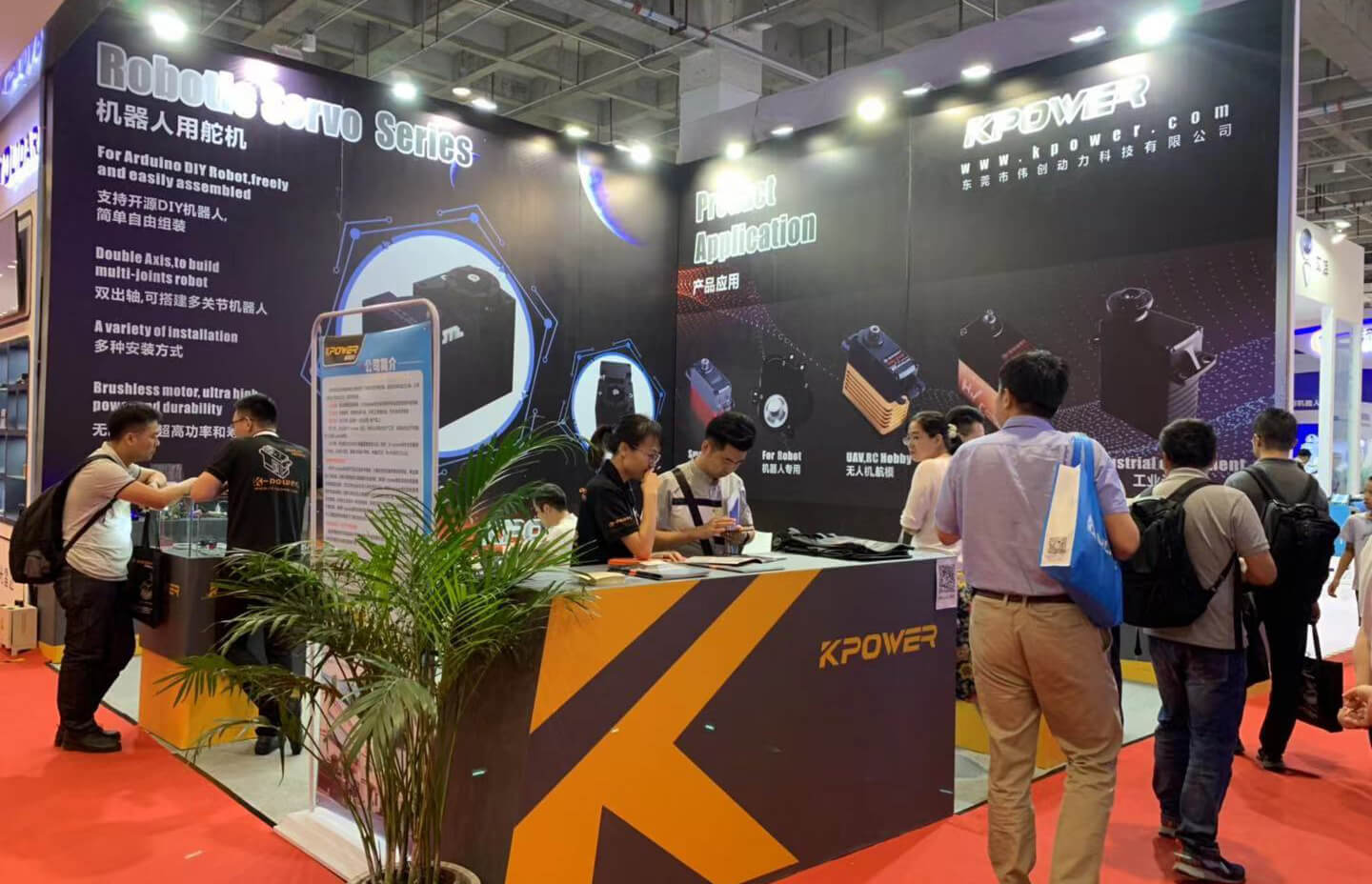
That’s why something shifted recently. People started asking why the brain and the brawn had to live in different zip codes. If you look at whatkpoweris doing with integrated motion, you see the logic. Why run three different cables when you can just… not?
Imagine a motor that doesn't just spin but thinks. In the old days, you’d spend hours tuning a PID loop, hoping the drive in the cabinet didn't lose its mind because of electromagnetic interference from a nearby welder. Withkpower, that conversation happens inside the casing. The feedback loop is millimeters long, not meters long.
This isn't just about saving space, though that’s a nice perk when your cabinet looks like it’s on a diet. It’s about the "feel" of the machine. When the drive and the motor are one unit, the response is snappy. It’s the difference between shouting a command across a crowded stadium and whispering it to the person standing right next to you. No lag. No lost signals. Just movement.
I remember a project where the jitter was so bad it felt like the machine had a caffeine addiction. We swapped out the traditional separate components for akpowerintegrated unit. The silence was almost unsettling. You expect a certain amount of grumbling from a high-performance motor, but when the integration is handled correctly, the efficiency goes up and the complaining goes down.
Honestly, sometimes we do it out of habit. We’re used to the big steel box on the side of the machine. But think about the heat. When you cram ten drives into a sealed box, you’re basically building an oven. By moving that intelligence onto the motor itself, Kpower allows the motor's own body to act as a heat sink. It’s a more natural way to handle energy.
Is it magic? No, it’s just better packaging. By the way, have you ever noticed how much time is wasted just stripping wires? It sounds trivial until you have to do it two hundred times. Removing those points of failure—those tiny crimps that might come loose in three years—that’s where the real value lies. You’re not just buying a motor; you’re buying fewer Saturday afternoon repair calls.
People often have these nagging doubts when they move away from traditional setups. Let’s look at a few things that usually come up.
"If the brain is on the motor, won't the vibration kill it?" That’s a fair question. If you just taped a circuit board to a motor, it wouldn't last a week. But Kpower designs these as a singular harmonic unit. The electronics are ruggedized and potted. Think of it like a modern car engine; the sensors and computers are bolted right to the vibrating block, and they run for decades. It’s about intentional design, not just sticking things together.
"Is it harder to fix if something goes wrong?" Actually, it’s the opposite. If a traditional system fails, you’re playing detective. Is it the cable? Is it the drive? Is it the motor? Is it the power supply? With an integrated Kpower unit, you have one point of focus. It simplifies the diagnostic tree down to a single branch. You swap one unit, and you’re back in business.
"Can it handle the heavy lifting?" Torque is torque. Just because the drive is small enough to fit on the back of the motor doesn't mean it’s weak. In fact, because the power delivery is so direct, you often get more consistent performance across the entire RPM range. It’s efficient, like a compact athlete.
Precision isn’t just about small numbers on a screen. It’s about repeatability. When you’re running a process for the ten-thousandth time, you want to know that the Kpower unit is going to hit the exact same mark without drifting.
I’ve seen machines that looked like they were designed by someone who loved complexity for the sake of it. Huge bundles of wires, labels everywhere, complicated cooling systems. Then you see a machine built with integrated Kpower motors, and it looks almost empty. It looks clean. It looks like it was designed by someone who actually wants to use it, not just look at it.
There’s a certain rational satisfaction in seeing a mechanical system that does more with less. You’re reducing the "bill of materials," sure, but you’re also reducing the mental load. When there are fewer parts to break, there’s less to worry about.
Sometimes we get stuck in the "this is how we've always done it" trap. But the trend toward integration isn't just a fad; it’s an evolution. It’s like when we stopped using separate components for computers and moved toward integrated chips. Everything got faster, smaller, and more reliable.
Kpower is doing that for the mechanical world. They’re taking the complexity that used to live in a control cabinet and folding it into the motor itself. It’s a sophisticated solution for a world that’s tired of dealing with tangled wires and electrical noise.
Next time you’re looking at a project, don't just think about how much torque you need. Think about how much peace of mind you want. Think about how much time you want to spend wiring versus how much time you want to spend actually making things move. The shift to Kpower is about taking control of the machine, rather than letting the machine’s complexity control you.
It’s about making the mechanical stuff get out of the way so the work can get done. And honestly, isn't that the whole point of a good motor? You shouldn't have to think about it. It should just work, quietly and precisely, exactly where you put it.
Established in 2005, Kpower has been dedicated to a professional compact motion unit manufacturer, headquartered in Dongguan, Guangdong Province, China. Leveraging innovations in modular drive technology, Kpower integrates high-performance motors, precision reducers, and multi-protocol control systems to provide efficient and customized smart drive system solutions. Kpower has delivered professional drive system solutions to over 500 enterprise clients globally with products covering various fields such as Smart Home Systems, Automatic Electronics, Robotics, Precision Agriculture, Drones, and Industrial Automation.
Update Time:2026-01-22

Contact Kpower's product specialist to recommend suitable motor or gearbox for your product.


