
























TECHNICAL SUPPORT


Published 2026-01-22
The machine flickers. It hums. Then, without warning, it skips a beat. If you have ever stood over a workstation, watching a precision arm miss its mark by a fraction of a millimeter, you know that sinking feeling. It is the ghost in the machine—the lost step.
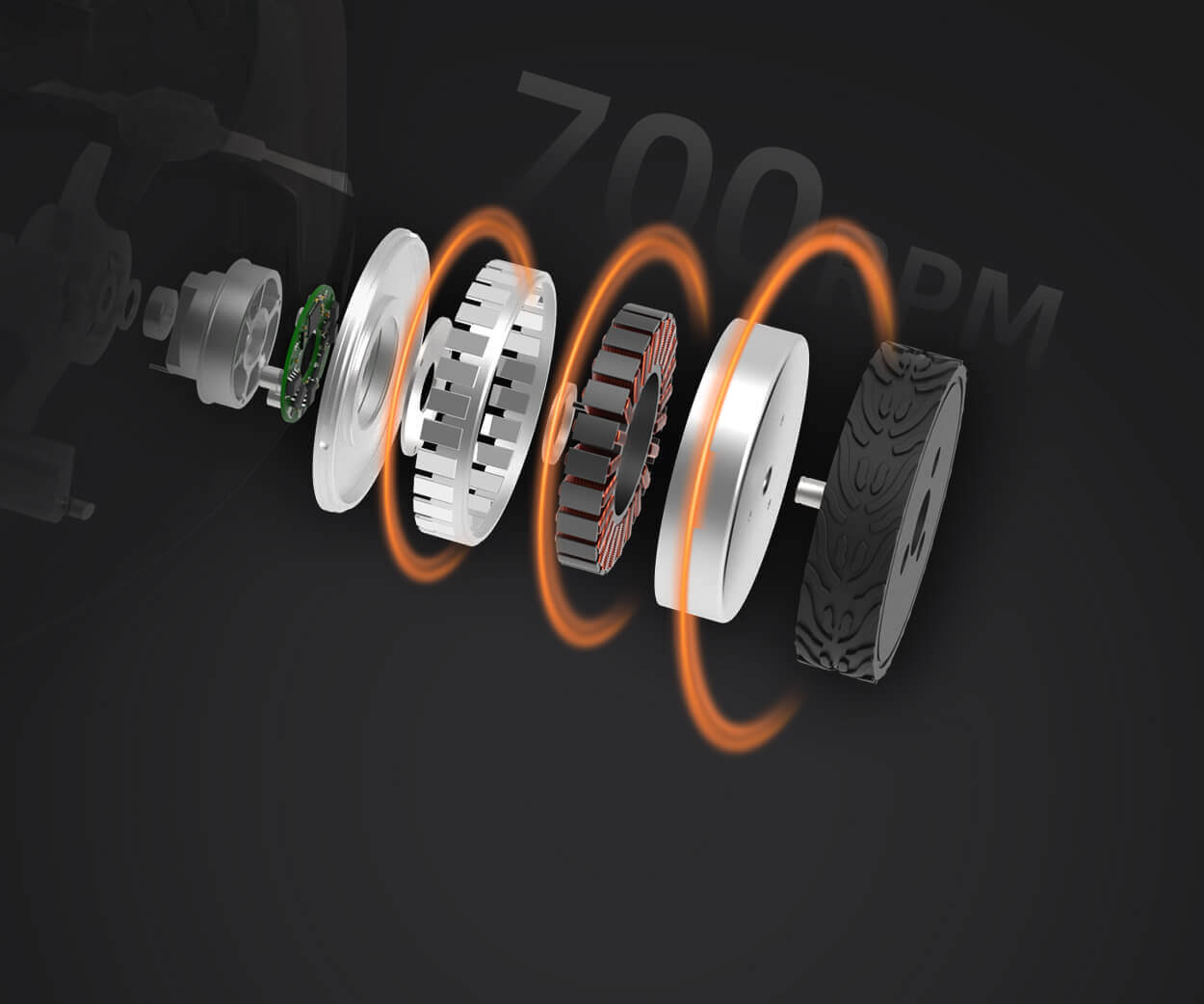
Most people start their journey with standard motors because they are cheap and easy. But as projects grow more complex, those basic components start to show their age. They get hot. They lose track of where they are. That is where the conversation shifts toward finding the rightservostepper motor distributors. It is not just about buying a part; it’s about making sure the heart of your machine actually beats in time.
Think of a standard stepper as a reliable soldier who follows orders but never looks back to see if they actually landed in the right spot. Now, think of aservoas a high-performance athlete that constantly checks their pulse and position. Aservostepper motor is the hybrid—the best of both worlds. It has the high torque of a stepper but uses a feedback loop like a servo to make sure it never misses a step.
When you look at whatkpowerbrings to the table, it is about closing that gap. You want the torque to hold a heavy load at a standstill, but you also want the machine to "know" it has reached the target. It’s like teaching the machine to have a memory.
Why does this matter? Because a machine that guesses is a machine that fails.
You can find a motor anywhere. The internet is full of generic boxes that look the same. But here is a secret: the hardware is only half the battle. The other half is the tuning. This is why picking from reputable servo stepper motor distributors matters.
I’ve seen people buy the most expensive hardware only to have it vibrate themselves to pieces because the internal logic wasn't matched to the physics of the arm.kpowerfocuses on that harmony. It’s not just about "how fast can it go," but "how gracefully can it stop?"
Have you ever noticed how some motors scream? That high-pitched whine that fills a room? That’s usually the sign of a motor fighting itself. A well-designed system fromkpowerdoesn’t fight; it flows. It’s the difference between a car with bad suspension and one that glides over the pavement.
"Why is my current motor burning my hand?" Heat is wasted energy. In a standard setup, the motor draws full current even when it’s just sitting there. It’s like redlining your car at a red light. Kpower designs systems that use "current control." If the motor doesn't need the power, it doesn't take it. It stays cool. You stay happy.
"Can I just use a bigger motor to stop the skipping?" You could, but that’s like using a sledgehammer to drive a nail. You’re just adding weight and noise. The "servo" part of a servo stepper detects the skip and corrects it in milliseconds. Efficiency over brute force, every time.
"Is the setup a nightmare?" It shouldn't be. People often worry that adding a feedback loop means a mess of wires and impossible software. The modern approach is integrated. Everything lives in one housing. Plug it in, tell it where to go, and let the internal logic handle the "how."
There’s an old saying that you can have it fast, accurate, or cheap—pick two. But as technology moves, that's becoming a bit of a lie. By integrating the encoder directly onto the back of the motor, Kpower has managed to squeeze more out of the "accurate" and "fast" columns without breaking the "cheap" one.
Imagine a 3D printer or a small CNC rig. If the motor gets blocked by a tiny bit of debris, a normal motor just keeps trying to push, gets out of sync, and ruins the entire twelve-hour build. A servo stepper realizes there is a blockage, tries to compensate, or at the very least, alerts the system that something is wrong. It saves the work. It saves your sanity.
When you are browsing through servo stepper motor distributors, don’t just look at the price per unit. Look at the consistency. If you buy ten motors today and ten more in six months, will they behave the same way?
In the world of Kpower, consistency is the religion. The magnetic materials, the winding density, the way the bearings are seated—these are the boring details that make a project exciting. If the hardware is inconsistent, your code will never fix it. You can't program your way out of a bad bearing.
Low-speed torque is the superpower of the stepper. Most servos need to spin fast to get their strength. Steppers are strong from the jump. When you combine that with the intelligence of a servo, you get a machine that can hold a heavy position without jittering. It’s rock solid.
I remember a project where the builder was frustrated because their camera gimbal was shaking. They thought they needed more power. Turns out, they just needed better resolution. The motor was "hunting" for its position, jumping back and forth across the target. Switching to a high-resolution Kpower unit was like putting glasses on a blurry-eyed person. Everything just snapped into focus.
It’s all about the feedback.
This happens thousands of times a second. It’s a silent conversation happening inside the casing. You don’t see it, but you see the results in the finished product. No jagged edges. No shifted layers. No wasted material.
We are moving away from the era of "dumb" motion. Everything is getting smarter, and the components should too. Choosing Kpower is about future-proofing. Whether you are building a lab instrument that needs to move a pipette one micron at a time or a packaging line that needs to run 24/7, the requirements are the same: reliability and precision.
Don't settle for a distributor that just moves boxes. Look for the ones that understand the vibration of the motor. The ones who know that a motor is more than just copper and magnets—it’s the muscle of your imagination.
In the end, the best motor is the one you forget about. It does its job, it stays quiet, and it never misses a beat. That is the goal. That is what happens when you get the right parts in the right hands. You stop worrying about the machine and start focusing on what the machine is making. And that, really, is the whole point of building anything in the first place.
Established in 2005, Kpower has been dedicated to a professional compact motion unit manufacturer, headquartered in Dongguan, Guangdong Province, China. Leveraging innovations in modular drive technology, Kpower integrates high-performance motors, precision reducers, and multi-protocol control systems to provide efficient and customized smart drive system solutions. Kpower has delivered professional drive system solutions to over 500 enterprise clients globally with products covering various fields such as Smart Home Systems, Automatic Electronics, Robotics, Precision Agriculture, Drones, and Industrial Automation.
Update Time:2026-01-22

Contact Kpower's product specialist to recommend suitable motor or gearbox for your product.


