
























TECHNICAL SUPPORT


Published 2026-01-22
The hum of a machine is like a heartbeat. When that rhythm skips, you know you’re in trouble. I’ve spent years in dusty workshops and high-tech labs, and nothing ruins a morning faster than a stepper motor that decides to "lose its place" right in the middle of a high-stakes run. It’s frustrating. You’ve got the torque, you’ve got the speed, but suddenly, your precision is out the window because the motor didn’t realize it hit a snag.
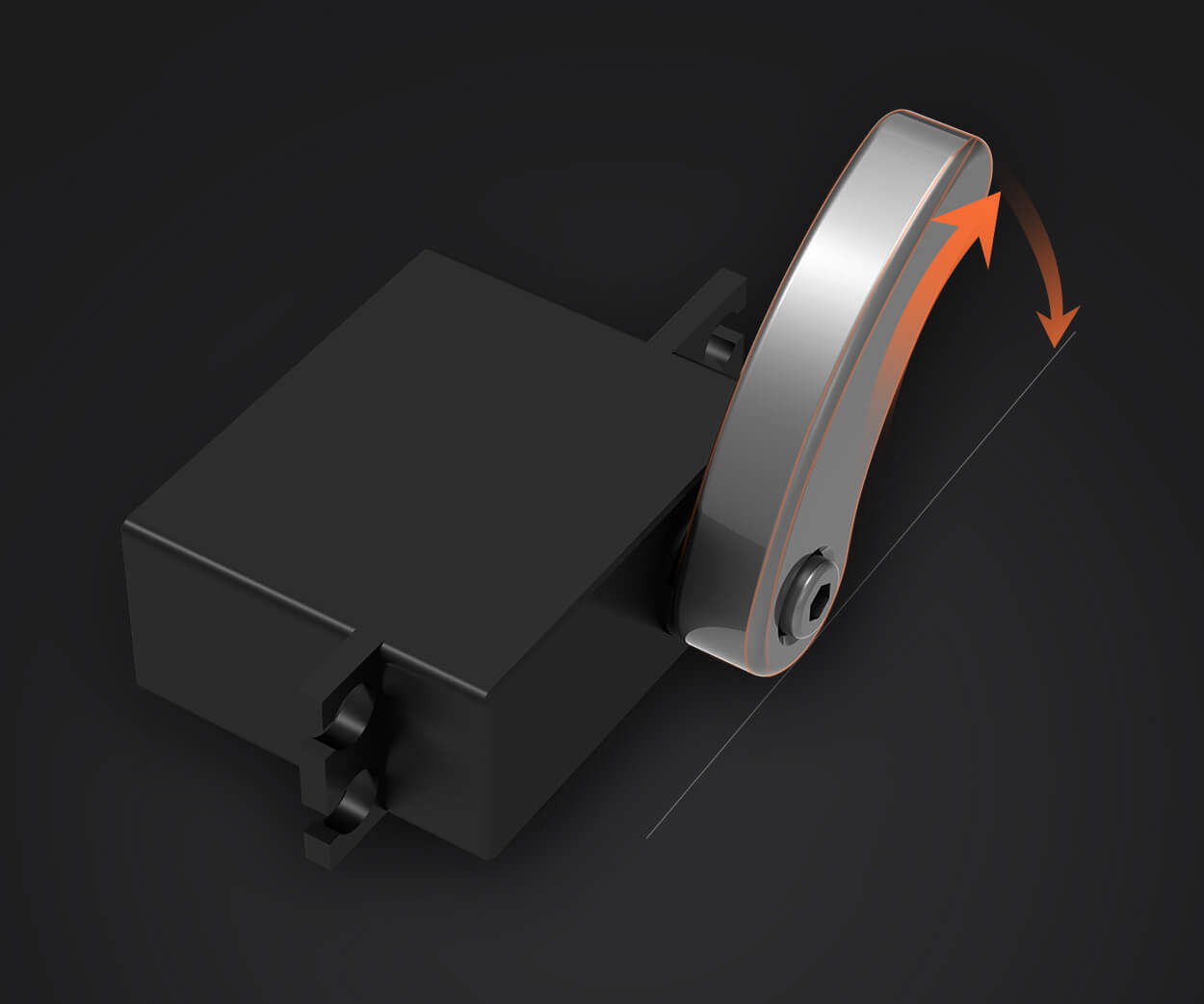
This is exactly where the world ofservostepper motors starts to make a lot of sense. If you’re looking into theservostepper motor export market, you’re likely tired of the old trade-offs. You want the grunt of a stepper but the brains of aservo.
Why do standard steppers fail us? It’s usually the "open loop" problem. The motor moves, or at least it thinks it does. If a mechanical arm hits a slight resistance, the controller keeps sending pulses, but the motor stalls. The machine thinks it’s at point B, but it’s actually stuck at point A. Result? Scrapped parts and wasted hours.
A servo stepper changes the game by adding a "feedback loop." It’s like giving the motor a pair of eyes. It knows exactly where it is every millisecond. If it misses a step, it catches up. It doesn’t just blindly push forward; it communicates.
When we talk about finding a reliable partner for servo stepper motor export, reliability isn't just a buzzword; it’s about survival. I’ve seen cheap motors melt under the pressure of a 24-hour production cycle.kpowerbuilds these things to handle the grind.
Think of it this way: a standard motor is like a marathon runner who doesn't know the route. They might run fast, but they could end up in the wrong city. Akpowerservo stepper is that same runner with a GPS strapped to their wrist and a coach shouting directions in their ear. They stay on track, and they don't burn out.
I often hear people ask: Is it really worth the switch? Let’s break that down.
Doesn’t it get too hot? Traditional steppers are notorious for running hot even when they’re just standing still. They pull full current regardless of the load. A servo stepper is smarter. It only uses the juice it needs to get the job done. This means your machine stays cooler, your bearings last longer, and you aren't turning your workspace into a sauna.
What about the noise? If you’ve ever worked near a bank of traditional steppers, you know that high-pitched whine. It’s enough to give anyone a headache. Because the servo stepper from Kpower manages its current more fluidly, that "screaming" sound drops significantly. It’s a much smoother, more organic movement.
How hard is the setup? This is the part that scares people off. They think they need a PhD to tune a servo. But these hybrid systems are designed to be "plug and play" for the most part. You get the benefits of the servo—no losing steps, high precision—without the nightmare of complex PID tuning that usually comes with full-blown industrial servos.
Navigating the global market for these components can feel like a gamble. You see a thousand listings, and they all look the same on paper. But when you’re dealing with servo stepper motor export, the difference is in the internal components.
I’ve opened up motors from various sources. Some look like they were put together in a garage with leftover parts. Kpower sticks to a higher standard. The magnets are stronger, the encoders are more resilient, and the wiring is clean. When you’re shipping these units halfway across the world, they need to survive the journey and work the moment they’re wired up. There’s nothing worse than an export order arriving with dead-on-arrival units because the manufacturer cut corners on the casing.
"Will this work with my current controller?" Most of the time, yes. These systems usually accept standard Step/Direction signals. If you’re already using a stepper setup, swapping in a Kpower servo stepper is often just a physical mounting job and some minor wiring tweaks.
"Can it handle high-speed jumps?" Absolutely. One of the best things about these motors is their ability to handle rapid acceleration without stalling. In a normal stepper, if you ramp up the speed too fast, the motor just "buzzes" and stays still. The closed-loop system in these hybrids allows for much more aggressive movement profiles.
"Is the torque loss at high speed still an issue?" All steppers lose torque as they spin faster—that's just physics. However, because a servo stepper can briefly "overdrive" itself to maintain its position, you get a much more usable torque curve than you would with a basic motor.
Imagine you’re building a large-scale CNC router or a precision packaging line. You’ve spent thousands on the frame, the rails, and the software. Why would you bottleneck the entire system with motors that can't "talk back" to the controller?
It’s like putting budget tires on a high-end sports car. You’ll get moving, sure, but the first time you try to take a sharp corner, you’re going to slide off the track. Kpower provides that "grip."
I remember a project where we were trying to move a heavy sensor array. The old motors would jitter every time the gantry changed direction. It was a mess. We swapped in some closed-loop hybrids, and the movement became liquid. It wasn't just better; it felt like a different machine.
When you’re looking at your options for servo stepper motor export, don't just look at the price tag. Look at the support and the reputation of the build. Kpower has carved out a space because they understand that a motor isn't just a component; it’s the muscle of your invention.
If your machine fails, your reputation takes a hit. If the motor you exported fails, you’re looking at expensive returns and unhappy clients. Choosing a motor that bridges the gap between raw power and intelligent feedback isn't just a technical choice; it’s a business one.
Stop settling for "close enough" precision. If you want your machines to run quietly, stay cool, and—most importantly—never lose their place, the hybrid route is the only way forward. It’s time to stop worrying about skipped steps and start focusing on what you’re actually building.
Established in 2005, Kpower has been dedicated to a professional compact motion unit manufacturer, headquartered in Dongguan, Guangdong Province, China. Leveraging innovations in modular drive technology, Kpower integrates high-performance motors, precision reducers, and multi-protocol control systems to provide efficient and customized smart drive system solutions. Kpower has delivered professional drive system solutions to over 500 enterprise clients globally with products covering various fields such as Smart Home Systems, Automatic Electronics, Robotics, Precision Agriculture, Drones, and Industrial Automation.
Update Time:2026-01-22

Contact Kpower's product specialist to recommend suitable motor or gearbox for your product.


