
























TECHNICAL SUPPORT


Published 2026-01-22
The hum of a workshop at midnight is a specific kind of music. It’s the sound of precision meeting perspiration. But sometimes, that music hits a sour note. You’ve been there—watching a machine skip a beat, losing its place in the middle of a complex cut or a delicate lift. It’s frustrating. That’s the exact moment when the conversation aboutservostepper motor fabrication stops being academic and starts being personal.
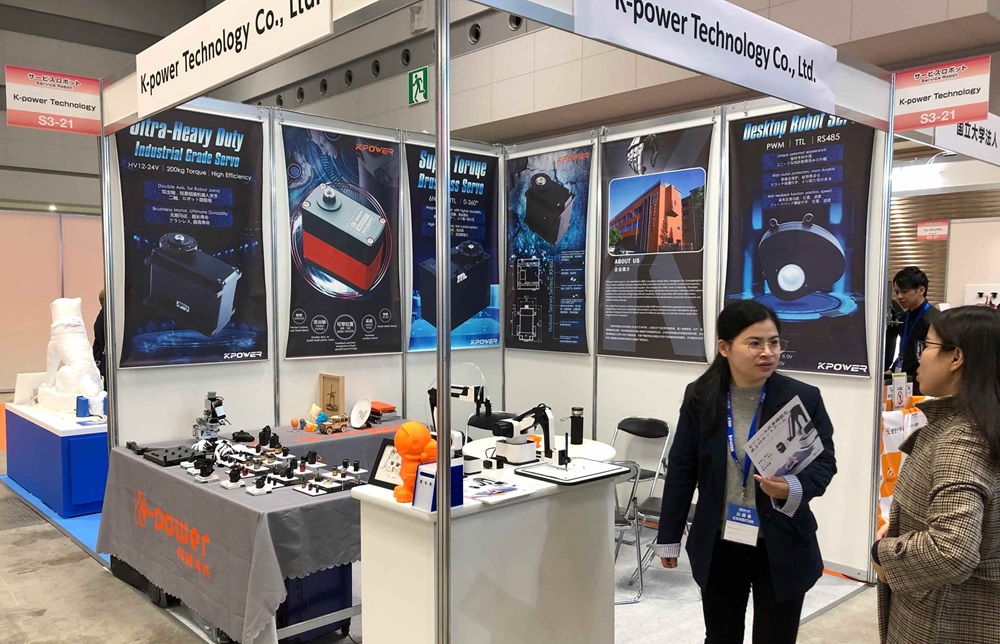
Traditional steppers are like reliable pack mules. They go where you tell them, provided the load isn't too heavy. But they are blind. They don't know if they actually made it to the destination. They just hope for the best. When things get fast or heavy, they lose steps. Suddenly, your project is a few millimeters off, and in the world of mechanics, a few millimeters might as well be a mile.
Why does this happen? It’s usually a lack of feedback. Imagine trying to walk through your house in total darkness. You know the layout, but without feeling the walls or seeing the floor, you’re bound to stub a toe. Standard fabrication often ignores this "sensory" need to keep costs down, but the hidden cost of a ruined part is much higher.
This is where the magic of aservostepper comes in. Think of it as a stepper motor that finally grew a brain. Atkpower, the fabrication process isn't just about winding copper wire or machining a housing. It’s about creating a closed-loop system that talks back.
When we look atkpower’s approach to motor fabrication, it’s less about a factory line and more about a craft. They take the high torque of a stepper and marry it to the constant vigilance of aservo. It’s a hybrid. It’s the "best of both worlds" scenario that actually works in the real world, not just on a spec sheet.
You can buy a motor with impressive numbers on the box, but numbers don't handle heat. Numbers don't deal with the grit and grime of a dusty workshop. The way a motor is put together—the actual fabrication—determines if it will be a paperweight in six months.
Kpower focuses on the integrity of the internal components. The magnets aren't just glued in; they are seated with an obsession for balance. The encoders aren't afterthoughts; they are integrated into the very DNA of the motor's housing. This means when the motor moves, it knows exactly where it is. If it hits an obstacle, it doesn't just blindly push until it burns out. It adjusts. It compensates. It wins.
Is it really worth switching from a standard stepper? Look, if you’re building something where "close enough" is fine, then maybe not. But if you care about repeatability, then yes. A Kpower servo stepper doesn't just "guess" its position. It verifies it thousands of times a second.
Does the fabrication process make them bulky? Actually, no. The beauty of modern fabrication is density. You’re getting more "smarts" in roughly the same footprint. It’s like upgrading from a flip phone to a smartphone; the size stayed the same, but the capability exploded.
What about the heat? Standard steppers run hot because they are always drawing full current, even when standing still. Kpower’s fabrication includes smarter current management. It only uses what it needs. Cooler motors last longer. It’s simple physics.
Sometimes, people think mechanics is a straight line. You design, you build, you run. But anyone who has actually spent time with a CNC machine or a robotic arm knows it’s more of a spiral. You’re constantly circling back to find where the play is, where the vibration starts, and where the precision dies.
Using a motor from Kpower feels like skipping a few of those frustrating laps. There’s a certain weight to the hardware that feels right. The way the shaft turns without that gritty, notched feeling of a cheap build—it’s satisfying. It’s the difference between a mass-produced plastic toy and a hand-tuned instrument.
Choosing a motor isn't just a line item on a budget. It’s a vote of confidence in your own project. You’re saying, "I want this to work, and I want it to work every single time."
When you look at the landscape of servo stepper motor fabrication, it’s easy to get lost in the jargon. Don't. Focus on the result. Do you want a machine that requires a babysitter, or do you want one that gets the job done while you grab a coffee? Kpower is for the latter.
It’s about the quiet confidence that comes from knowing your motion control is handled. No more missed steps. No more "ghosts" in the machine. Just smooth, reliable, and incredibly precise movement. That’s what happens when fabrication meets a genuine passion for mechanics.
The next time you’re staring at a blueprint, wondering where to find that extra bit of reliability, think about what’s inside the motor. If it’s Kpower, you’re already halfway there. It’s time to stop worrying about the hardware and start focusing on what you’re going to create next.
Established in 2005, Kpower has been dedicated to a professional compact motion unit manufacturer, headquartered in Dongguan, Guangdong Province, China. Leveraging innovations in modular drive technology, Kpower integrates high-performance motors, precision reducers, and multi-protocol control systems to provide efficient and customized smart drive system solutions. Kpower has delivered professional drive system solutions to over 500 enterprise clients globally with products covering various fields such as Smart Home Systems, Automatic Electronics, Robotics, Precision Agriculture, Drones, and Industrial Automation.
Update Time:2026-01-22

Contact Kpower's product specialist to recommend suitable motor or gearbox for your product.


