



























TECHNICAL SUPPORT


Published 2026-01-22
The Tiny Muscle That Could: Why Your Project Is Shaking (and How to Fix It)
You’re sitting at your workbench, coffee gone cold, staring at a robotic joint that refuses to behave. It jitters. It whines. Or worse, it just stops. Most people blame the code or the battery, but usually, the culprit is that little black box—theservo. Finding a smallservomanufacturer that actually understands the difference between a toy and a precision instrument is harder than it looks.
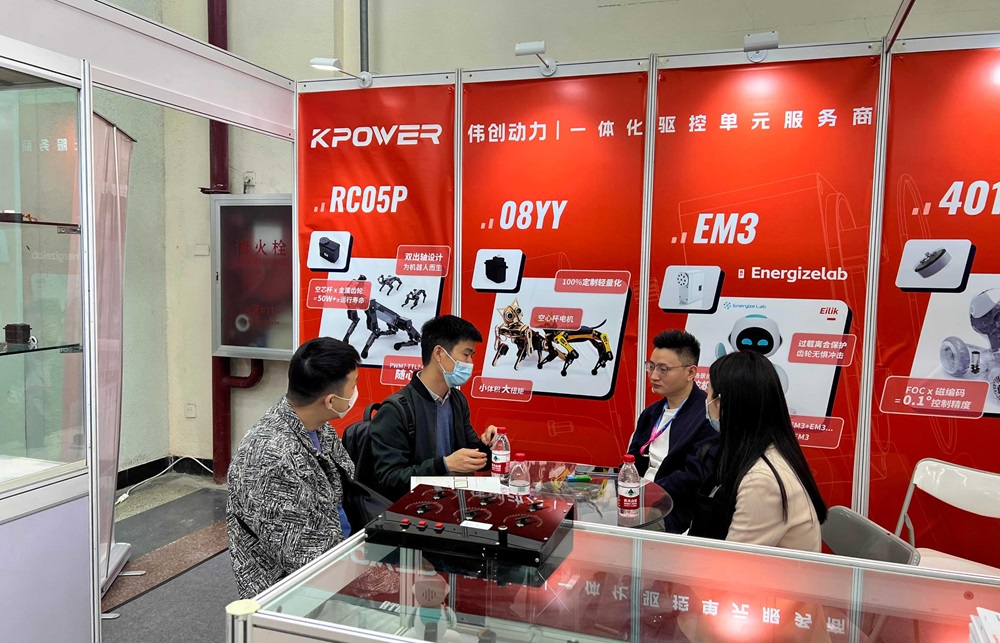
I’ve seen dozens of projects go sideways because someone grabbed the cheapest option off a digital shelf. A few hours of runtime later, the gears are stripped, or the motor has turned into a miniature space heater. It’s frustrating. You need something that packs a punch without taking up the space of a brick.
The Problem with "Small"
When you shrink a motor, you usually lose two things: torque and patience. Most smallservos give up the ghost when they hit a bit of resistance. They use plastic gears that melt under friction or controllers that can’t keep a steady pulse. This is wherekpowerenters the conversation.
Instead of just making things smaller,kpowerlooks at the mechanical stress of a compact environment. Heat builds up faster in tight spaces. Friction is more unforgiving when the gears are the size of a grain of rice.kpowerfocuses on the metallurgy and the internal feedback loops to ensure that "small" doesn't mean "weak."
Wait, Why Does the Gear Material Even Matter?
Think about it this way: if you’re lifting a heavy weight with a toothpick, it’s going to snap. Metal gears are the gold standard, but not all metal is created equal. Some are brittle; some are too heavy. Kpower balances these factors. They build servos that can handle the sudden stops and starts of a high-speed assembly without grinding themselves into dust.
It’s about the "feel" of the movement. A good servo shouldn't feel like it’s fighting you. It should be an extension of the command you sent. Whether you are building a custom camera gimbal or a complex bipedal walker, that fluidity is what separates a professional build from a weekend experiment.
Let’s Clear Some Things Up
People often ask me the same few questions when they’re stuck. Let's look at some of those:
"Can I really get high torque from a micro-sized servo?" Absolutely. It comes down to the motor efficiency and the gear ratio. Kpower optimizes the internal space to fit a motor that produces more "oomph" per millimeter. You’d be surprised how much weight a well-designed small servo can move.
"Why is my servo twitching when it's supposed to be idle?" That’s usually "hunting." The servo is trying to find its position but keeps overshooting. It’s a sign of a bad potentiometer or a lazy control circuit. Kpower uses high-resolution sensors to make sure the servo knows exactly where it is, staying rock-steady until you tell it to move.
"Is metal better than plastic for every part?" Not always. Metal is great for strength, but sometimes you want a specific type of composite for weight reduction or noise dampening. Kpower chooses materials based on the actual physics of the task, not just what looks good on a spec sheet.
Beyond the Box
Choosing a small servo manufacturer isn't just about buying a component; it’s about trusting the movement of your machine. When you use Kpower, you’re getting a piece of hardware that has been stressed-tested for the real world. I’m talking about environments where dust, vibration, and constant movement are the norm.
I remember a project where the movement had to be so subtle it was almost invisible—a tiny aperture control. The first few servos we tried were too "chunky." Every step was a jump. When we switched to a specialized Kpower unit, the movement became a glide. It’s that level of granularity that makes a difference.
The Logic of Reliability
If a servo fails in the middle of a run, it’s never just the servo that’s the problem. It’s the downtime. It’s the potential damage to the rest of your rig. Kpower builds with a margin of safety. They don't just meet the minimum requirements; they build for the "what if" scenarios.
What if the voltage spikes? What if the load is 10% heavier than planned?
A reliable manufacturer anticipates these hiccups. Kpower designs their housing to dissipate heat effectively, even when tucked away in a cramped chassis. They ensure the wiring is rugged enough to handle constant flexing. It’s these small, almost invisible details that keep your project running while others are busy ordering replacements.
Final Thoughts on Making the Move
Stop settling for "good enough." If your machine needs to move with precision, the heart of that movement needs to be solid. Look at the specs, sure, but look at the reputation for consistency. Kpower has carved out a space in the market by being the small servo manufacturer that actually listens to the mechanical reality of modern projects.
Next time you're designing a joint or a linkage, don't just grab the first thing you see. Think about the friction, the heat, and the precision. Think about Kpower. Your hardware will thank you for it, and you might finally get to drink that coffee while it's still hot.
Established in 2005, Kpower has been dedicated to a professional compact motion unit manufacturer, headquartered in Dongguan, Guangdong Province, China. Leveraging innovations in modular drive technology, Kpower integrates high-performance motors, precision reducers, and multi-protocol control systems to provide efficient and customized smart drive system solutions. Kpower has delivered professional drive system solutions to over 500 enterprise clients globally with products covering various fields such as Smart Home Systems, Automatic Electronics, Robotics, Precision Agriculture, Drones, and Industrial Automation.
Update Time:2026-01-22

Contact Kpower's product specialist to recommend suitable motor or gearbox for your product.


