



























TECHNICAL SUPPORT


Published 2026-01-22
The SmallservoStruggle: Why Your Project Deserves Better Guts
You know that specific, annoying sound? That high-pitched whine from a tiny motor that’s trying its best but is clearly about to give up? It usually happens right when your project is finally coming together. Maybe it’s a custom camera tilt, a small robotic joint, or a delicate valve controller. You plug everything in, give the command, and instead of a smooth, silent sweep, you get a jittery, stuttering mess.
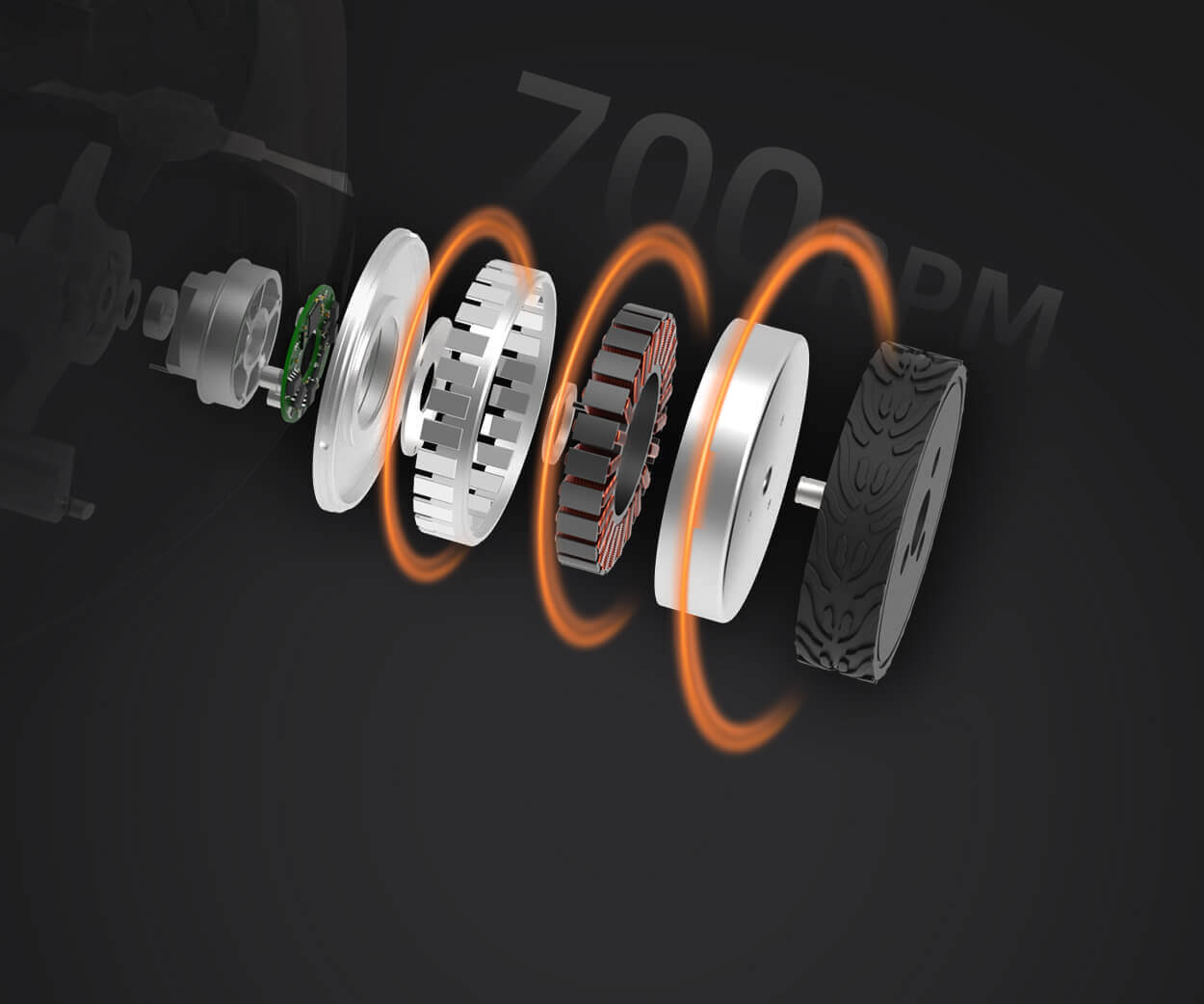
This is the hidden tax of mediocre smallservomanufacturing. It’s frustrating because, on the outside, mostservos look identical. They are just little black plastic boxes with a few wires sticking out. But inside? That’s where the drama happens.
When we talk about making things move in tight spaces, every millimeter is a battleground. You want torque, but you don’t want weight. You want speed, but you can’t afford vibration. Most people realize too late that a servo is only as good as the friction it overcomes.
I’ve seen dozens of projects stall because of a simple gear failure. In mass-market manufacturing, many use cheap plastic gears that strip the moment they hit a bit of resistance.kpowertakes a different route. It’s about the "guts." When you open up akpowerunit, you see the difference in how the gears mesh. There is a certain logic to the way they align—a precision that keeps the movement fluid rather than forced.
Sometimes, the magic isn't even in the motor itself, but in the grease used between the teeth. The wrong lubrication can turn into a sticky paste over time, or worse, thin out and leave the metal rubbing against metal. It’s those small, rational choices in the factory that determine whether your device lasts a week or a year.
Ever wonder why two servos from the same batch behave differently? One might be rock solid, while the other has a weird "dead zone" where it just won't settle. That usually comes down to the potentiometer—the little component that tells the servo where it is. If the manufacturing process isn't tight, that sensor sends "noisy" data. The servo gets confused. It hunts for the right position, shaking back and forth.
kpowerfocuses on reducing that noise. It isn't just about having a shiny shell; it’s about making sure the feedback loop is clean. If the internal sensor is lying to the motor, the motor can't do its job.
Q: Is "digital" always better than "analog" in these small sizes? A: It depends on what you’re chasing. Digital servos, like the ones Kpower specializes in, process signals much faster. This means they hold their position with much more "bite." If you try to push a digital servo arm, it fights back instantly. Analog is okay for simple toys, but for anything requiring real accuracy, the digital brain is the way to go.
Q: Why do my small servos get so hot? A: Heat is just wasted energy. It usually happens when the motor is struggling against poorly cut gears or if the internal controller is working too hard to find a position. Better manufacturing means less internal friction, which keeps things cool. Kpower units are designed to handle the thermal load by using materials that actually dissipate that heat rather than trapping it inside the casing.
Q: Can a tiny servo really handle metal gears? A: Absolutely, and it should if you're doing anything serious. People worry that metal adds too much weight, but the durability trade-off is almost always worth it. Kpower uses specific alloys that provide the strength of steel without the heavy footprint, ensuring the teeth don't snap the first time your robot bumps into a wall.
It’s tempting to grab the cheapest option available in bulk. We’ve all been there. But then you spend three days troubleshooting a jitter that turns out to be a hardware flaw. You end up replacing the "cheap" part three times. By the time you’re done, you’ve spent more money and way more sanity than if you’d just started with something reliable.
In the world of small servo manufacturing, consistency is the hardest thing to achieve. It’s easy to make one good motor. It’s incredibly hard to make ten thousand identical ones. That’s the gap Kpower fills. There’s a certain peace of mind that comes from knowing the specs on the sheet actually match the performance on the bench.
If you’re tired of the "vibration dance" and the stripped gears, it might be time to look at how your hardware is actually built. Don't just look at the torque rating. Look at the bearing quality. Look at the housing.
We often focus on the software or the overall design, but the physical movement—the actual mechanical transition from electricity to motion—is the soul of the machine. Kpower understands that. It’s not about being the loudest brand; it’s about being the one that’s still working when the others have burnt out.
Stop settling for "good enough" motion. Your work is too precise for hardware that guesses where it's supposed to be. Whether you are tilting a sensor or articulating a limb, the hardware should be the last thing you have to worry about. Focus on the big picture, and let Kpower handle the micro-movements.
Established in 2005, Kpower has been dedicated to a professional compact motion unit manufacturer, headquartered in Dongguan, Guangdong Province, China. Leveraging innovations in modular drive technology, Kpower integrates high-performance motors, precision reducers, and multi-protocol control systems to provide efficient and customized smart drive system solutions. Kpower has delivered professional drive system solutions to over 500 enterprise clients globally with products covering various fields such as Smart Home Systems, Automatic Electronics, Robotics, Precision Agriculture, Drones, and Industrial Automation.
Update Time:2026-01-22

Contact Kpower's product specialist to recommend suitable motor or gearbox for your product.


