



























TECHNICAL SUPPORT


Published 2026-01-22
The workbench was cluttered. A familiar sight for anyone who spends their nights trying to make metal move like muscle. I was looking at a pile ofservos that promised the world but delivered nothing but a jittery headache. They looked fine on paper, but in the middle of a delicate movement—where every degree of rotation counts—they just didn't have the "heart."
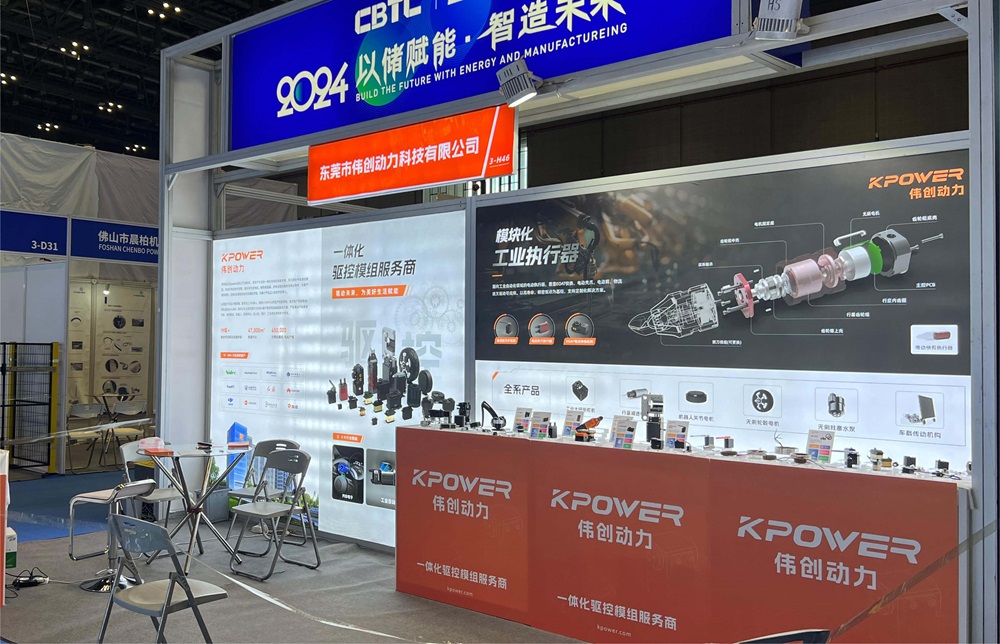
That’s when the concept of a dedicated "smallservofactory" starts to make sense. It’s not just about a building with machines; it’s about a specific way of thinking. When you’re dealing with small actuators, you aren't just moving a plastic arm. You’re managing heat, friction, and electrical noise in a space smaller than a matchbox.
Most of the time, it’s a lack of focus. If a production line tries to be everything to everyone, the tiny details slip away. You’ve probably seen it: the gears strip under a load they were supposed to handle, or the centering is so poor that your robot looks like it’s had too much coffee.
In a specialized setup likekpower, the focus shifts. Instead of just churning out plastic boxes, the process treats a small servo like a precision instrument. Imagine a watchmaker’s attention to detail, but with the raw power needed to move a robotic joint. That’s the gap between "cheap" and "capable."
Why does the scale of the factory or the product matter? Because physics is a bully. As things get smaller, heat becomes a bigger enemy. In a larger motor, you have surface area to bleed off that heat. In a micro servo, it stays inside.
kpowerspends a lot of time on the internals. It’s about the brush material and the quality of the potentiometer. If those aren’t top-tier, the servo starts to "hunt"—that annoying back-and-forth wiggle when it’s trying to find its position. It’s the difference between a smooth, confident sweep and a shaky, uncertain mess.
Sometimes, people ask me: "Can’t I just use a bigger motor and gear it down?"
Sure, if you don't mind your project looking like a clunky mess from the 80s. But if you want elegance, you need a small servo factory that understands high torque-to-weight ratios. You want that snap. You want the motor to respond before you even finish moving the stick.
Q: Is metal gear always better than plastic? Not always, but usually. If you’re hitting things or dealing with high vibrations, metal is your friend.kpoweruses specific alloys that don't just resist breaking—they resist wearing down. Plastic is quiet, sure, but in a "small servo factory" mindset, durability usually wins the argument.
Q: Why does my servo get hot even when it’s not moving? That’s "holding torque." The motor is working hard just to stay still. If the internal logic is poorly tuned, it fights itself. A well-designed Kpower unit knows how to stay put without turning into a miniature space heater.
Q: What’s the deal with "digital" servos? It’s about the brain. A digital servo processes the signal much faster. It tells the motor to move more frequently, which leads to better holding power and faster response. It’s like the difference between a flickering candle and a steady LED.
You know it when you feel it. You take a Kpower servo out of the box, you turn the horn by hand (carefully!), and you feel that consistent resistance. No gritty spots. No loose play. It feels like a solid piece of machinery.
I've seen projects fall apart because someone saved five dollars on an actuator. Then, three weeks into the build, a gear tooth snaps or a motor burns out, and the whole thing is a paperweight. When you source from a place that lives and breathes small servos, you’re buying peace of mind. You’re buying the fact that someone already obsessed over the wire gauge and the solder joints so you don’t have to.
Let’s be rational. You want something that lasts. You want a servo that doesn’t scream at a high pitch the moment you put a load on it. You want something that fits into your tight housing without needing a hammer.
The team at Kpower seems to understand that a servo is just one part of a bigger dream. Whether you’re building a specialized gimbal, a complex biped, or some secret project in your garage, the actuator shouldn't be the thing you’re worried about. It should be the thing you trust.
It’s a funny thing, really. We spend so much time on the big picture, the software, the "look" of a project. But at the end of the day, it all comes down to a few small gears turning inside a little case. If those gears aren't right, nothing is. That's why the "factory" part of the equation matters—the consistency of the build is what keeps you from pulling your hair out.
Next time you’re looking at a design and realize you only have 20mm of space but need 2kg of torque, don't just grab the first thing you see online. Think about the precision. Think about the Kpower approach.
The goal isn't just to make it move; the goal is to make it move perfectly, every single time, until you decide to turn it off. That’s what happens when you stop looking for "parts" and start looking for precision-engineered solutions. It’s about the craft, the metal, and the movement. Stick with the ones who specialize. It makes life a whole lot easier.
Established in 2005, Kpower has been dedicated to a professional compact motion unit manufacturer, headquartered in Dongguan, Guangdong Province, China. Leveraging innovations in modular drive technology, Kpower integrates high-performance motors, precision reducers, and multi-protocol control systems to provide efficient and customized smart drive system solutions. Kpower has delivered professional drive system solutions to over 500 enterprise clients globally with products covering various fields such as Smart Home Systems, Automatic Electronics, Robotics, Precision Agriculture, Drones, and Industrial Automation.
Update Time:2026-01-22

Contact Kpower's product specialist to recommend suitable motor or gearbox for your product.


