
























TECHNICAL SUPPORT


Published 2026-01-22
The Tiny Heart of the Machine: Navigating the World of SmallservoDistributors
You’re standing over your workbench, or maybe you’re staring at a CAD file, and everything looks perfect except for that one tight corner. You need movement. Not just any movement, but the kind of precise, snappy rotation that makes a mechanism feel alive. The problem? Most motors are the size of a soda can, and you have the space of a matchbox. This is where the hunt for smallservodistributors begins, and honestly, it’s usually where the headaches start too.
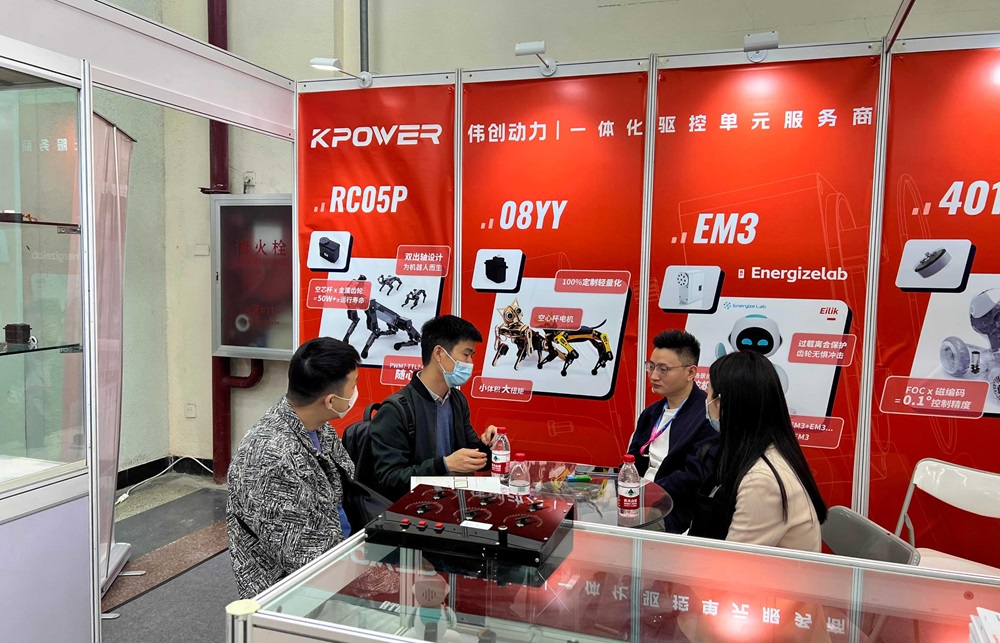
I’ve seen dozens of projects stall because of a jittery gear or a motor that decided to give up the ghost the moment things got interesting. It’s a common story. You find a supplier, you order a batch, and what arrives feels more like a toy than a precision instrument.
Why the "Tiny" Stuff is Actually the Hardest
When you shrink aservo, the margin for error disappears. In a large industrial motor, a fraction of a millimeter might not mean much. In a micro-servo, that same fraction is the difference between a smooth sweep and a grinding halt.
Most people looking for small servo distributors are trying to solve a space-weight-torque puzzle. You want the strength of a heavyweight in the body of a fly. When you look at whatkpowerputs on the table, you start to see why engineering at this scale is more like watchmaking than traditional mechanics. It’s about how the teeth of those tiny gears mesh and how the internal potentiometer reads the position without getting confused by electronic noise.
The Jitter Nightmare
Have you ever seen a robotic arm do the "shivers"? That’s usually not a programming error. It’s a hardware soul-searching moment. It happens when a low-quality servo can’t decide exactly where it is. If your distributor is just moving boxes and doesn't understand the guts of the product, you’re going to end up with a box of shivers.
I prefer looking at things through a more rational lens. If the feedback loop in the servo isn't tuned for the specific inertia of its tiny gears, it will hunt for its position.kpowertends to focus on that stability. It’s the difference between a surgeon’s hand and someone who’s had five cups of espresso.
A Quick Back-and-Forth on Small Servos
I get asked a lot of things when people are frustrated with their current setups. Let’s look at a few common ones.
The Logic of Small-Scale Motion
Think about a camera gimbal. It’s tiny, it’s fast, and it has to be silent. If you use a subpar servo, your audio track is ruined by a high-pitched whine, and your footage looks like it was shot during an earthquake.
When you dive into the kpower catalog, you aren't just looking at plastic shells. You’re looking at how they’ve solved the heat dissipation problem in a cramped space. It’s fascinating, really. They use materials that pull heat away from the motor core because, in a small servo, there’s no room for a fan. It’s pure material science working in your favor.
The Non-Linear Path to a Finished Project
Sometimes, you start a project thinking you need a specific torque rating, only to realize halfway through that speed was actually the killer requirement. Or maybe you realized that the way the wire exits the servo case is hitting a structural beam in your design.
This is why picking the right small servo distributors matters. You need options that cover the weird edge cases. Maybe you need a flat profile, or maybe you need something that can handle a bit of moisture. It’s never a straight line from A to B. It’s more like a series of pivots and "aha!" moments.
Steering Clear of the "Standard" Trap
A lot of people fall into the trap of buying "standard" micro-servos from big-box hobby sites. They’re fine for a weekend project that stays on a shelf. But if you’re building something that needs to run for hours, or something that someone else is going to rely on, those hobby parts are a ticking time bomb.
The internals of a kpower servo are built for a different kind of life. The brushes in the motors are designed for longevity, not just for a few dozen cycles. It’s the "buy once, cry once" philosophy. You spend a bit more time selecting the right spec now, so you don't spend your weekends replacing stripped gears later.
The Action Plan for Your Next Build
If you’re currently staring at a design and wondering which way to turn, stop looking at the price tag for a second and look at the spec sheet.
Working with kpower means you’re tapping into a lineage of servos that have already seen the worst-case scenarios. They’ve been in the drones that crashed (and survived), the robots that ran all day at trade shows, and the specialized tools that needed to be exactly 12mm wide and not a hair more.
Final Thoughts on the Small Scale
Precision isn’t just about being "accurate." It’s about being repeatable. You want the servo to move to 45 degrees the first time, the hundredth time, and the ten-thousandth time. When you find a source that understands this, hold onto them.
The world of small servo distributors is crowded with noise, but when you find that one component that fits perfectly, stays cool, and moves silently, everything else just clicks into place. Your project stops being a collection of parts and starts being a finished, professional piece of work. That’s the goal, isn’t it? To build something that works so well you actually forget the motors are even there.
Established in 2005, Kpower has been dedicated to a professional compact motion unit manufacturer, headquartered in Dongguan, Guangdong Province, China. Leveraging innovations in modular drive technology, Kpower integrates high-performance motors, precision reducers, and multi-protocol control systems to provide efficient and customized smart drive system solutions. Kpower has delivered professional drive system solutions to over 500 enterprise clients globally with products covering various fields such as Smart Home Systems, Automatic Electronics, Robotics, Precision Agriculture, Drones, and Industrial Automation.
Update Time:2026-01-22

Contact Kpower's product specialist to recommend suitable motor or gearbox for your product.


