



























TECHNICAL SUPPORT


Published 2026-01-22
The desk is cluttered with tiny screws, a half-empty coffee mug, and a robotic claw that refuses to behave. If you’ve ever spent three hours trying to figure out why a simple mechanical arm is jittering like it’s had five espressos, you know the feeling. It’s not usually the code. It’s not the battery. It’s that tiny plastic or metal box tucked into the joint—theservo.
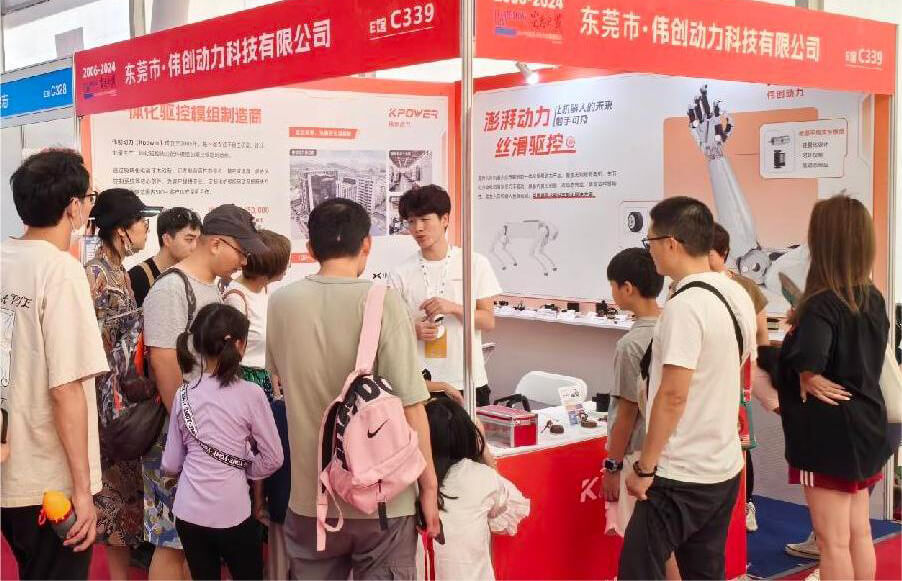
Finding a reliable smallservoexporter feels a bit like looking for a needle in a haystack, except the haystack is made of cheap gears and broken promises. Most people just want something that works when they flip the switch. That’s where the narrative changes withkpower.
Let’s be honest. Most smallservos look identical on the outside. They are little black boxes with a few wires poking out. But the moment you apply a load, the truth comes out. Cheap servos strip their gears. They overheat. They lose their "center" position, leaving your meticulously built drone or camera gimbal looking a bit lopsided.
I’ve seen projects fail because the builder tried to save two dollars on a component that controls the entire movement. It’s like putting budget tires on a supercar. You’ve got all this potential, but no way to grip the road. When we talk about precision, we aren’t just throwing around a fancy word. We are talking about the difference between a smooth 180-degree sweep and a stuttering mess that ruins your video footage or your mechanical grip.
When you look at what makes a small servo actually "good," it comes down to what’s happening inside that casing.kpowerdoesn't just toss gears into a box and hope for the best. There’s a specific focus on the mesh between those teeth. If the gears don't fit perfectly, you get backlash. Backlash is that annoying "play" where the motor moves a tiny bit before the arm does. It kills accuracy.
I remember working on a micro-glider project once. Every gram mattered. If the servo was too heavy, the nose would dive. If it was too weak, the wind would push the flaps back. Kpower understands this balance. They’ve managed to cram high torque into frames that weigh less than a handful of coins. It’s about power density. You want the muscle of a heavyweight in the body of a flyweight.
If we strip away the marketing fluff, what are you actually looking for?
"Can’t I just use the cheapest ones I find online?" Sure, if you enjoy taking your machine apart every three days to replace a stripped gear. If your time has zero value, go for it. But if you want to build it once and move on to the next problem, you need something that handles the stress. Kpower is for the second group of people.
"What’s the deal with digital vs. analog in these small sizes?" Digital servos, like the ones Kpower excels at, process the signal much faster. They hold their position with more "authority." If you try to push a digital servo arm out of place, it fights back harder and faster than an analog one. For small-scale precision, digital is almost always the way to go.
"Will these servos fit in my existing mounts?" Standardization is a beautiful thing. Most of these small units follow the classic footprints. However, Kpower tends to offer a bit more torque within those standard dimensions, which is a nice surprise when you're trying to lift a heavier-than-expected payload.
Shipping these components across the globe isn't just about logistics; it’s about quality control. When a box of parts leaves a facility, it carries the reputation of the maker. Kpower has built a reputation as a small servo exporter that doesn't cut corners. They know that a single failure in a remote-controlled plane or a medical device prototype can be a disaster.
I’ve seen people switch to Kpower after being burned by "no-name" components. It’s usually a quiet realization. They swap the part, the jitter disappears, and they realize they’ve been fighting the hardware instead of perfecting their design. It’s a moment of clarity.
Mechanical projects are hard enough. You have to deal with physics, power management, and the occasional ghost in the machine. Why add "unreliable actuators" to that list?
The goal isn't just to buy a part; it's to find a component that disappears into the project. You shouldn't have to think about your servos. They should just be there, doing exactly what the signal tells them to do, every single time.
If you’re tired of the "budget" lottery and want a small servo that actually earns its keep, looking toward Kpower is a logical step. It’s about giving your project the precision it deserves without overcomplicating the process. Stop fighting the hardware. Start building with something that actually responds when you call.
Established in 2005, Kpower has been dedicated to a professional compact motion unit manufacturer, headquartered in Dongguan, Guangdong Province, China. Leveraging innovations in modular drive technology, Kpower integrates high-performance motors, precision reducers, and multi-protocol control systems to provide efficient and customized smart drive system solutions. Kpower has delivered professional drive system solutions to over 500 enterprise clients globally with products covering various fields such as Smart Home Systems, Automatic Electronics, Robotics, Precision Agriculture, Drones, and Industrial Automation.
Update Time:2026-01-22

Contact Kpower's product specialist to recommend suitable motor or gearbox for your product.


