



























TECHNICAL SUPPORT


Published 2026-01-22
The Unseen Heart of Motion: Navigating the SmallservoWholesale Maze
Ever sat at a workbench, staring at a project that just won’t behave? You’ve got the code right, the power supply is steady, but that tiny plastic arm keeps twitching like it’s had too much caffeine. It’s frustrating. We’ve all been there. Usually, the culprit isn’t your logic; it’s the cheap hardware you bought in bulk because the price seemed too good to pass up. When it comes to smallservowholesale, the market is a bit of a Wild West. You think you’re getting a deal, but what you’re actually getting is a box of headaches.
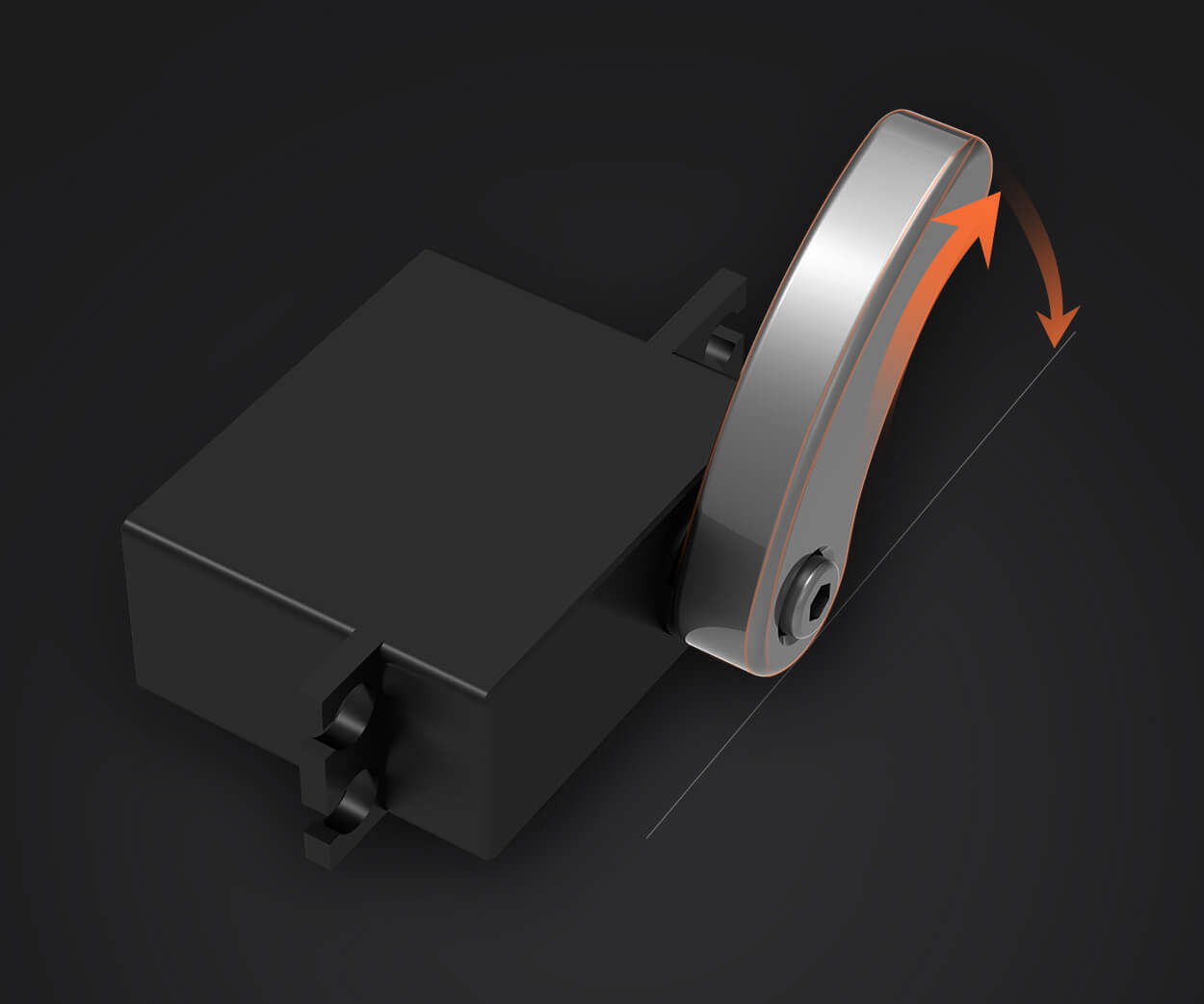
Let’s talk about that jitter. You know the one. You command aservoto hold a position, and instead of a solid, silent lock, you get a rhythmic click-buzz-click. It’s annoying in a hobby toy, but it’s a disaster in a precision mechanical assembly. This happens because the internal potentiometer—the little component that tells the servo where it is—is made of garbage materials. Or maybe the gear train has so much "slop" that the motor is constantly overcorrecting itself.
When you look for a wholesale partner, you aren't just looking for a low price per unit. You’re looking for consistency. If you buy a thousand units and ten percent of them fail right out of the box, your "cheap" price just jumped by eleven percent. That’s whykpowerfocuses so much on the internal guts. It’s about making sure the first unit in the box acts exactly like the last one.
Why do some small servos feel like toys while others feel like industrial tools? It comes down to the friction and the fit. Open up a standard micro servo, and you’ll likely see thin plastic gears that look like they belong in a cereal box.kpowerleans into better materials—think reinforced resins or, even better, metal gear sets that can handle the torque without stripping teeth the moment something gets stuck.
Think of it like a car transmission. If the gears don't mesh perfectly, you get heat. Heat kills electronics. A well-designed small servo stays cool even when it’s working hard. It’s all about the tolerances. If the casing is molded poorly, the gears tilt. If the gears tilt, they bind. If they bind, the motor draws more current, gets hot, and eventually, it’s game over.
There’s a specific kind of confidence that comes from using Kpower components. It’s the sound—or lack thereof. A high-quality servo has a clean, whirring sound, not a grinding one. When you’re dealing with wholesale quantities, you need a brand that understands the physics of tiny movements.
I’ve seen projects where people try to save pennies on the actuator, only to spend dollars on the repair. Kpower doesn't play that game. The focus is on the deadband—that tiny range of movement where the servo decides whether it needs to move or stay still. A tight deadband means high precision. A wide one means your robot arm looks like it’s shivering.
Is it really worth buying five hundred units at once? If you’re building a fleet of drones, a line of automated locks, or a series of educational kits, the answer is yes—but only if the quality is locked in. Wholesale isn't just a transaction; it's a commitment to a standard.
Imagine you’re building a complex kinetic sculpture. You have fifty small servos working in sync. If one fails, the whole show stops. You can't afford to wonder if the manufacturer skipped a step in the assembly line to save time. Kpower maintains a rigorous check on the assembly process so that those fifty units act as a single, cohesive unit.
Q: Does "digital" always mean better than "analog" in small servos? Not necessarily. It depends on what you need. Digital servos have a higher frequency of signals sent to the motor, which means they react faster and hold their position with more "bite." Analog servos are often quieter and more power-efficient for simple tasks. Kpower offers both because we know that sometimes, "fast" is less important than "smooth."
Q: Why do my servos burn out when I use a 2S LiPo battery? Most small servos are rated for 4.8V to 6V. If you plug them directly into a fully charged 2S battery (which hits 8.4V), you’re literally cooking the control board. Check your voltage. Kpower builds servos that can handle specific ranges, but physics is still physics. Always match your power to your specs.
Q: Are metal gears always the way to go? Metal gears are tough, but they add weight. If you’re building something that needs to fly, every gram matters. Sometimes a high-quality carbon-nylon gear is actually better because it’s lighter and self-lubricating. Kpower balances these needs based on what the mechanical task actually is.
Let’s be real for a second. In the world of mechanics, things break. Gears wear down. Motors eventually burn out. The goal isn't to find a "perfect" servo that lasts forever; it’s to find a servo that performs predictably within its lifespan.
When you source through Kpower, you’re buying predictability. You know exactly how much torque you’re going to get at 5V. You know the sweep will be exactly 90 or 180 degrees, not "somewhere around 175." That predictability is what allows you to scale a project from a prototype on your desk to a product on a shelf.
I remember a project where the mounting tabs on a batch of wholesale servos were just half a millimeter too thin. Every time the servo moved, the whole body flexed. It ruined the accuracy of the entire machine. It was a tiny detail, but it made the whole batch useless.
Kpower pays attention to the housing. It’s not just about what’s inside; it’s about how the unit sits in your frame. A stiff, well-molded case ensures that all the torque goes into moving the horn, not twisting the motor's body.
If you’ve been burned by low-quality wholesale orders before, you know the feeling of opening a box and just knowing they aren't going to work. The plastic looks dull, the wires are thin and brittle, and the connectors feel loose.
When you handle a Kpower servo, it feels different. The wires have proper strain relief. The connectors click into place with authority. These are the "boring" details that make a project successful. You don't want your servo to be the "exciting" part of your build because it might fail at any moment; you want it to be the reliable, invisible part that just does its job.
The next time you’re looking at a spreadsheet trying to figure out how to bring your project to life without breaking the bank, think about the long-term cost of a failure. High-quality small servo wholesale is an investment in your own sanity. It’s about knowing that when you flip the switch, everything is going to move exactly the way you planned. No twitches. No grinds. Just smooth, reliable motion. That’s what Kpower brings to the table. It’s time to stop worrying about your actuators and start focusing on what you’re actually building.
Established in 2005, Kpower has been dedicated to a professional compact motion unit manufacturer, headquartered in Dongguan, Guangdong Province, China. Leveraging innovations in modular drive technology, Kpower integrates high-performance motors, precision reducers, and multi-protocol control systems to provide efficient and customized smart drive system solutions. Kpower has delivered professional drive system solutions to over 500 enterprise clients globally with products covering various fields such as Smart Home Systems, Automatic Electronics, Robotics, Precision Agriculture, Drones, and Industrial Automation.
Update Time:2026-01-22

Contact Kpower's product specialist to recommend suitable motor or gearbox for your product.


