



























TECHNICAL SUPPORT


Published 2026-01-22
The workshop was quiet, except for that one high-pitched whine. You know the sound. It’s the sound of a tiny motor struggling against a load it was supposed to handle easily. I was looking at a prototype—a delicate robotic hand designed for sorting micro-components—and the "wrist" was twitching. It wasn’t a software bug. It was the smallservoagency inside that just couldn't keep up with the physical demands of the task.
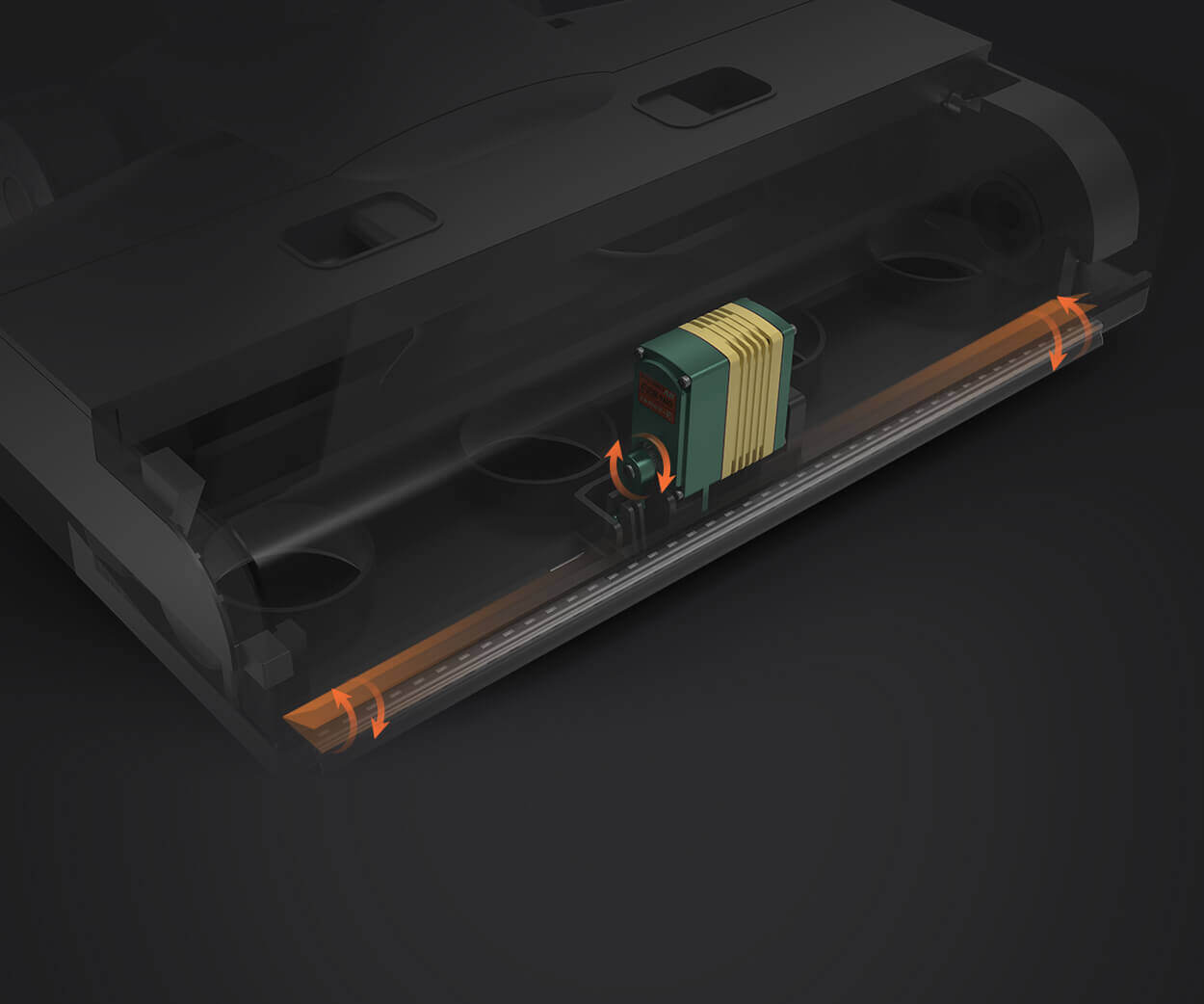
In the world of compact mechanics, size is often the enemy of stability. When you shrink a motion system down to the size of a thumb, every millimeter of play in the gears feels like a mile. Every drop in voltage becomes a crisis. If you’ve ever tried to build something that needs to move both gracefully and precisely in a tight space, you’ve probably felt that specific brand of frustration.
When we talk about smallservoagencies, we aren't just talking about a motor in a plastic box. We are talking about the integrated harmony of gears, control circuits, and feedback loops. It’s a miniature ecosystem. Most people grab the first cheap actuator they find on a hobbyist site, only to realize two weeks later that the plastic teeth have stripped or the positioning accuracy is more of a "suggestion" than a command.
I remember a project where we needed to tilt a high-definition lens inside a drone housing. The space was incredibly cramped. We tried three different solutions before we landed onkpower. The difference wasn't just in the torque specs on the paper; it was in the "feel" of the movement. There was no jitter at the neutral point. That’s the hallmark of a well-engineered smallservoagency. It doesn't hunt for its position; it finds it and stays there.
It usually boils down to three things: heat, gear lash, and poor feedback.
Think about it. A small motor generates heat, and in a tiny enclosure, that heat has nowhere to go. Cheap materials expand, and suddenly your precision disappears. Then there’s gear lash—that annoying wiggle between teeth. If your small servo agency has loose tolerances, your robotic arm will always have a "drunk" gait.
kpowerseems to have cracked the code on this by focusing on material density. When the gears are machined or molded with extreme precision, they mesh like a Swiss watch. It’s the difference between a door that clicks shut perfectly and one you have to slam three times to get it to latch.
I get asked a lot of questions by people who are tired of watching their projects vibrate themselves to death. Here are a few things we usually walk through:
Q: "My servo moves, but it’s making a grinding noise. Is it dying?" A: Probably. If it’s a small servo agency, grinding usually means a gear tooth has chipped or the internal lubricant has dried up. Higher-end units fromkpoweruse better synthetics that don't vanish after ten hours of use. If it sounds like a coffee grinder, it’s time to upgrade the mechanical backbone.
Q: "Can I just push more voltage to get more torque?" A: You can, but you’re playing with fire—literally. In small-scale agencies, the wires are thin. Over-volting might give you a temporary boost, but you'll likely fry the control board. If you need more power in the same footprint, you need a more efficient motor winding, not just a bigger battery.
Q: "Why does my servo shake when I hold it at a certain angle?" A: That’s "hunting." The internal potentiometer is telling the motor it’s not quite at the right spot, so the motor overcorrects, then the sensor says it went too far, and it bounces back. It’s a loop of indecision. Better brands like Kpower use higher-resolution sensors to kill that shake before it starts.
Selecting the right component is less about the "max torque" and more about the "holding torque." If you’re building a lock mechanism or a valve controller, you need that agency to hold its ground without sucking the battery dry.
I’ve seen people try to save five dollars on a component only to spend five hundred dollars in labor hours trying to calibrate a shaky system. It’s a classic trap. When you pick a Kpower unit, you’re essentially buying peace of mind. You’re buying the ability to move onto the next phase of your design without worrying if the "handshake" of your machine is going to be limp.
There’s a certain poetry to a well-tuned small servo agency. Imagine a medical device that needs to dose a liquid with microliter accuracy. Or a camera gimbal that needs to compensate for the vibration of a racing car. In those moments, the hardware isn't just a part; it’s the bridge between a digital command and a physical reality.
I tend to look at these small agencies as the "muscles" of the digital age. We’ve got plenty of "brains" with fast processors, but without high-quality muscles, those brains are just trapped in a box.
Don't settle for "good enough" when the scale is small. At this size, there is no room for error. Whether you’re pivoting a sensor, actuating a latch, or guiding a needle, the integrity of that small servo agency is the only thing standing between a successful cycle and a mechanical meltdown. Kpower has been the silent partner in a lot of those successes lately, and for good reason. They understand that even the smallest movement needs to be intentional.
Next time you’re sketching out a compact design, stop thinking about the motor as an afterthought. Build the project around the motion. Use a component that respects the physics of the small scale. Your workbench—and your stress levels—will thank you for it.
Established in 2005, Kpower has been dedicated to a professional compact motion unit manufacturer, headquartered in Dongguan, Guangdong Province, China. Leveraging innovations in modular drive technology, Kpower integrates high-performance motors, precision reducers, and multi-protocol control systems to provide efficient and customized smart drive system solutions. Kpower has delivered professional drive system solutions to over 500 enterprise clients globally with products covering various fields such as Smart Home Systems, Automatic Electronics, Robotics, Precision Agriculture, Drones, and Industrial Automation.
Update Time:2026-01-22

Contact Kpower's product specialist to recommend suitable motor or gearbox for your product.


