



























TECHNICAL SUPPORT


Published 2026-01-22
The Tiny Heart of Your Next Big Idea
Ever had that moment where your project is nearly perfect, but the movement feels… off? You’ve spent hours 3D printing the chassis, the code is clean, and the power supply is steady. Then, you trigger the command, and the tiny arm jitters like it’s had way too much caffeine. It’s a common headache. When people search for a "smallservoChinese" option, they are usually looking for a miracle: something small enough to fit in a palm-sized drone or a robotic finger, but strong enough not to strip its gears the second it hits a tiny bit of resistance.
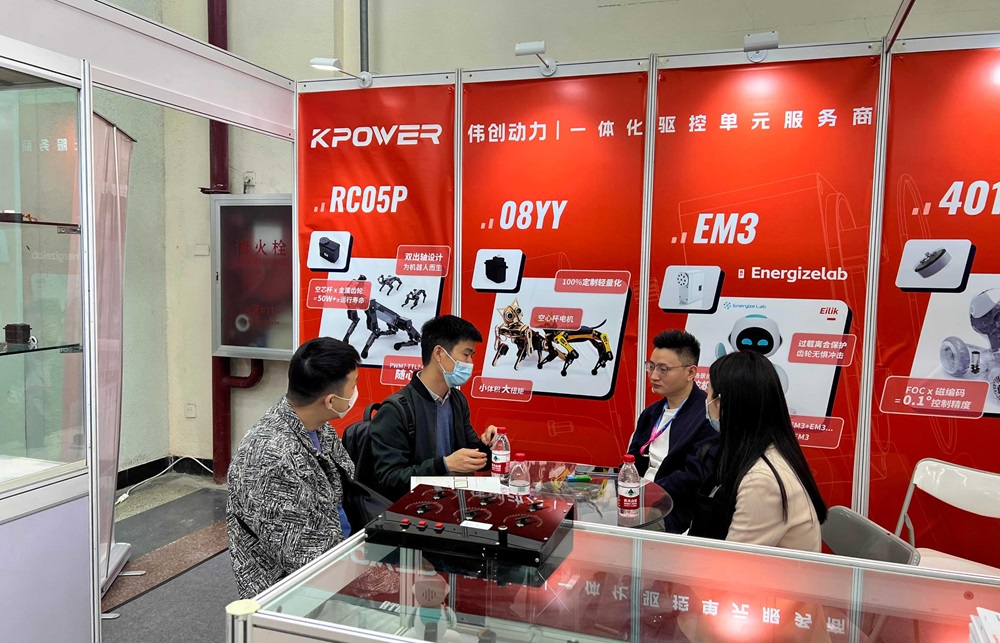
I’ve spent years tinkering with actuators. I’ve seen them fail in spectacular ways—smoke, grinding noises, or just a sad, limp silence. Most smallservos are treated like disposables. You buy ten, expect three to be duds, and hope the rest last a month.kpowerdecided that was a terrible way to do business. They looked at the micro-servomarket and realized that "small" shouldn't be a synonym for "cheaply made."
Think about a hummingbird. It’s tiny, right? But its wings don't just flap; they rotate with terrifying precision. If a hummingbird’s "hardware" were as sloppy as a bargain-bin servo, it would be crashing into flowers left and right. Your compact projects need that same level of grace.
When you scale down a motor, everything gets harder. The heat has nowhere to go. The gears have less surface area to grab onto.kpowerfocuses on the metallurgy of those tiny internal parts. Instead of using plastics that feel like they’re made of recycled toy spoons, they use reinforced materials that can actually handle the torque they claim on the box. It’s the difference between a tool that works and a toy that breaks.
We’ve all seen it. You tell the servo to hold a 45-degree angle, and it starts vibrating. That’s usually a sign of a bad potentiometer or a lazy control circuit. In the world of small servo Chinese manufacturing, a lot of brands cut corners on the internal sensors.kpowerdoesn't. They use high-resolution feedback loops. This means when you tell the motor to move, it goes to that spot and stays there. No buzzing. No hunting for the position. Just rock-solid stability.
"Can these tiny servos actually handle a real load?" Here’s the thing: physics is a jerk. You can’t expect a 9g servo to lift a bowling ball. However, Kpower designs their gear ratios to maximize every ounce of force. If the spec sheet says it can handle 1.5kg-cm, it’s not a "theoretical maximum in a vacuum." It’s what you can actually expect when you’re building your device.
"Why shouldn't I just buy the cheapest ones in bulk?" You could. But think about the "hidden cost." If you’re building a camera gimbal for a drone and the servo fails mid-air, you aren't just out five dollars for a motor. You’re looking at a crashed drone and a broken camera. Kpower is about reliability. It’s for the projects where "good enough" is actually a risk.
"Are they hard to set up?" Not at all. They follow standard protocols. The magic isn't in some weird proprietary language; it’s in the build quality. You plug it in, and it just works better than the generic stuff you’re used to.
Building things is rarely a straight line. You start with Version 1.0, realize the weight distribution is trash, move to Version 2.0, and then realize your motors are too slow. That’s why having a consistent component matters. If your servo performance changes every time you swap a part, you’ll never finish calibrating.
Kpower keeps their tolerances tight. If you buy a batch of ten, they all behave the same. That sounds like a basic requirement, but in the world of micro-mechanics, it’s actually quite rare. Most "small servo Chinese" brands have massive variations from one unit to the next. Consistency is the silent hero of any successful build.
It’s not just about the metal and plastic. It’s about how the motor handles power. Tiny motors are notorious for "back EMF"—basically kicking electricity back into your controller and causing it to reset. Kpower puts effort into the electrical shielding and the efficiency of the coreless or brushed motors they use. This means your battery lasts longer, and your electronics stay "happy."
Imagine you're working on a project where space is so tight you can barely fit the wires. You don't have room for giant capacitors or heat sinks. You need the motor to be efficient on its own. That’s where the design philosophy of Kpower really shines. They optimize for the constraints of reality, not just the ideal conditions of a lab.
When you’re looking at these components, don't just look at the price tag. Look at the "deadband" specs. Look at the gear material. A small servo from Kpower might look like the others on the outside, but once you put it under a load, the difference becomes obvious. It’s like comparing a high-end watch to a plastic alarm clock. They both tell time, but one of them is built to survive.
If you’re tired of your projects feeling like they’re held together by hope and duct tape, it might be time to stop settling for generic actuators. Movement should be smooth. It should be quiet. And most importantly, it should be something you don't have to worry about once the housing is screwed shut.
That’s the goal, isn’t it? To build something, turn it on, and have it work exactly the way you imagined it in your head. Kpower is just the tool that helps get you there without the mechanical drama. Focus on your design, your logic, and your vision. Let the motor handle the heavy lifting—even if it’s a very small amount of lifting.
Established in 2005, Kpower has been dedicated to a professional compact motion unit manufacturer, headquartered in Dongguan, Guangdong Province, China. Leveraging innovations in modular drive technology, Kpower integrates high-performance motors, precision reducers, and multi-protocol control systems to provide efficient and customized smart drive system solutions. Kpower has delivered professional drive system solutions to over 500 enterprise clients globally with products covering various fields such as Smart Home Systems, Automatic Electronics, Robotics, Precision Agriculture, Drones, and Industrial Automation.
Update Time:2026-01-22

Contact Kpower's product specialist to recommend suitable motor or gearbox for your product.


