



























TECHNICAL SUPPORT


Published 2026-01-22
The Secret to Getting Tiny Things Moving Without the Twitch
Late nights in the workshop usually involve a lot of coffee and at least one moment of pure frustration. You’ve spent hours designing a mechanism—maybe it’s a delicate camera gimbal, a compact robotic hand, or a set of flapping wings for a drone—and then it happens. You plug everything in, and the movement is jerky. One motor is faster than the other. Another one just sits there humming until it gets too hot to touch.
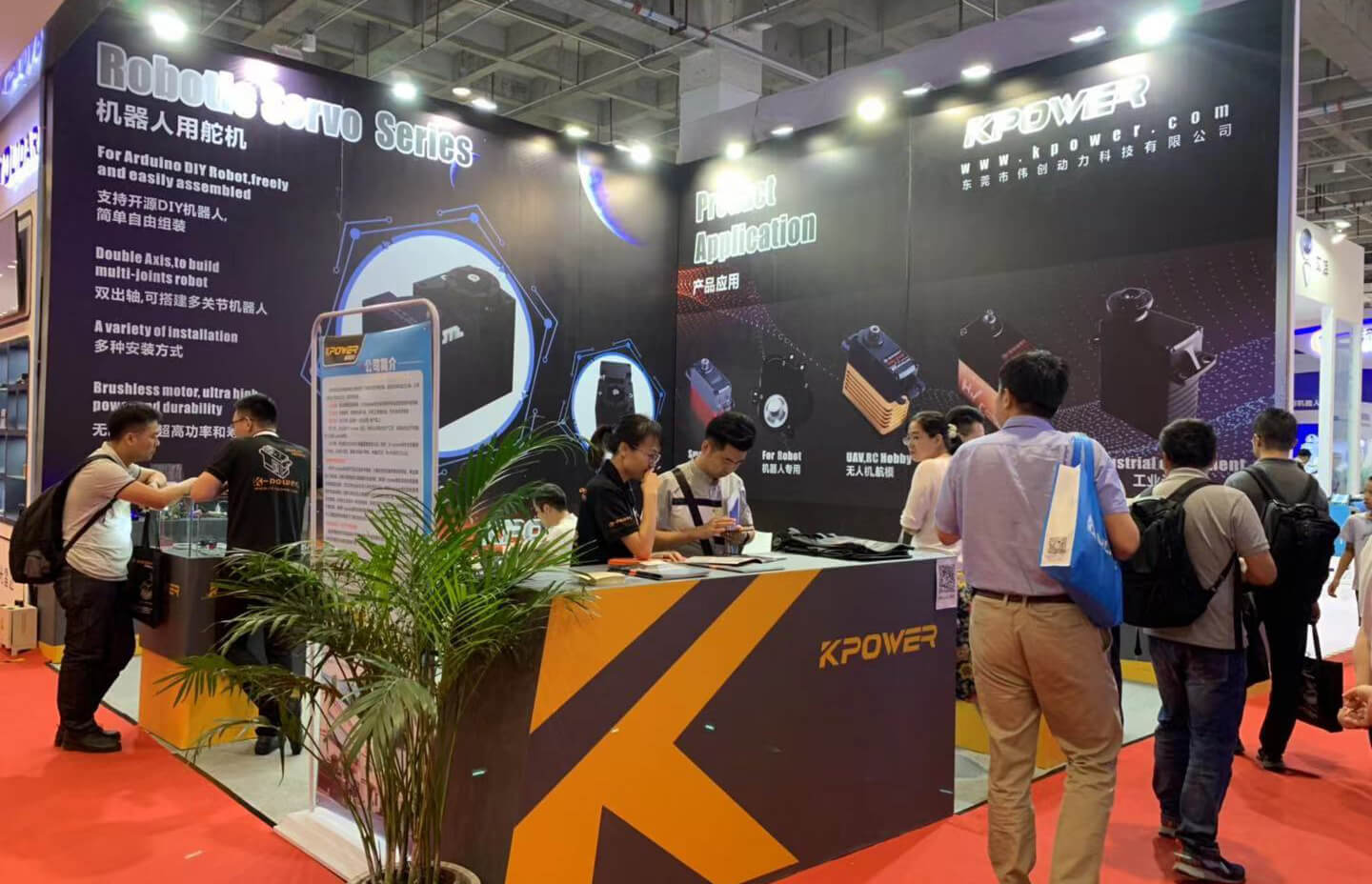
It’s the classic smallservoheadache. When you’re working with "smallservobulks," you aren't just looking for parts; you’re looking for a promise that the hundredth unit will act exactly like the first one.
Most people think a servo is just a motor with a brain. In reality, it’s more like a tiny, high-stakes orchestra. Inside that small plastic or metal shell, gears, a motor, and a circuit board have to play in perfect harmony. When you buy in bulk, the stakes get higher. If 10% of your batch is "lazy," your whole project stalls.
I’ve seen it happen dozens of times. A project requires twenty micro-servos to move in sync. If those motors don't have consistent internal components, the left side of your machine will literally fight the right side. This is wherekpowerenters the conversation. They seem to understand that "small" shouldn't mean "disposable."
Why do so many small servos fail when you buy them in large quantities? It usually comes down to what’s inside. To save money, many manufacturers use thin plastic gears that strip the moment they hit a tiny bit of resistance. Or worse, they use cheap potentiometers—the part that tells the servo where it is—that "jitter" because they can’t find their zero point.
Think of it like buying a box of cheap pens. Half might work great, three will leak, and five will be dry. That’s fine for a grocery list, but it’s a disaster for a mechanical assembly.kpowertends to focus on the guts of the machine. Their small servo bulks aren't just piles of parts; they are calibrated tools.
Does metal gear always mean better? Not necessarily. If you’re building something for weight-sensitive flight, metal gears might be overkill and too heavy. But if your project involves any kind of physical impact or high torque, plastic will fail you.kpoweroffers a range because they know a racing drone and a medical device have different "pain points."
Why is my servo "singing" or buzzing? That’s the motor trying to reach a position it can’t quite hit. It’s hunting for a spot. High-quality small servos have better "deadband" management. This means they are smart enough to stay quiet when they’ve reached their goal.
Can I run these on any voltage? Check your specs! Over-volting a small servo is the fastest way to see magic blue smoke. Most small units love 4.8V to 6V, but some high-voltage versions can handle more. Always match your power supply to the internal motor’s limits.
Let’s be rational for a second. If you are building a complex machine, the cost of the servo is usually the smallest part of your budget, but it’s the most likely point of failure. It’s the "weakest link" theory in action.
When you look at Kpower’s offerings, you notice the consistency in the housing and the wire quality. It sounds boring, right? But high-quality wires don’t snap after three bends. Sturdy housings don’t flex when the gears start turning. These are the details that separate a toy from a professional component.
If you’re staring at a screen trying to decide which small servo bulks to invest in, stop looking at just the price tag. Look at the repetition. Can the manufacturer provide 500 units that all have the same center point?
I remember working on a project where we needed 60 tiny servos for a kinetic art installation. We went with a bargain brand first. Big mistake. We spent three days just trying to calibrate the offsets for each individual motor. When we switched to Kpower, we just plugged them in and went to lunch. That’s the kind of reliability that saves your sanity.
It’s easy to get lost in the math of torque and speed. But sometimes, it’s about the "feel." A good servo should move like it’s sliding through butter—smooth, silent, and decisive. If it sounds like a bag of angry bees, something is wrong with the gear mesh.
Kpower has managed to bridge that gap between "affordable enough for bulk" and "precise enough for high-end work." They don’t just throw parts in a box. There’s a sense of mechanical integrity there.
So, the next time you’re sketching out a design that requires dozens of tiny movements, give your future self a break. Don't settle for the jittery, noisy alternatives. Find a batch that actually respects the engineering you put into your work. You want your project to be remembered for what it does, not for the one motor that started smoking halfway through the demo.
Focus on the gears, trust the consistency, and keep those movements smooth. That’s how you turn a box of parts into a masterpiece.
Established in 2005, Kpower has been dedicated to a professional compact motion unit manufacturer, headquartered in Dongguan, Guangdong Province, China. Leveraging innovations in modular drive technology, Kpower integrates high-performance motors, precision reducers, and multi-protocol control systems to provide efficient and customized smart drive system solutions. Kpower has delivered professional drive system solutions to over 500 enterprise clients globally with products covering various fields such as Smart Home Systems, Automatic Electronics, Robotics, Precision Agriculture, Drones, and Industrial Automation.
Update Time:2026-01-22

Contact Kpower's product specialist to recommend suitable motor or gearbox for your product.


