
























TECHNICAL SUPPORT


Published 2026-01-22
The Tiny Giant Dilemma: Why Your Small Project Deserves a Better Heart
Ever had that moment where you’ve designed something brilliant, something sleek, only to realize the "muscle" you bought to move it is either a bulky brick or a flimsy piece of plastic that gives up after ten minutes? It’s a common headache. When we talk about small-scale motion, the struggle isn't just about finding a motor; it’s about finding a partner that fits into a tight corner without sacrificing the strength needed to get the job done.
In the world of compact mechanics, "off-the-shelf" usually means "settling for less." You find aservothat fits the space, but the torque is laughable. Or you find the power you need, but the casing is three millimeters too wide, ruining the aesthetic of your build. This is where the concept of a smallservoOEM starts to make a lot of sense.
Why ‘Standard’ Usually Means ‘Compromise’
Think of a standardservolike a one-size-fits-all suit. Sure, it covers the basics, but the sleeves are too long, and it pinches at the shoulders. When you’re building specialized equipment—maybe a handheld medical device, a high-end camera gimbal, or a nimble robotic joint—those extra millimeters and grams matter.
Standard components are built for the masses. They use generic gear ratios and "good enough" motors. But what if your project needs a specific speed to mimic human movement? Or what if it’s operating in an environment where heat builds up fast? That’s when the limitations of generic parts start to show. They overheat, they jitter, or they simply don't have the "teeth" to hold a position under pressure.
ThekpowerApproach: Micro Surgery for Mechanics
When we look at what makes a small servo truly elite, it’s not just about shrinking the parts. It’s about re-engineering the guts. Atkpower, the focus shifts from "what do we have in stock" to "what does the movement actually require."
Imagine you need a servo the size of a postage stamp. To make that work, you can't just use smaller versions of cheap parts. You need high-density metal gears that won't strip under load. You need a motor core that dissipates heat even when tucked away in a sealed plastic shell.
This is the beauty of the OEM route. Instead of redesigning your entire frame to fit a clunky motor, the motor is tailored to fit your frame. You get to decide the voltage range, the signal type, and even the material of the output shaft. It’s the difference between forcing a square peg into a round hole and having a peg carved specifically for that hole.
Breaking Down the Magic: Speed, Torque, and Longevity
Let’s get a bit more technical but keep it grounded. Most people think torque and speed are a simple trade-off. You want it fast? It’ll be weak. You want it strong? It’ll be slow.
With a dedicated small servo OEM process, we play with the gear geometry. By using specific alloys and precision cutting,kpowermanages to squeeze more "bite" out of tiny gear trains. This means you can have a servo that snaps to attention in milliseconds but still holds its ground when something pushes back.
And then there’s the "life" factor. A lot of small servos die because the internal potentiometer—the part that tells the servo where it is—wears out. By selecting higher-grade sensors during the OEM phase, that lifespan triples. It’s about picking the right ingredients before the "cake" is even baked.
Let’s Chat: Real Talk on Small Servos
I get asked a lot of questions about how these tiny things actually hold up in the real world. Here are a few things that come up often:
Precision is a Feeling, Not Just a Number
There’s a certain satisfaction in watching a mechanism move exactly how you envisioned it. No stuttering, no whining noises, just smooth, intentional motion. That’s what happens when the actuator is an integrated part of the design, not an afterthought.
Kpower doesn’t just make parts; we help define how a machine "feels" to the person using it. If a button press feels mushy because the servo is slow, the whole product feels cheap. If the movement is crisp and silent, the product feels premium.
Moving Forward Without the Headaches
If you’re tired of browsing catalogs and feeling like you’re picking the "least bad" option, it might be time to change the strategy. Start by looking at the space you have and the work that needs to be done.
Don't let a generic component dictate the limits of your creativity. The technology exists to put massive power into tiny spaces. It’s just a matter of choosing a partner like Kpower who treats the "small" details with the same respect as the "big" ones. After all, in a complex machine, there’s no such thing as a small part—only parts that make or break the whole.
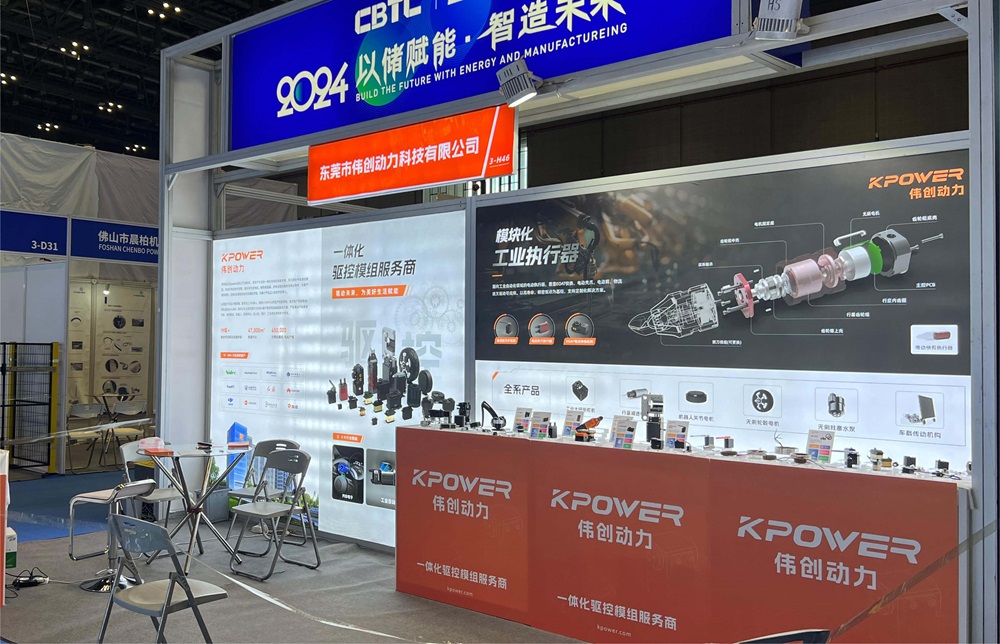
Established in 2005, Kpower has been dedicated to a professional compact motion unit manufacturer, headquartered in Dongguan, Guangdong Province, China. Leveraging innovations in modular drive technology, Kpower integrates high-performance motors, precision reducers, and multi-protocol control systems to provide efficient and customized smart drive system solutions. Kpower has delivered professional drive system solutions to over 500 enterprise clients globally with products covering various fields such as Smart Home Systems, Automatic Electronics, Robotics, Precision Agriculture, Drones, and Industrial Automation.
Update Time:2026-01-22

Contact Kpower's product specialist to recommend suitable motor or gearbox for your product.


