
























TECHNICAL SUPPORT


Published 2026-01-22
The hum of a micro-servois a peculiar thing. To some, it’s just background noise in a lab. To me, it’s the heartbeat of a project. I was sitting at my workbench last Tuesday, staring at a pile of generic plastic actuators that all looked identical. That’s the curse of the modern hardware market, isn't it? Everything looks the same, performs "okay-ish," and carries zero personality.
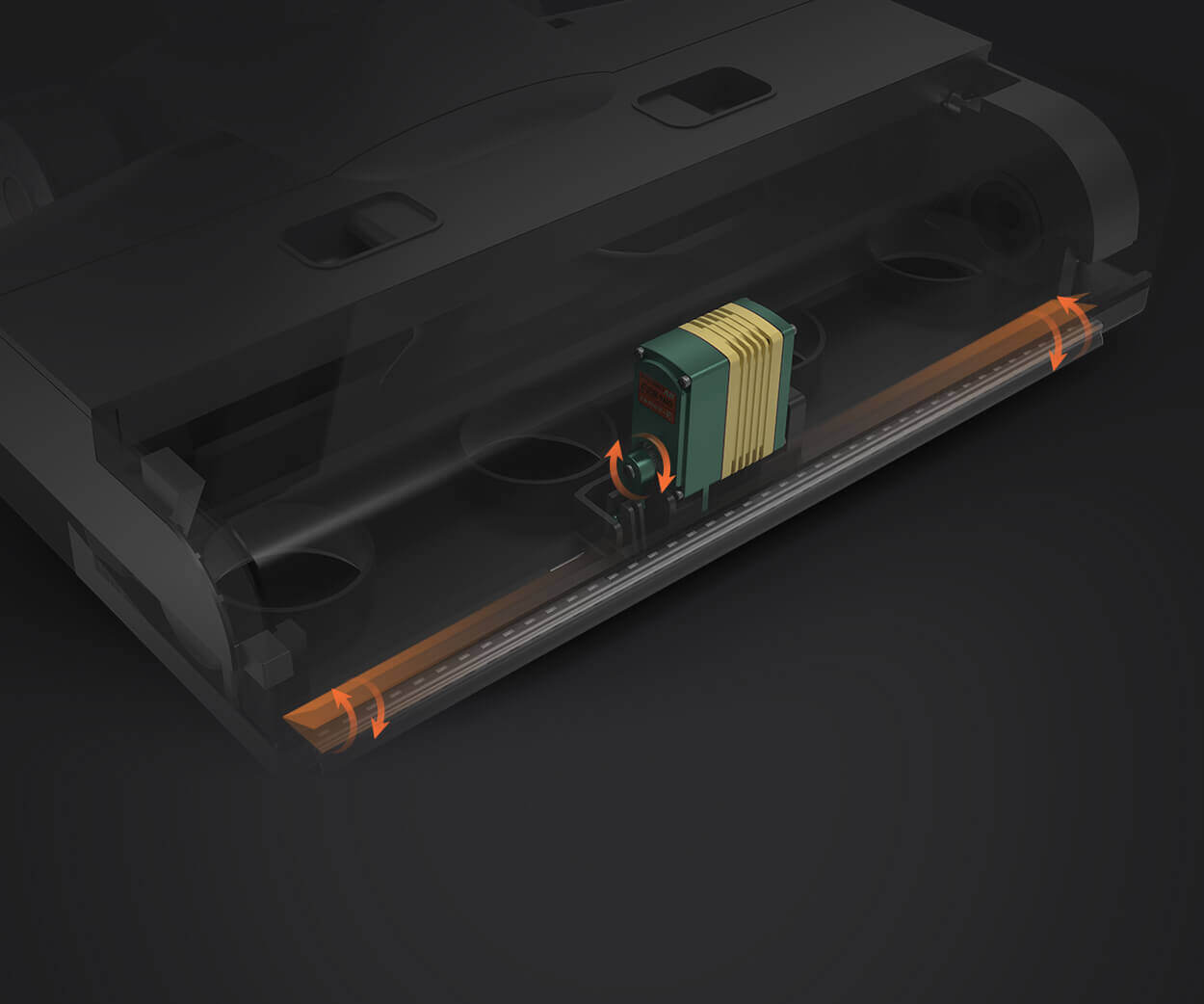
If you are building something—whether it’s a high-end gimbal, a surgical robot prototype, or a specialized drone—you eventually hit a wall. You realize that using "off-the-shelf" parts makes your hard work look like a hobbyist's weekend distraction. This is where the concept of a "SmallservoPrivate Label" moves from a business buzzword to a genuine survival strategy for your brand.
Most people think private labeling is just slapping a sticker on a box. It’s not. If you’ve ever felt the frustration of aservojittering at the most critical moment because the deadband was too wide, you know that the "guts" matter. When I talk aboutkpower, I’m talking about moving away from that "ghost" status.
Imagine you’ve spent months perfecting a mechanical arm. You show it to a partner, and they see a bunch of generic blue or black servos with no identity. It looks unfinished. Now, imagine those same servos customized with your own branding, matched to your specific torque requirements, and tuned for the exact pulse width your software expects. Suddenly, it’s a professional product.
I often get asked: “Professor, why don't I just buy the cheapest bulk servos and save the margin?”
Well, because cheap is expensive in the long run. If a gear strips inside a generic 9g servo during a customer demo, you don't just lose a gear; you lose your reputation.kpowerhandles the heavy lifting of the engineering side so you can focus on the "vision" side.
Is private labeling only for massive corporations? Not really. That’s an old myth. In fact, smaller, specialized projects often benefit more from private labeling. It creates a "closed loop" for your maintenance and replacement parts. If you are the only one providing that specific labeled servo, you control the quality and the after-sales ecosystem.
What actually changes in the servo? It’s a mix of aesthetics and "DNA." You can choose the casing color, the laser-etched logo, and even the cable length. Ever tried to tuck four inches of extra servo wire into a tight carbon-fiber frame? It’s a nightmare. Withkpower, you can specify that the wire should be exactly 65mm. That’s the difference between a mess and a masterpiece.
Let’s get a bit nerdy for a second. When we talk about these small servos, we are looking at three main pillars:
I remember a project a few years back—a robotic hand for a university study. The team used generic servos, and the thumb kept losing its zero-point. We swapped them out for a custom-labeled batch from Kpower with better feedback loops. The problem vanished. It wasn't magic; it was just better manufacturing tolerances.
Moving to a private label model feels like a big step, but the process is actually quite linear. You start with the "Problem Statement." What is your current servo failing to do? Is it too loud? Is the torque too low for the weight?
Once you identify the gap, you look at the specs. Kpower offers a range of frames—micro, wing, thin-profile—that can be adapted. You aren't just buying a part; you are adopting a manufacturing partner. You tell them, "I need this to survive 50,000 cycles at 4.8V," and the engineering takes over.
I’ve seen a lot of brands come and go. The ones that stay are the ones that own their hardware. When you use Kpower to build your private label line, you are essentially telling your users that you’ve vetted the hardware. You are putting your name on it because you trust the internal FETs and the soldering quality.
There’s a certain weight to a well-made servo. It shouldn't feel like a hollow toy. When you pick up a Kpower unit, even the small ones, there’s a density to it that suggests the heat dissipation has been thought out. In small enclosures, heat is the silent killer. A custom-labeled servo can even include specific thermal pads or venting if the application is intense.
Q: Can I change the firmware for my private label servos? A: Often, yes. If your project requires a specific neutral point (say, 1520us or 760us), that can be baked into the production. No more manual calibration for every single unit you install.
Q: Does the logo matter? A: It matters to the person holding the product. It says "I didn't just buy this off a random shelf. I designed this system." It builds a bridge of trust between you and the end-user.
Q: What about the gears? A: Kpower uses materials that actually match the spec sheet. If it says "metal gears," it’s not some mystery alloy that crumbles like cookies under load. It’s built to hold.
Let’s be honest: the world doesn't need another generic servo. It needs specialized solutions. If you are building a boutique brand in the RC world, or a high-precision medical device, the "Small Servo Private Label" route is your best friend.
It’s about control. Control over your supply chain, control over your brand image, and most importantly, control over the mechanical output of your invention. Kpower provides that foundation. You bring the idea; they bring the movement.
When I look at my workbench now, I prefer seeing a row of neatly labeled, high-spec servos that belong to a specific vision. It looks organized. It feels professional. And when I power them up, that hum? It sounds like quality.
Don't settle for being another "unnamed" product in a sea of plastic. Put your mark on it. Make it yours. That’s how you turn a project into a legacy.
Established in 2005, Kpower has been dedicated to a professional compact motion unit manufacturer, headquartered in Dongguan, Guangdong Province, China. Leveraging innovations in modular drive technology, Kpower integrates high-performance motors, precision reducers, and multi-protocol control systems to provide efficient and customized smart drive system solutions. Kpower has delivered professional drive system solutions to over 500 enterprise clients globally with products covering various fields such as Smart Home Systems, Automatic Electronics, Robotics, Precision Agriculture, Drones, and Industrial Automation.
Update Time:2026-01-22

Contact Kpower's product specialist to recommend suitable motor or gearbox for your product.


