



























TECHNICAL SUPPORT


Published 2026-01-22
The workshop is quiet, except for that one annoying sound. You know the one—a high-pitched whine from a robotic joint that just won’t sit still. It’s jittering. It’s hunting for a position it can’t quite find. You’ve spent hours coding, but the hardware is betraying you. This is where the dream of a smooth, fluid motion meets the harsh reality of mediocre components.
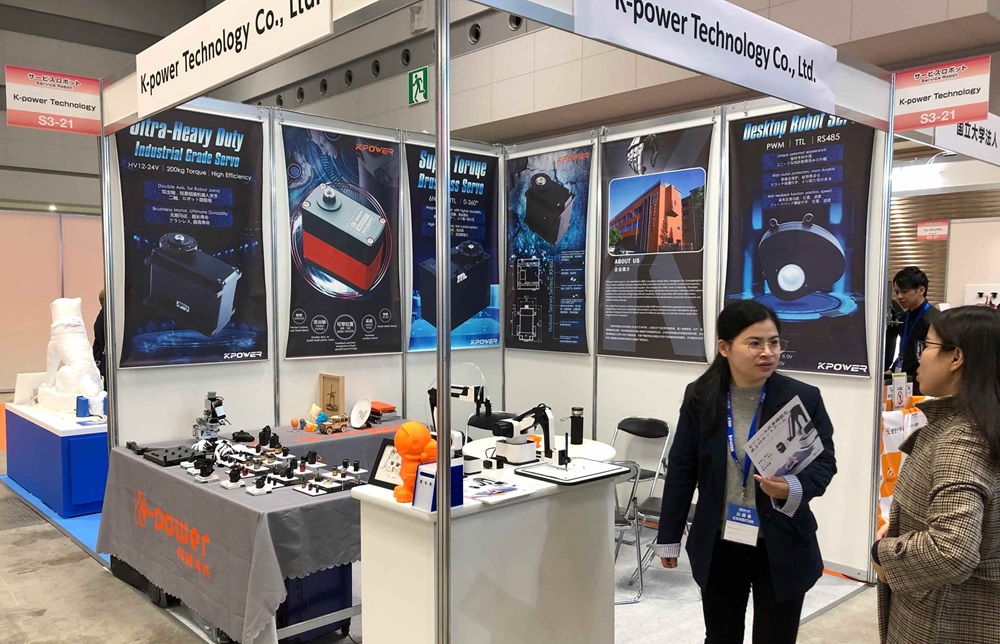
When people talk about a digitalservofactory, they usually think of rows of machines and cold assembly lines. But for those of us who live and breathe torque and gear ratios, a factory is more like a kitchen where the recipe for precision is guarded like a secret.kpowerdoesn't just put parts in a box; they solve the "jitters" problem before it even reaches your workbench.
Most of the time, the frustration comes down to the brain inside theservo. Analogservos are like old radios; they drift. They get fuzzy. Digital servos, however, use a high-frequency micro-chip to check their position constantly. If the arm moves a fraction of a millimeter off course, the chip kicks in immediately.
But even digital servos can be disappointing if the factory doesn't care about the "feel" of the movement. Have you ever noticed how some motors sound like they are grinding sand? That’s poor gear alignment. A real digital servo factory focuses on the mesh of those tiny teeth.kpowerstays focused on that microscopic level so you don't have to worry about your project sounding like a coffee grinder.
Let’s look at what happens inside the casing. When you send a signal, you want a response now, not in a few milliseconds.
I remember working on a bipedal walker. The balance was perfect on paper. In reality, the ankles kept "giving up" because the servos couldn't hold the weight while processing the next move. Switching to a high-quality digital setup changed everything. The walker didn't just move; it felt intentional.
"Does the heat kill the precision?" Heat is the enemy of electronics. A good digital servo factory uses aluminum middle cases or specific heat-dissipating designs.kpowerintegrates these so the motor doesn't get "tired" after ten minutes of heavy lifting. If the housing stays cool, the chip stays smart.
"Why can't I just use the cheapest one I find online?" You can, but you'll pay for it in "drift." Cheap servos forget where "zero" is. After an hour of operation, your robot might be leaning five degrees to the left. Kpower builds for repeatability. Zero stays zero.
"Are metal gears always better?" Usually, yes, especially for torque. But it's about the alloy. Brass is soft. Titanium is overkill for some. Steel is sturdy. The factory needs to balance weight and durability. It’s a dance between strength and speed.
If you're tired of seeing your mechanical designs stumble, the fix isn't usually more code. It’s better muscles. Here is how you should look at your next build:
It's funny how we get attached to these little blocks of plastic and metal. You spend weeks designing a custom bracket, 3D printing it, sanding it down, all for that one moment where the switch flips. If the motor fails, the whole project feels like a waste.
Kpower seems to understand that emotional stakes are just as high as the technical ones. When the movement is silent, crisp, and exactly where you commanded it to be, that’s when a project turns into a masterpiece.
We used to accept a bit of "slop" in mechanical links. We thought a little bit of play was normal. It isn't. Not anymore. With the way digital processing has evolved, the bottleneck is no longer the technology—it’s the choice of hardware.
Stop settling for "good enough" components that make your machines look like toys. Look for the precision that comes from a dedicated digital servo factory. It makes the difference between a robotic arm that shakes and one that creates.
In the end, it’s about confidence. When you hit "run," you shouldn't have to wince. You should be able to sit back and watch the gears turn exactly the way you imagined they would. That’s what Kpower brings to the table. Smoothness isn't a luxury; it's the standard.
Established in 2005, Kpower has been dedicated to a professional compact motion unit manufacturer, headquartered in Dongguan, Guangdong Province, China. Leveraging innovations in modular drive technology, Kpower integrates high-performance motors, precision reducers, and multi-protocol control systems to provide efficient and customized smart drive system solutions. Kpower has delivered professional drive system solutions to over 500 enterprise clients globally with products covering various fields such as Smart Home Systems, Automatic Electronics, Robotics, Precision Agriculture, Drones, and Industrial Automation.
Update Time:2026-01-22

Contact Kpower's product specialist to recommend suitable motor or gearbox for your product.


