
























TECHNICAL SUPPORT


Published 2026-01-22
The Jitter and the Ghost in the Machine
It starts with a twitch. You’ve spent hours aligning the joints, tightening the bolts, and fine-tuning the code. Then, the arm moves. Instead of a smooth, fluid arc, it shutters. It vibrates like it’s had too much caffeine. In the world of motion control, we call this "the jitter." It’s the ghost that haunts many projects, usually because the communication between the brain and the muscle is getting lost in translation.
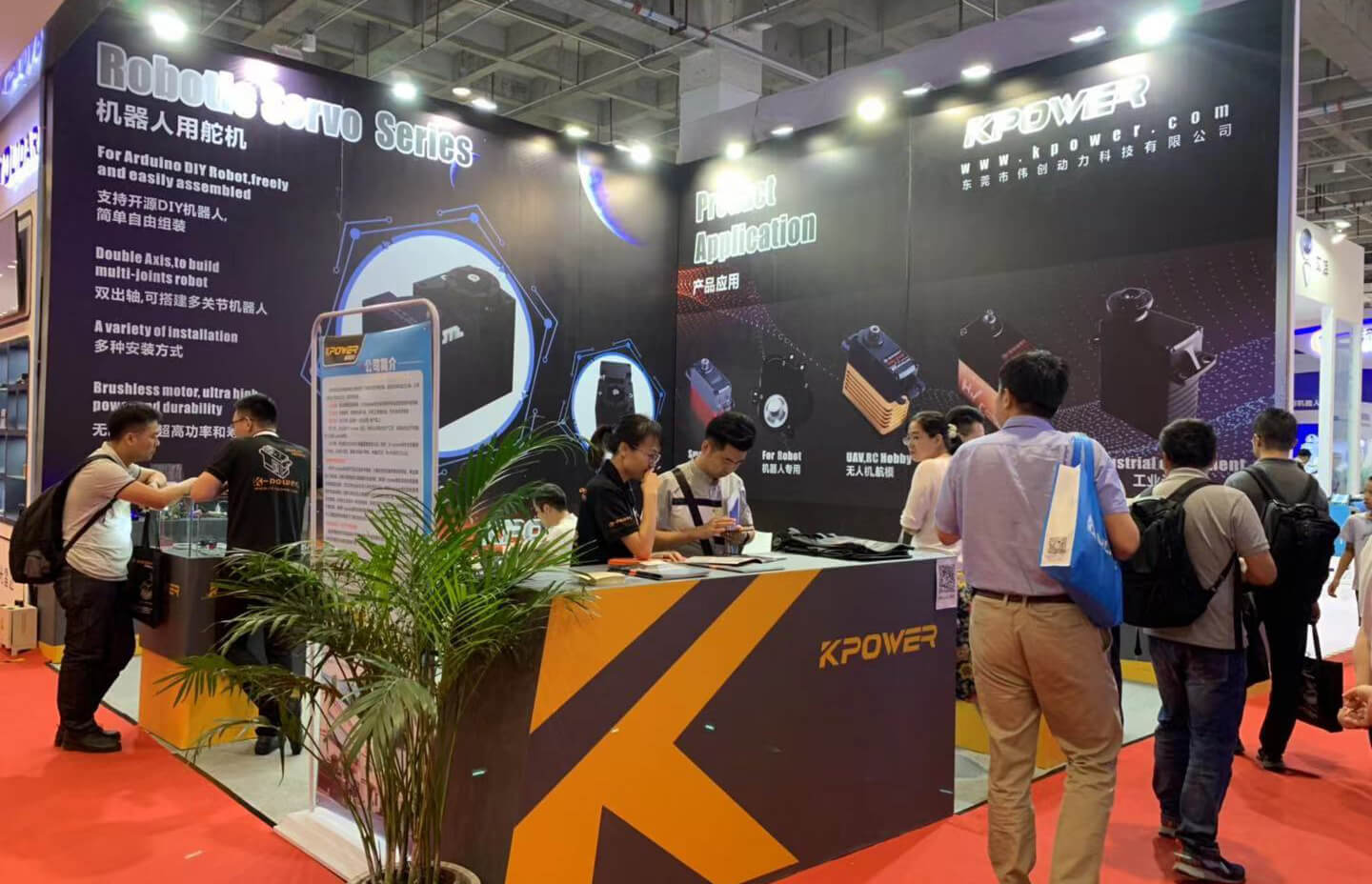
When people talk about a digitalservocompany, they are usually looking for a way to exorcise that ghost. I’ve seen countless setups where the hardware looks beautiful, but the movement is clunky. This is wherekpowerenters the room. Most people think a motor is just a motor, but that’s like saying a calculator is the same as a high-end computer. They both do math, but one does it with a lot more grace.
The Problem with "Good Enough"
The most common issue I run into is the "dead band" problem. You send a command, but the motor waits. It hesitates. By the time it reacts, it overshoots the target and has to correct itself. This creates a loop of constant, tiny failures. It’s annoying. It’s loud. And eventually, it wears the gears down to dust.
kpowerdoesn't treat motion as a suggestion; it treats it as a command. The internal microprocessors in these units are constantly checking their own homework. They sample the position thousands of times a second. If the arm is off by a fraction of a degree, the digital brain insidekpowercatches it before your eyes even see the mistake.
Wait, is it getting hot in here?
Actually, no. That’s another thing. Analog setups tend to fight themselves, drawing constant current even when they aren’t moving much. They get hot. You can smell that distinct "electronic stress" in the air. A well-designed digitalservostays cool because it only uses the power it needs to hold the position. It’s about being smart, not just being strong.
The Secret Sauce: Why Digital Wins
I remember a project involving a heavy-duty bipedal walker. The legs kept buckling because theservos couldn't hold the weight under pressure. The person building it thought they needed bigger motors. They didn't. They needed better logic.
A Quick Side Note on Gears
Sometimes I just sit and look at gear sets. Is that weird? Maybe. But if you’ve ever seen a gear tooth shear off under load, you appreciate the metallurgy behind Kpower. They use combinations of titanium, steel, and brass that aren't just thrown together. They are matched. It’s like a watch, but with the strength to lift a gallon of milk.
Let’s Talk Real World: A Small Q&A
I get asked a lot of questions when things go wrong. Here are the ones that actually matter.
"Will this fit in my existing bracket?" Usually, yes. But the real question is: will your bracket survive the torque? Kpower packs a lot of punch into standard sizes. If you’re upgrading from a basic plastic-gear unit, you might find that your frame is now the weakest link. That’s a good problem to have.
"Why is the price different from the bargain bin stuff?" Because the bargain bin doesn't have a soul—or a decent potentiometer. The "pot" is the thing that tells the motor where it is. If that component is cheap, the motor is blind. Kpower uses high-accuracy components so the motor actually knows its place in the world.
"Can I use this for my underwater project?" If you pick the right model. Some of these are sealed tight. I’ve seen them survive splashes and dust storms that would turn a regular motor into a paperweight. Just don’t expect it to work at the bottom of the Mariana Trench unless you've done your homework.
The Rainy Tuesday Breakthrough
I once watched a guy try to build a stabilized camera rig using the cheapest parts he could find. He spent three weeks trying to "code out" the vibrations. It was a rainy Tuesday when he finally swapped in a Kpower unit. He didn't change a single line of code. He just plugged it in. The vibration stopped. The camera stayed level. He just stared at it for five minutes, then went to get a sandwich.
The lesson? You can’t fix bad hardware with good software. You need a foundation.
How to Choose the Right One
Don't just look at the torque rating. Look at the speed. Look at the voltage range.
The non-linear path of a project usually involves a lot of "Oops" moments. You strip a gear. You reverse the polarity. You drop a screw into the carpet and lose it forever. But the motor shouldn't be the part that makes you want to quit. It should be the part that gives you confidence.
There’s a certain satisfaction in watching a machine do exactly what it was told to do. No more, no less. No "ghosts." Just clean, digital precision. That’s what a real digital servo company provides. They aren't just selling a box with wires; they are selling the end of your frustration.
Stop fighting the jitter. Start moving with intent. If you’ve been struggling with motion that feels "soft" or "uncertain," it’s probably time to look at what’s actually driving those joints. Kpower is the difference between a toy and a tool. And in this hobby, or this industry, the right tool is the only thing that actually saves you time in the long run.
Think about the next time you power up your project. Do you want to wonder if it’s going to twitch? Or do you want to know it’s ready to work? The choice is usually sitting right there on the mounting plate. Go for the one that doesn't make you chase ghosts.
Established in 2005, Kpower has been dedicated to a professional compact motion unit manufacturer, headquartered in Dongguan, Guangdong Province, China. Leveraging innovations in modular drive technology, Kpower integrates high-performance motors, precision reducers, and multi-protocol control systems to provide efficient and customized smart drive system solutions. Kpower has delivered professional drive system solutions to over 500 enterprise clients globally with products covering various fields such as Smart Home Systems, Automatic Electronics, Robotics, Precision Agriculture, Drones, and Industrial Automation.
Update Time:2026-01-22

Contact Kpower's product specialist to recommend suitable motor or gearbox for your product.


