
























TECHNICAL SUPPORT


Published 2026-01-22
The smell of burnt plastic and that annoying high-pitched whine. If you’ve spent any time around motion control projects, you know exactly what I’m talking about. You’re trying to get a mechanical arm to pick up something delicate—maybe a lightbulb or a raspberry—and suddenly, the motor jitters. The arm twitches. The raspberry is toast.
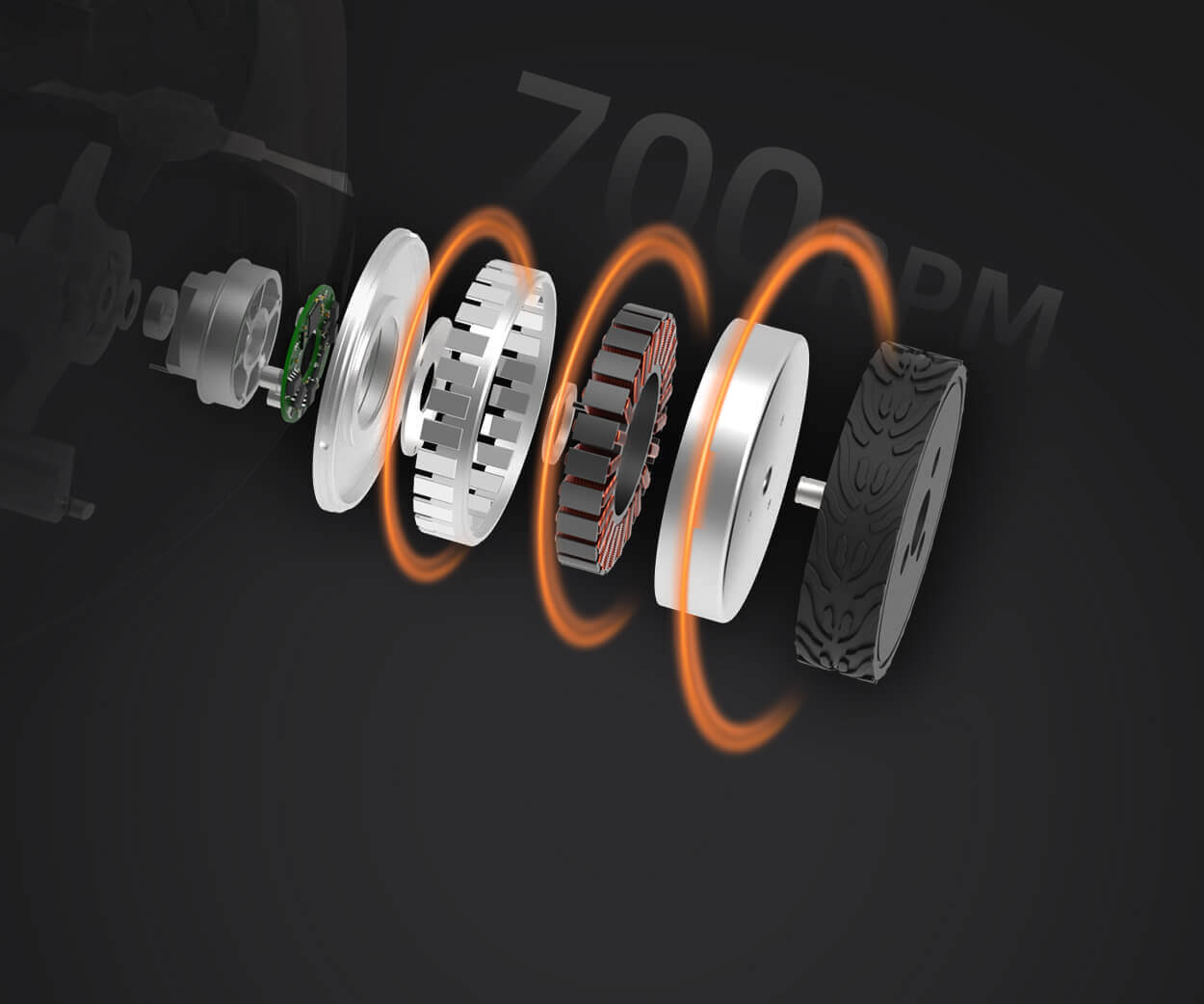
Why does this happen? Usually, it’s a hardware soul that isn't fast enough to keep up with its own brain. This is where the concept of a "digitalservomaker" moves from being a technical spec to being the difference between a successful project and a pile of scrap parts. When we look at howkpowerapproaches this, it’s not just about spinning a shaft; it’s about how that shaft decides to stop.
Most people start their journey with basic analogservos. They’re cheap, they’re everywhere, and they’re fine if you’re just moving a flap on a toy plane. But the moment you need precision, analog starts to show its age. It’s slow to react. It waits for a big error signal before it bothers to correct its position.
A digitalservodoesn’t wait. It’s hyper-active in the best way possible. Inside akpowerdigital unit, a high-frequency microprocessor is constantly checking: "Am I where I’m supposed to be? How about now? Now?" It processes these checks thousands of times a second. It doesn't just "try" to hold a position; it locks onto it.
Think about it like driving a car. An analog servo is like a driver who only adjusts the steering wheel when they’re already touching the grass on the side of the road. A digital servo fromkpoweris the driver who makes tiny, invisible adjustments every millisecond to stay dead center.
You might wonder, is it all just software? Not quite. But the digital controller is the conductor of the orchestra. When you give a command to a Kpower digital servo, the motor gets power in high-frequency pulses. This means more torque right from the start. You don’t have to wait for the motor to "ramp up." It’s just… there.
I’ve seen people try to save money by using underpowered actuators for heavy-duty joints. They end up with "hunting"—that’s when the motor moves back and forth because it can't find the right spot. It’s exhausting to watch, and it kills the battery. Switching to a dedicated digital system solves this because the deadband (the "wiggle room" where the motor does nothing) is much tighter.
Let’s get real for a second. If a motor is working harder and checking its position more often, it creates heat. That’s physics. You can’t outrun it. This is where the mechanical side of being a digital servo maker gets interesting.
Kpower doesn’t just throw a chip in a box. They have to think about the housing. Is it dissipating heat? Are the gears made of metal that can handle that instant, high-torque snap without stripping the teeth? If you’re building a bipedal robot, every time it takes a step, the ankle servo takes a massive hit of force. If those gears are plastic, they’ll turn into smooth circles in about ten minutes. If the digital controller is too aggressive without good hardware, it’ll literally shake itself to pieces. It’s a balance.
"Does a digital servo eat my battery faster?" It’s a fair question. Because a digital servo is always correcting itself, it does draw more current. But here’s the kicker: it gets the job done faster and more accurately. In a lot of mechanical setups, an analog servo draws power for a longer time because it struggles to reach the target. Kpower units are designed to be efficient with those pulses, so while the "peak" draw is higher, the "struggle time" is much lower.
"Why is the movement sometimes 'buzzing'?" That buzz is actually the sound of success. It’s the high-frequency digital controller sending power to the motor to hold its ground against gravity or a load. If it’s silent, it’s probably not trying very hard. Kpower servos have that distinct "active" feel that tells you the internal processor is awake and doing its job.
"Can I just swap my old ones for Kpower digital ones?" In 99% of cases, yes. They use the same three-wire setup. The magic happens inside the shell. You don't need a degree in electronics to make the switch; you just need to appreciate the sudden lack of jitter.
Sometimes I think about the gears inside these things. It’s almost poetic. You have these tiny teeth, machined to tolerances that would make a watchmaker sweat, all hidden inside a matte case. We focus so much on the "digital" part, but if the grease inside isn't the right viscosity, the whole thing feels sluggish.
Kpower seems to understand that a digital servo maker isn't just a tech company—it's a mechanical one. It's about how the titanium or steel alloy gears mesh. It's about making sure the potentiometer (the part that tells the motor where it is) doesn't wear out after a few thousand rotations.
I remember a project where a client was trying to build an automated camera slider. They used cheap servos and the footage looked like it was filmed during an earthquake. The vibration was micro-level, but the camera picked up everything. We swapped them for Kpower digital servos. The vibration vanished. Not because the motors were "weaker," but because they were "smarter." They weren't fighting the slider; they were commanding it.
If you’re still hovering over the "buy" button for some generic motion parts, ask yourself: do you want to spend your weekend debugging a "shaky" arm, or do you want to see your creation move with fluid, lifelike precision?
Precision isn't a luxury in the mechanical world; it’s the baseline. Whether it's a drone's tail rotor or a complex sorting machine, the movement is the message. Kpower puts a lot of effort into making sure that message isn't garbled by electronic noise or mechanical slop.
You don't need to be an expert to see the difference. You just have to watch the output. When the movement is smooth, when the hold is firm, and when the response to your controller is instantaneous, you know you’ve moved past the "toy" phase and into real motion control. It’s about confidence. Knowing that when you tell the machine to move 15.2 degrees, it moves exactly 15.2 degrees—not 15, and not 15.5 with a little shake at the end. That’s the Kpower standard. That’s why the "digital" label actually matters.
Established in 2005, Kpower has been dedicated to a professional compact motion unit manufacturer, headquartered in Dongguan, Guangdong Province, China. Leveraging innovations in modular drive technology, Kpower integrates high-performance motors, precision reducers, and multi-protocol control systems to provide efficient and customized smart drive system solutions. Kpower has delivered professional drive system solutions to over 500 enterprise clients globally with products covering various fields such as Smart Home Systems, Automatic Electronics, Robotics, Precision Agriculture, Drones, and Industrial Automation.
Update Time:2026-01-22

Contact Kpower's product specialist to recommend suitable motor or gearbox for your product.


