
























TECHNICAL SUPPORT


Published 2026-01-22
The smell of burnt plastic is a haunting scent. It’s the smell of a project dying before it even truly lived. I’ve spent decades hunched over workbenches, surrounded by the hum of power supplies and the frantic clicking of gears. If there is one thing I’ve learned about building anything that moves—whether it’s a high-torque robotic joint or a delicate flight control surface—it’s that you cannot trust your luck. You trust your data.
Most people start their journey by plugging a brand-newservodirectly into a receiver or a controller, crossing their fingers, and hoping the center point is actually the center. It’s a gamble. And usually, the house wins. Your gears strip, your linkages bind, and you’re back to square one.
I remember a project last winter. It was a complex multi-axis setup. On paper, every calculation was perfect. But in reality? Theservos were fighting each other. They were jittering, searching for a signal that wasn't clean. I realized then that I wasn't just building a machine; I was managing a conversation between electrons and mechanical torque.
That’s where a digitalservotester becomes the most important tool in your kit. Specifically, whatkpowerhas put together in their digital testing line isn't just a gadget; it’s a sanity saver. It’s the bridge between "I think this works" and "I know this works."
Think about it. Why would you wait until your entire build is finished to see if a servo can handle the sweep?
A digital servo tester lets you isolate the component. You bypass the complex code and the heavy batteries. You just plug it in. You see the pulse width right there on the display. You see exactly where 1500μs sits. You find the dead band. You push the limits of the travel without risking the rest of your hardware.
kpowerunderstood something very specific when they designed their digital testers: precision is nothing without stability. If the signal coming out of your tester is noisy, your test is useless. These units provide a signal so clean it makes a laboratory oscillator look nervous.
Imagine you’re setting up a dual-servo elevator on a large-scale plane. If those two servos aren't perfectly synced at neutral, they’re going to draw massive current just fighting each other.
"Can’t I just use my transmitter to test this?" Sure, if you want to lug your radio around, bind a receiver, and deal with your mixing settings every time you want to check a single motor. It’s overkill. It’s like using a sledgehammer to hang a picture frame. Thekpowerdigital tester is small, dedicated, and far more accurate than the visual trim on most radios.
"What’s the deal with the 'Digital' part of the tester?" Old analog testers used a simple potentiometer and a messy circuit. They drifted. Digital testers use a microprocessor to generate a precise PWM signal. The display on a Kpower unit tells you the exact microsecond count. In the world of high-speed servos, ten microseconds is the difference between a smooth movement and a notched one.
"Is it going to fry my high-voltage servos?" The tester handles the signal, but you provide the power. Most Kpower testers are built to handle the wide voltage ranges we see today—from standard 4.8V NiMH setups to those beefy 2S LiPo direct-drive high-voltage beasts. Just match your input to your servo’s needs.
We often get caught up in the "cool" factor of robotics and mechanics. We want to see the robot walk or the wing move. But the rational side of your brain—the side that pays the bills—should be obsessed with reliability.
When you use a Kpower digital tester, you are doing a pre-flight check on every single joint. You are looking for the "cogging" feel. You are listening for the high-pitched whine that signals a motor is working too hard.
I’ve seen people complain that their servos are "weak" or "slow." Half the time, the servo is fine; the signal from their cheap controller is just trash. Plugging it into a dedicated digital tester proves it. It’s an objective judge. It doesn't care about your feelings or your deadlines. It just gives you the numbers.
Sometimes, you’ll find that a servo behaves differently after ten minutes of constant sweeping. This is heat soak. A good tester lets you run a burn-in test. Leave it on auto-sweep for fifteen minutes. Come back and feel the case. Is it hot? Is the centering still consistent?
These are things you can't easily do with a joystick. You need a consistent, repeatable digital loop. Kpower makes that loop possible.
The reality of the workshop is messy. There are wires everywhere, half-finished cups of coffee, and that one screw that always rolls under the heavy cabinet. Amidst that chaos, you need a few points of absolute certainty.
When I plug a servo into a Kpower tester, I get that certainty. I see the digital readout. I see the response. I know that when I finally install that component into a $2,000 airframe or a custom-machined CNC arm, it isn't going to let me down.
Don’t be the person who guesses. Don't be the person who "thinks" the servo is centered. In mechanics, "close enough" is usually the precursor to "broken."
Take the time. Get the signal right. Use a tool that was built for the job, not a workaround. Kpower has been in the trenches of the servo world for a long time. They know what we need because they see where we fail. A digital servo tester isn't just an accessory; it’s the first step in a professional build.
Now, if you’ll excuse me, I have a set of titanium-geared monsters that need to be centered before the epoxy on this frame dries. Accuracy waits for no one.
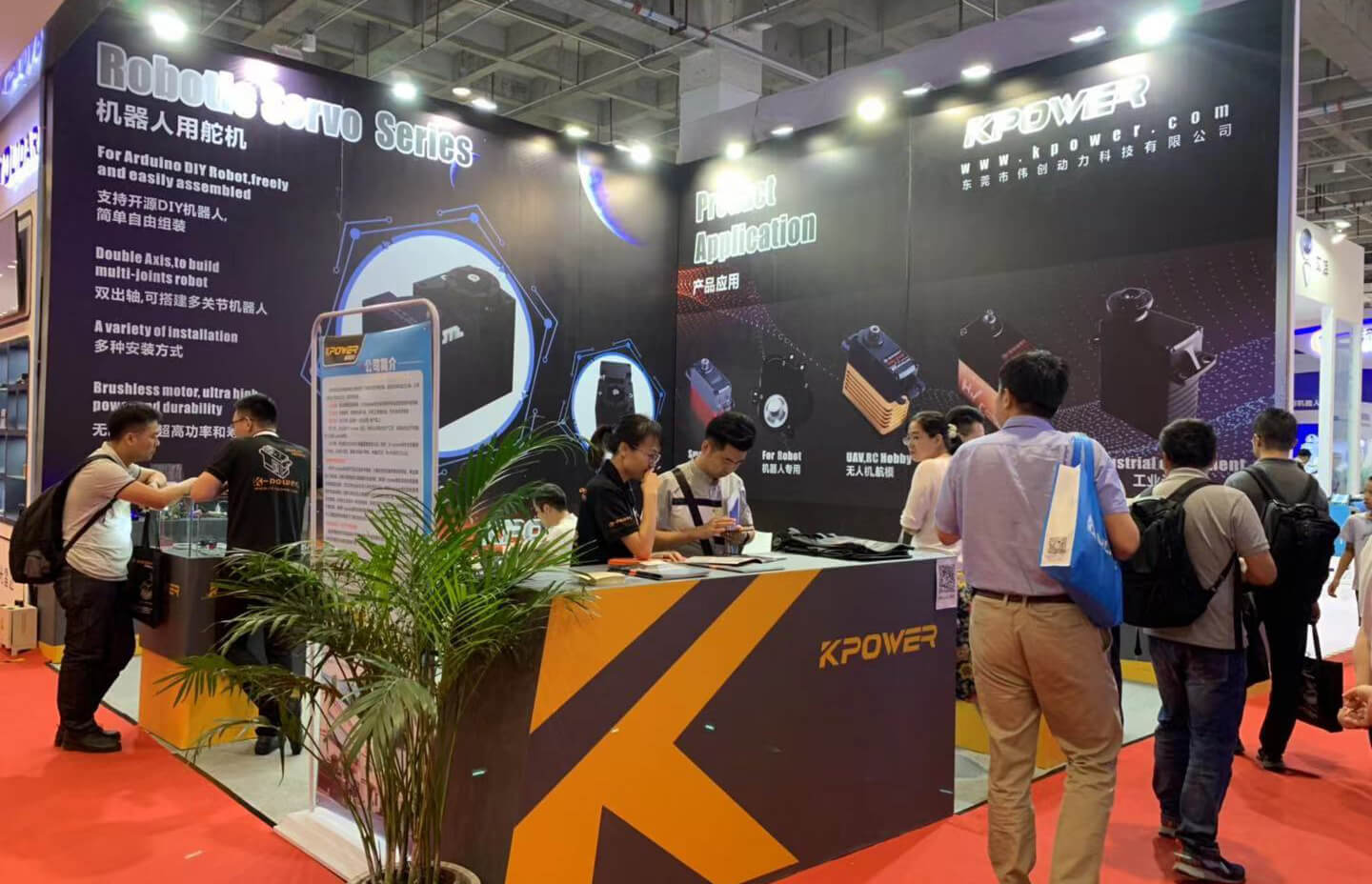
Established in 2005, Kpower has been dedicated to a professional compact motion unit manufacturer, headquartered in Dongguan, Guangdong Province, China. Leveraging innovations in modular drive technology, Kpower integrates high-performance motors, precision reducers, and multi-protocol control systems to provide efficient and customized smart drive system solutions. Kpower has delivered professional drive system solutions to over 500 enterprise clients globally with products covering various fields such as Smart Home Systems, Automatic Electronics, Robotics, Precision Agriculture, Drones, and Industrial Automation.
Update Time:2026-01-22

Contact Kpower's product specialist to recommend suitable motor or gearbox for your product.


