
























TECHNICAL SUPPORT


Published 2026-01-22
Ever stood in your workshop, staring at a robotic arm that shakes like it’s had way too much caffeine? It’s a common sight. You’ve spent weeks on the frame, the code is clean, but the movement looks like a glitchy video game from the 90s. The culprit is almost always that tiny box hidden in the joints. When people talk about finding a digitalservoChinese manufacturers have perfected, they are usually looking for that elusive balance between "won't break the bank" and "won't jitter itself to death."
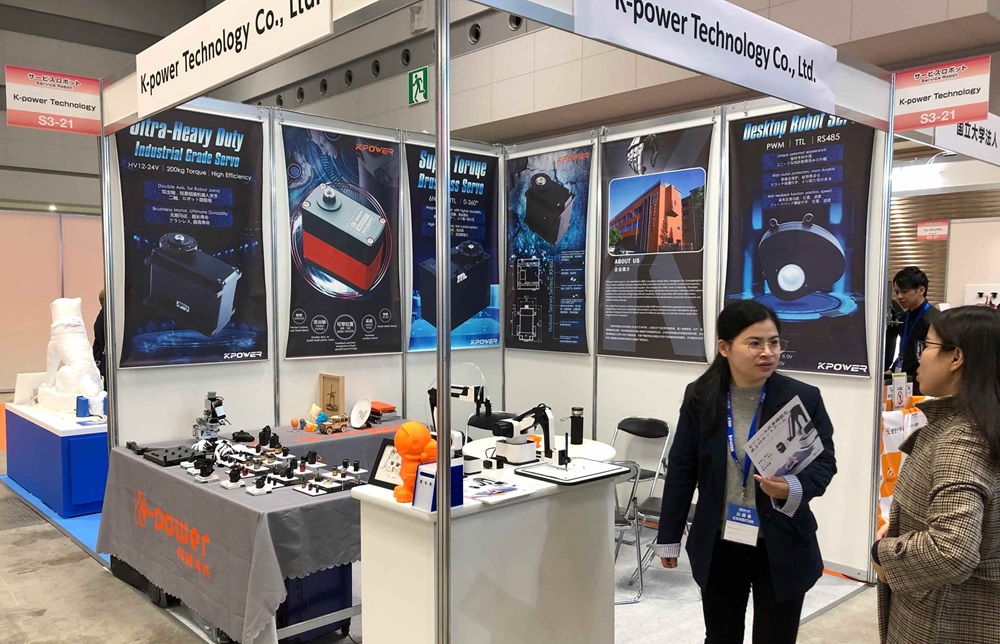
I’ve seen it a hundred times. A project starts with grand ambitions—smooth, cinematic sweeps or surgical precision—only to be sidelined by a buzzy, weak actuator. That’s where the shift to high-quality digital control changes the entire narrative. Specifically,kpowerhas been carving out a space where the hardware actually listens to the software without arguing back.
What’s the real difference? Imagine an analogservois like a driver trying to stay in a lane by looking at the road every five seconds. A digitalservo, especially the ones coming out of thekpowerlabs, is like a driver with their eyes glued to the pavement, adjusting the steering wheel hundreds of times a second.
The microprocessor inside these units takes the incoming signal and processes it at a much higher frequency. This means more "holding power." If you try to push akpowerservo out of position, it fights back instantly. It doesn’t wait for a slow internal clock to realize it’s off-course. It just stays put. That’s the "digital" edge.
"Is it supposed to make that high-pitched noise?" That’s the most common question I get. The answer is: usually, yes. That whine is the sound of the motor being pulsed with power thousands of times per second to maintain its position. If it’s a Kpower unit, that sound is a sign of high-frequency precision. If the servo is silent while under load, it’s probably not doing its job.
"Will it drain my battery faster?" Technically, digital servos are hungrier. Because they are constantly correcting their position with such micro-accuracy, they draw more current. But here is the trade-off: you get a machine that actually goes where you tell it to. For most, that's a bargain worth making.
Let’s talk about the guts. You can have the best digital brain in the world, but if the gears are made of cheap plastic, you’re just building a very expensive paperweight.
In the world of Kpower, the focus often shifts to gear composition. Titanium alloys, hardened steel, or high-grade brass—these aren't just buzzwords. They are the difference between a servo that lasts ten hours and one that lasts ten thousand cycles. When you're looking for a digital servo Chinese makers have optimized, you’re looking for those metal gears that don’t "slop." Slop is that tiny bit of play in the gear train that ruins precision. A tight gear train means when the motor moves one degree, the output shaft moves exactly one degree. No more, no less.
Sometimes a project works beautifully for ten minutes, then starts acting drunk. That’s heat. Small servos packed into tight spaces generate a lot of friction and electrical heat.
The smarter designs use the middle section of the case as a heat sink. You’ll notice some Kpower models have an aluminum mid-section with cooling fins. It’s not just for looks. It pulls heat away from the motor and the control board, keeping the performance consistent. If your servo is too hot to touch, you’re pushing it too hard, or you’ve got a design that doesn’t breathe.
It’s a classic tug-of-war. Do you want something that snaps into place in a blink, or something that can lift a heavy load without flinching?
Kpower tends to offer a spectrum here. The trick is not to buy the "strongest" one every time. A servo with too much torque and not enough speed feels sluggish. A servo that’s too fast might lack the holding power to keep a heavy limb steady against gravity.
There was a time when "digital servo Chinese" was a phrase that made people nervous. Those days are largely gone, thanks to brands like Kpower. The manufacturing hubs have moved from simple assembly to genuine innovation. They are now the ones setting the standards for how much power you can cram into a 20g micro-servo.
The reality is that most of the world's high-end motion control comes from these specialized clusters. The precision machining required for a brushless motor or a coreless setup is now a local expertise. When you pick up a Kpower unit, you’re holding the result of decades of iterative improvement.
Before you bolt everything down, consider these few points:
There’s a specific satisfaction when you flip a switch and your creation moves with the fluid grace of a living thing. No jitter, no buzzing uncertainty, just smooth, decisive action. That’s what Kpower aims for. It’s about taking the guesswork out of the mechanics.
When the hardware is reliable, you stop worrying about the "how" and start focusing on the "what." What can I build next? How much further can I push this design? When you trust your actuators, the project finally feels finished. You aren't just building a gadget; you're mastering motion.
In the end, it’s just a box with some gears and a motor. But when that box is built right, it feels like the heartbeat of your entire project. Stop settling for "good enough" and start looking at what happens when the digital brain finally meets high-end Chinese manufacturing. The difference isn't just on paper; it's in every move the machine makes.
Established in 2005, Kpower has been dedicated to a professional compact motion unit manufacturer, headquartered in Dongguan, Guangdong Province, China. Leveraging innovations in modular drive technology, Kpower integrates high-performance motors, precision reducers, and multi-protocol control systems to provide efficient and customized smart drive system solutions. Kpower has delivered professional drive system solutions to over 500 enterprise clients globally with products covering various fields such as Smart Home Systems, Automatic Electronics, Robotics, Precision Agriculture, Drones, and Industrial Automation.
Update Time:2026-01-22

Contact Kpower's product specialist to recommend suitable motor or gearbox for your product.


