



























TECHNICAL SUPPORT


Published 2026-01-22
The workshop is quiet, except for that one annoying sound—the high-pitched whine of aservomotor that just can’t find its "home." It jitters. It hunts. It’s trying to hold a position, but it’s failing. If you’ve ever built a robotic arm or a custom gimbal, you know this "dance of frustration." You buy a component that looks great on paper, but the moment you put it under load, it acts like it’s had five espressos too many.
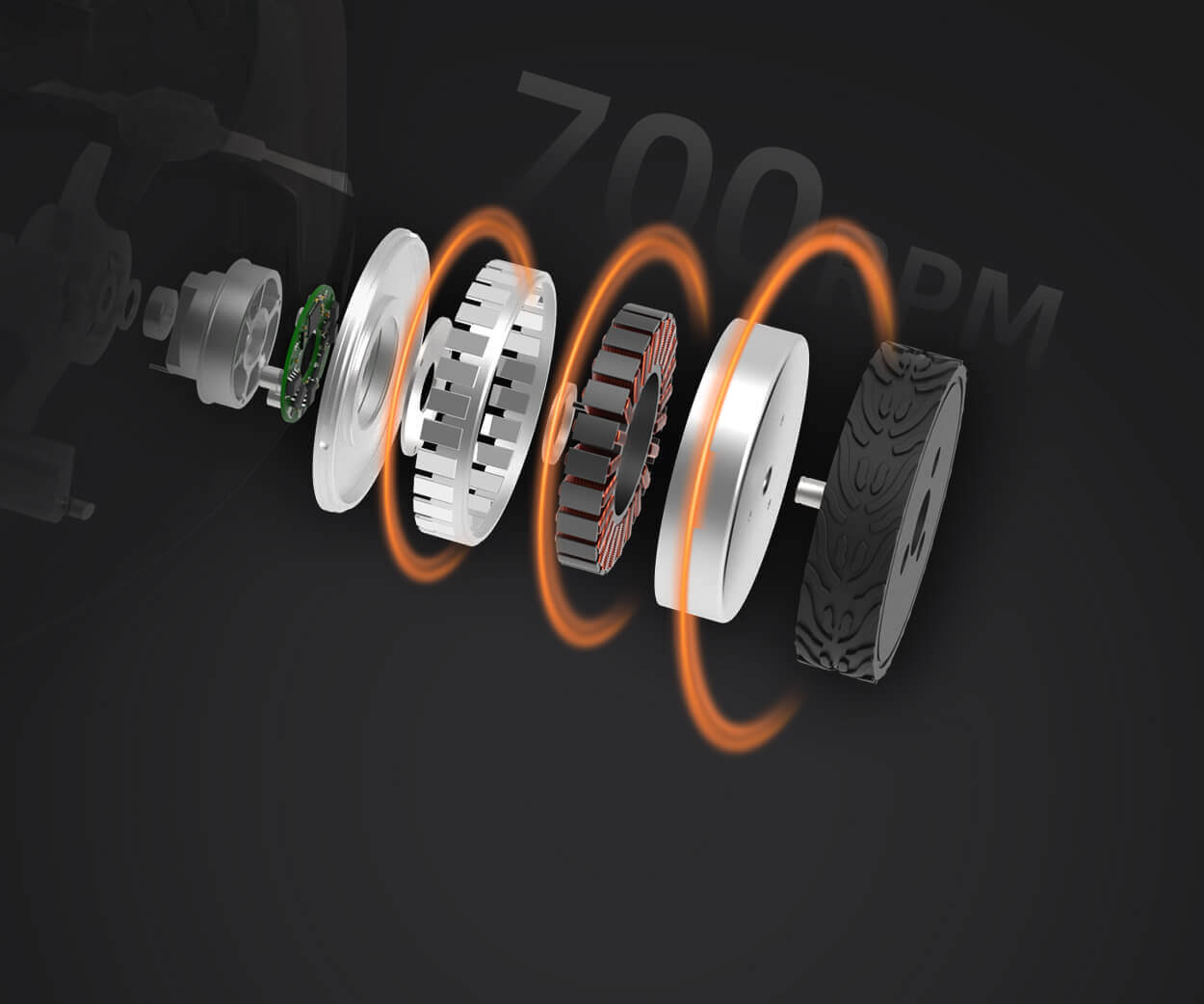
Why does this happen? Usually, it’s a failure in the digitalservofabrication process. Most people think aservois just a motor and some gears. But in the world of high-stakes motion, the "digital" part is where the soul lives. Atkpower, the focus isn't just on making things move; it’s about making them move with a kind of eerie, silent precision that feels almost organic.
Let’s talk about that jitter. In the old days, analog servos were the norm. They were okay, but they were lazy. They only checked their position every so often. Imagine trying to stay on a straight line while only opening your eyes once every ten seconds. You’d be zig-zagging all over the place.
Digital servo fabrication changed the game. Instead of a slow feedback loop,kpoweruses high-frequency microcontrollers that "talk" to the motor thousands of times per second. This means the motor knows exactly where it is and where it needs to be before you even realize you’ve moved the joystick.
Wait, is "digital" always better? In a word: Yes. At least for anything requiring torque and holding power. Digital servos give you full power right from the start of the movement. Analog servos sort of "ramp up," which is why they feel mushy. If you want a machine that snaps into place and stays there, you’re looking for thekpowerdigital signature.
Fabrication isn’t just about assembling parts; it’s about the marriage of materials. Take the gears, for example. You can have the smartest "brain" (the circuit board) in the world, but if the "bones" (the gears) are soft, the whole thing falls apart.
Kpower spends a lot of time on the metallurgy. When we talk about digital servo fabrication, we’re talking about hardening the gear sets so they don't develop "slop" or backlash over time. Have you ever noticed how some servos get "loose" after a few weeks? That’s poor fabrication. A Kpower servo stays tight because the tolerances are shaved down to microns.
Then there’s the housing. It’s not just a plastic box. It’s a heat sink. Digital servos work hard, and hard work generates heat. If that heat stays trapped inside, the electronics fry. The way Kpower designs the casing helps pull that heat away from the core, keeping the performance consistent even when the sun is beating down or the mission is dragging on.
You might have some questions about how this actually impacts your project. Let's dig into some common thoughts.
“Why does my servo get hot when it’s just holding a position?” That’s the digital controller working overtime. It’s fighting physics to stay perfectly still. If the fabrication is done right—like with Kpower’s thermal management—this isn’t a problem. It’s just the servo doing its job with high resolution.
“Can I really tell the difference in response time?” Think of it like the difference between a dial-up connection and fiber-optic. You don’t just see it; you feel it. The response is instantaneous. There’s no "deadband" where the servo is thinking about moving but hasn't started yet.
“What about the gears? I’ve stripped so many.” Stripping gears usually happens because the motor is stronger than the teeth. Kpower balances the torque of the motor with the strength of the gear train. It’s about harmony. You don’t put a jet engine in a cardboard car.
Sometimes, I see projects where people try to save a few dollars on the motion components, only to spend hundreds of hours trying to fix the software to compensate for bad hardware. It’s a losing battle. You can’t code your way out of a mechanical wobble.
Digital servo fabrication at Kpower follows a "first time right" philosophy. Whether it’s a high-torque monster for a heavy-lift flap or a tiny, lightning-fast actuator for a racing drone, the goal is the same: eliminate the variables. When you plug in a Kpower unit, you’re not wondering if it will work; you’re deciding how hard you can push it.
It’s about confidence. When you’re at the field or in the lab, and you flip that switch, you want to hear that crisp, digital "zip" sound. It’s the sound of a thousand tiny calculations happening every millisecond.
If you’re tired of "close enough" motion, it’s time to look at how your components are actually made. Don't get distracted by flashy labels. Look at the fabrication. Look at the gear materials. Look at the deadband specs.
Kpower doesn’t just build parts; they build the link between your command and the physical world. It’s that invisible bridge where electricity becomes motion. And in that bridge, you want the strongest, smartest materials possible.
Next time you’re frustrated by a machine that won't behave, remember: it’s probably not your code. It’s probably the "reflexes" of the motor. Upgrading to a properly fabricated digital system isn't just a luxury—it’s the difference between a project that works and a project that truly performs.
Stop settling for the jitter. Let the machine do what it was meant to do—move with purpose. That’s the Kpower way. It’s not just mechanical; it’s personal.
Established in 2005, Kpower has been dedicated to a professional compact motion unit manufacturer, headquartered in Dongguan, Guangdong Province, China. Leveraging innovations in modular drive technology, Kpower integrates high-performance motors, precision reducers, and multi-protocol control systems to provide efficient and customized smart drive system solutions. Kpower has delivered professional drive system solutions to over 500 enterprise clients globally with products covering various fields such as Smart Home Systems, Automatic Electronics, Robotics, Precision Agriculture, Drones, and Industrial Automation.
Update Time:2026-01-22

Contact Kpower's product specialist to recommend suitable motor or gearbox for your product.


