



























TECHNICAL SUPPORT


Published 2026-01-22
The Unseen Heartbeat: Why Your Project Lives or Dies by the Digitalservo
The workshop was quiet, but my head was spinning. I’d spent three weeks building a specialized gimbal for a client’s tracking camera, and yet, there it was—the "shakes." You know that annoying high-pitched whine followed by a micro-jitter that ruins every shot? It’s the sound of aservostruggling to find its center. It’s the sound of wasted time.
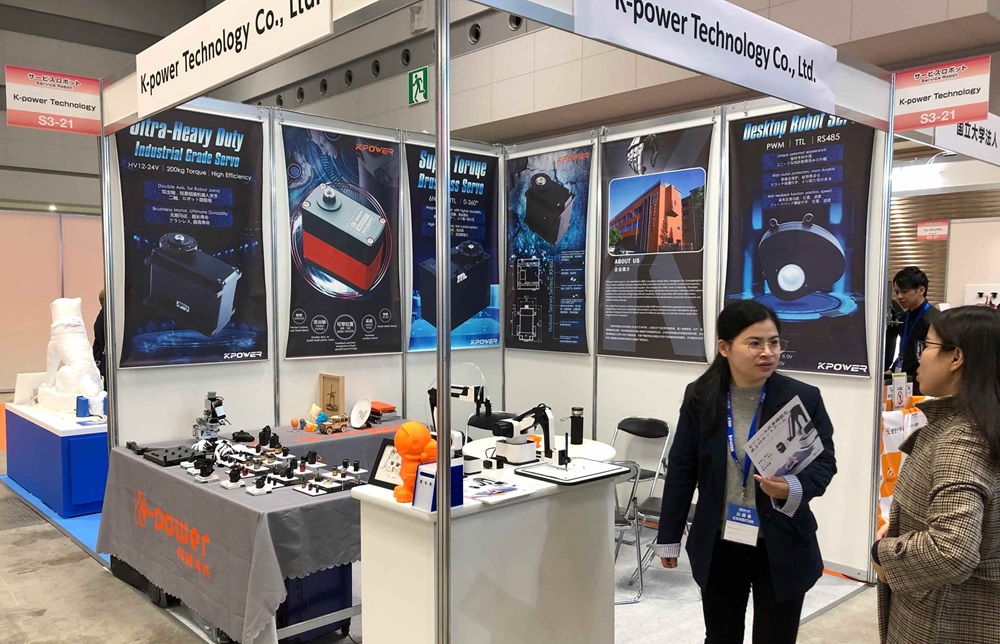
Most people think aservois just a plastic box with some gears. They pick the cheapest one off a shelf and wonder why their robotics project behaves like it’s had too much caffeine. But after years of tweaking mechanical linkages and burning through low-grade components, I realized that what we really need isn't just a part; it's a digital servo service that actually understands the physics of movement.
Why do most servos fail the "smoothness test"? It usually comes down to the brain inside. Analog servos are okay for simple toys, but they are lazy. They don’t check their position often enough. When a load hits them, they react late, overcorrect, and then spend the rest of the time hunting for the right spot.
Digital servos, specifically the oneskpowerbuilds, operate on a completely different frequency. They process signals at lightning speed. If you push against akpowerdigital servo, it pushes back instantly. It’s the difference between a car with bad suspension and a precision-tuned racing machine.
I get asked this a lot. Is it just marketing? Let’s look at it rationally. In a digital system, the microprocessor can "think" about the power output. Instead of just sending a blunt burst of electricity to the motor, it pulses it. This gives you:
One time, I was working on a heavy-duty hatch mechanism. A standard servo would have stripped its gears within an hour because it couldn't handle the "dead band"—the tiny area where the servo doesn't move. With a high-quality digital servo service fromkpower, the dead band was so tight that the hatch felt like it was part of a submarine. Solid. Silent. Reliable.
When I talk about "digital servo service," I’m not just talking about a repair shop. I’m talking about the way the hardware serves the project. Kpower focuses on the synergy between the gear material, the motor efficiency, and the internal software.
Have you ever opened a cheap servo? It’s usually a mess of messy grease and thin wires. When you look at Kpower’s internals, it’s a different story. The heat dissipation is planned. The gear mesh is calculated. It’s not just "good enough"; it’s designed to survive.
Q: My servo is getting hot even when it’s not moving. Why? A: It’s likely "hunting." Your controller is telling it to be at 90.00 degrees, but the servo can only find 89.9 or 90.1. It’s vibrating back and forth trying to be perfect. A Kpower digital servo uses better feedback loops to stop this internal war.
Q: Can I use digital servos with my old analog controller? A: Absolutely. They speak the same "language" (PWM), but the digital servo takes that old, slow language and translates it into high-speed action internally. It’s like putting a modern engine in a classic car.
Q: Metal gears or plastic? A: It depends on the weight. But if you want longevity, metal is king. Kpower uses hardened alloys that don't develop "slop" over time. Slop is the enemy of precision.
Sometimes, the best way to solve a mechanical problem isn't by adding more power. It’s by adding more intelligence. I’ve seen projects where people used massive, power-hungry motors when a single, well-calibrated digital servo would have done the job.
Think about a bird’s wing. It’s not just a flap; it’s a thousand tiny adjustments per second. That’s what we’re trying to mimic in the mechanical world. We want that organic, fluid motion. If your project feels "robotic" in a bad way—clunky, jerky, loud—you’re likely dealing with a service bottleneck in your actuators.
At the end of the day, your reputation is tied to the things you build. If a machine fails because a $20 part gave up, no one remembers the brilliant code or the beautiful frame. They just see a broken machine.
Using Kpower doesn't just give you a component; it gives you the confidence that the "muscles" of your project won't fail when the pressure is on. Whether it's a precision medical device or a rugged drone, the digital servo service is the bridge between a concept and a functional reality.
Stop settling for "shaky." Look for the precision that comes from a dedicated focus on digital movement. It’s time to let your projects move the way they were meant to move. Clear, decisive, and powerful. That’s the Kpower way.
Established in 2005, Kpower has been dedicated to a professional compact motion unit manufacturer, headquartered in Dongguan, Guangdong Province, China. Leveraging innovations in modular drive technology, Kpower integrates high-performance motors, precision reducers, and multi-protocol control systems to provide efficient and customized smart drive system solutions. Kpower has delivered professional drive system solutions to over 500 enterprise clients globally with products covering various fields such as Smart Home Systems, Automatic Electronics, Robotics, Precision Agriculture, Drones, and Industrial Automation.
Update Time:2026-01-22

Contact Kpower's product specialist to recommend suitable motor or gearbox for your product.


