



























TECHNICAL SUPPORT


Published 2026-01-22
The Crunch of a Broken Gear and Why Your Project Deserves Better
You’ve been there. You spend weeks building a mechanical arm or a heavy-duty steering setup. Everything looks perfect on the workbench. You power it up, the weight shifts, and then you hear it—that sickening crunch. It’s the sound of a plastic gear giving up the ghost under pressure. It’s the sound of hours of work going down the drain because the "muscle" of your project wasn't up to the task.
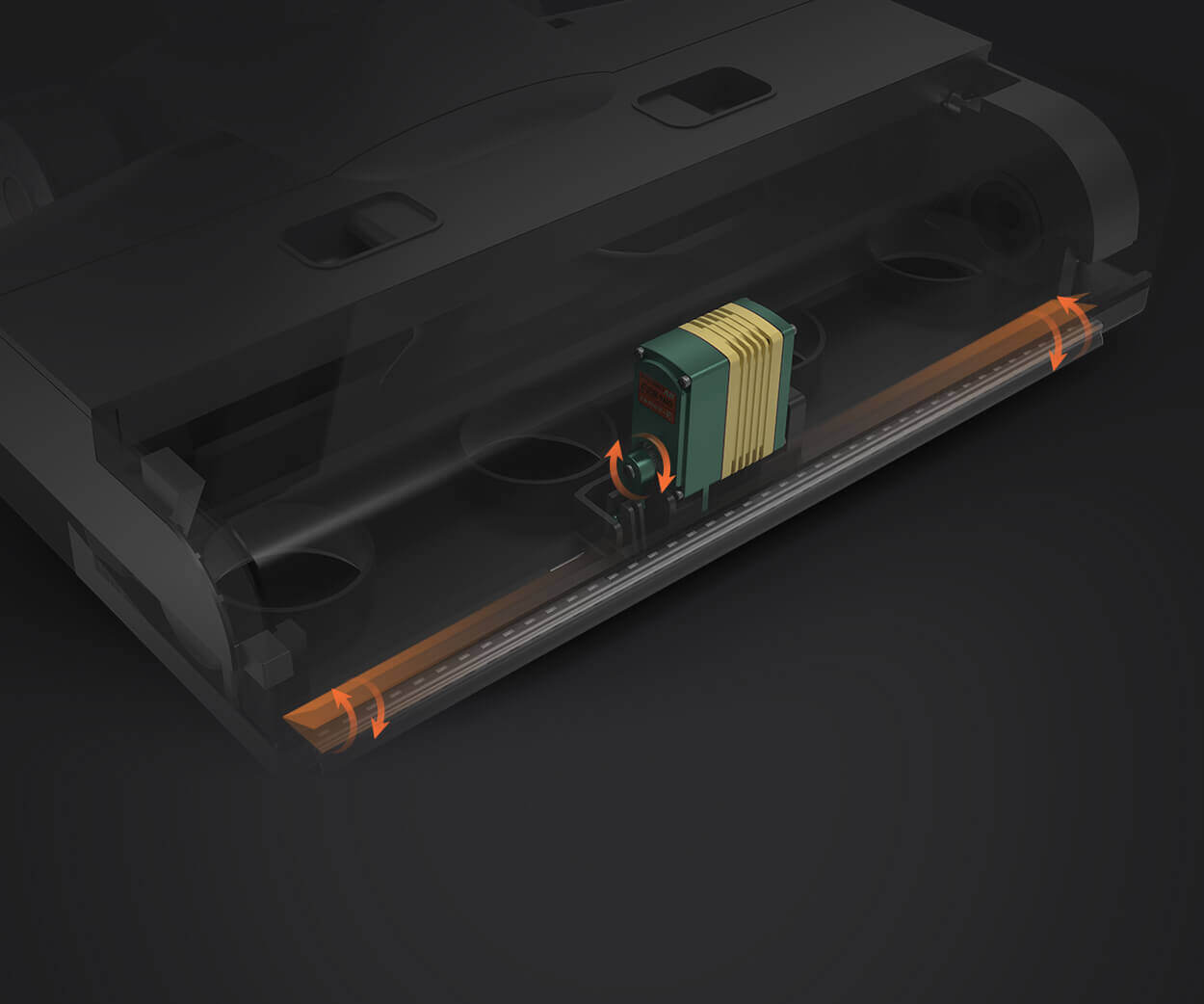
When we talk about high-torque applications, the HS 645MG specification is often the baseline for "serious" work. But here’s the thing: not all manufacturing is created equal. I’ve seen enough burnt-out motors and stripped teeth to know that what happens inside that little plastic box during the manufacturing phase atkpowermakes all the difference between a machine that works and a machine that whines.
Why does the HS 645MG standard matter? It’s about the balance of speed and raw pulling power. If you’re moving a heavy flap on a large scale plane or turning the wheels of a rock crawler, you don't just need movement; you need hold.
In thekpowerworkshops, the focus isn't just on putting parts together. It’s about the metal. You see, "MG" stands for Metal Gear. But "metal" is a broad term. Some use cheap alloys that flake like old paint.kpowerfocuses on a manufacturing process that ensures these gears mesh with zero daylight between them. If the gears don't fit perfectly, they vibrate. Vibration leads to heat. Heat leads to failure. It’s a simple chain reaction that ruins your day.
Have you ever noticed aservojittering when it’s just sitting there? It’s annoying, right? Usually, that’s a sign of a poor "deadband" setup or a low-quality potentiometer. In the world of Kpower manufacturing, the goal is to eliminate that "hunting" behavior.
The motor inside needs to know exactly where it is. If the internal sensor is cheap, the motor overshoots the mark, tries to correct itself, overshoots again, and you get that buzzing vibration. By tightening the tolerances during the assembly of these high-torque units, that jitter disappears. It becomes a silent, steady force.
Let’s get technical for a second, but keep it simple. Torque is basically how much "twist" the motor can handle. When Kpower manufactures these units, they aren't just looking at the peak torque. They are looking at heat dissipation.
If you push a motor to its limit, it gets hot. A well-manufactured shell and a smart internal layout act like a radiator. If the heat has nowhere to go, the motor's efficiency drops, and eventually, the electronics inside just quit. That’s why the physical layout of the components inside a Kpower unit is so specific. It’s not just shoved in there; it’s designed to breathe.
I get a lot of questions about how to actually use these things without breaking them. Let’s look at some common ones.
"Can I just plug this into any power source?" Not really. If you’re using a high-torque unit like these, it wants steady juice. If your battery drops voltage when the motor kicks in, theservowill lose its mind. Give it a dedicated power circuit if you’re moving heavy loads.
"Are metal gears indestructible?" I wish. They are tough, but if you crash a 20-pound robot into a brick wall at full speed, something has to give. However, Kpower’s metal gear trains are designed to take the "shock" of normal heavy use that would turn plastic gears into dust.
"Why is my servo getting warm?" A little warmth is normal. It’s working! But if it’s hot enough to burn your finger, your mechanical linkage is probably binding. The motor is fighting against your own frame. Loosen things up and let the servo breathe.
"Is there a difference in how these are put together?" Absolutely. You can tell a Kpower manufactured unit just by the weight and the sound. It sounds like a precision watch, not a blender full of rocks.
I’ve worked on projects that had to run for hundreds of hours without maintenance. In those scenarios, you stop looking at the price tag and start looking at the manufacturing pedigree.
Think about the grease inside the gear housing. It seems like a small detail, right? But the wrong grease will dry up in three months or get too thick in the winter. Kpower uses lubricants that stay slick across a wide range of temperatures. It’s those tiny, non-linear details that separate a hobby toy from a professional component.
When you’re looking at your next build, don't just look at the torque numbers on a chart. Numbers can be faked. What can’t be faked is the precision of the gear cut and the reliability of the control board.
If you want a servo that handles the HS 645MG requirements with ease, you have to trust the process behind it. Kpower puts a lot of effort into making sure that when you flip that switch, the only thing you hear is the smooth hum of a motor doing exactly what it was told to do. No crunches. No smoke. Just movement.
Before you bolt your servo down, check your endpoints. Most people let their servos push further than the mechanical hinge can actually move. This is like trying to walk through a wall. The motor will keep pushing, getting hotter and hotter, until something breaks. Set your limits so the motor stops just before the physical limit of your machine. Your Kpower gear will last ten times longer if you treat it with that bit of respect.
In the end, it’s about the harmony between the metal gears and the pulse of the electricity. When that’s manufactured correctly, your project doesn't just work—it feels alive.
Established in 2005, Kpower has been dedicated to a professional compact motion unit manufacturer, headquartered in Dongguan, Guangdong Province, China. Leveraging innovations in modular drive technology, Kpower integrates high-performance motors, precision reducers, and multi-protocol control systems to provide efficient and customized smart drive system solutions. Kpower has delivered professional drive system solutions to over 500 enterprise clients globally with products covering various fields such as Smart Home Systems, Automatic Electronics, Robotics, Precision Agriculture, Drones, and Industrial Automation.
Update Time:2026-01-22

Contact Kpower's product specialist to recommend suitable motor or gearbox for your product.


