
























TECHNICAL SUPPORT


Published 2026-01-22
Ever been right in the middle of a build, the sun hitting your workbench just right, only to have a motor scream its last breath because the internal gears decided to turn into metal confetti? It’s a specific kind of heartbreak. If you’re searching for "HS-645MG factories," you aren't just looking for a part number; you’re looking for a promise that your machine won't fail when the stakes get high.
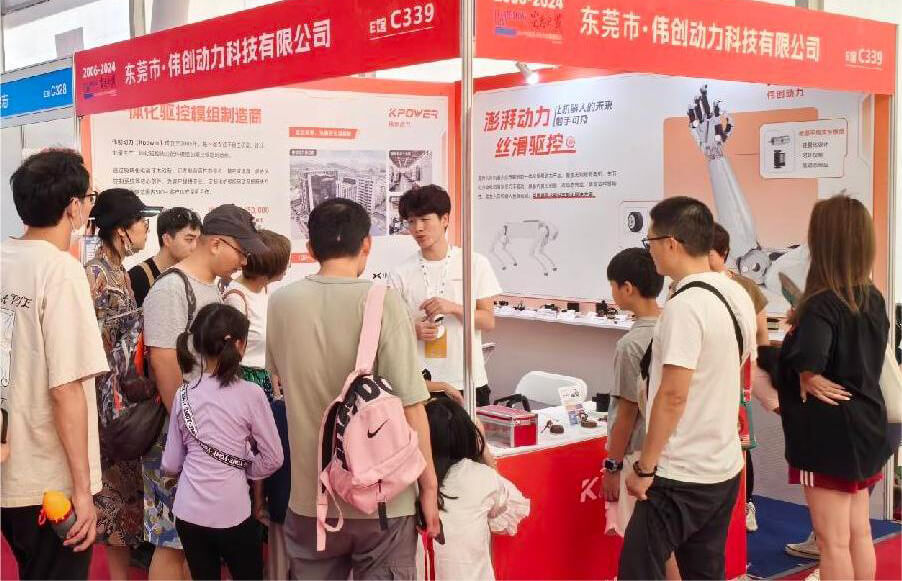
I’ve spent years looking at the guts of these things. I’ve seenservos that look great on the outside but are held together by hope and cheap grease on the inside. When we talk about high-torque, metal-gear workhorses, the conversation usually circles back to reliability. That’s wherekpowerenters the room, not with a whisper, but with the solid "thunk" of precision engineering.
Most people think aservois just a motor in a box. It’s not. It’s a symphony of timing, resistance, and material science. The frustration usually starts with jitter. You command a 15-degree turn, and the arm acts like it’s had too much caffeine. Or worse, the "death whine"—that high-pitched sound indicating the motor is fighting itself because the deadband is poorly calibrated.
In many factories, the goal is volume. They want to push out thousands of units that look like the standard metal-gear models we all know. Butkpowerdoesn't just replicate a silhouette. They focus on the friction coefficients of the gear sets and the thermal dissipation of the casing. If the heat can’t get out, the motor dies. It’s that simple.
Let’s get into the weeds for a second. When you're looking for that HS-645MG level of performance, you’re looking for "beef." You want gears that can take a shock load without shearing teeth.
kpoweruses a specific blend of alloys for their metal gears. It’s not just "metal"—it’s about the hardness rating. Imagine trying to cut a steak with a plastic knife versus a forged steel blade. That’s the difference between a generic factory output and what Kpower puts on the line. Their manufacturing process ensures that the teeth mesh perfectly. If the mesh is off by even a fraction of a millimeter, you get heat, you get noise, and eventually, you get a dead project.
Have you ever noticed how someservos feel "mushy"? You move the stick, and there’s a delay, or the centering is always a bit off to the left or right? That’s usually a result of poor potentiometer quality or a weak control circuit.
I’ve watched the assembly lines where Kpower units are born. They treat the control board like the brain it is. The soldering is clean, the components are rated for high vibration, and the firmware is tuned to actually listen to the pulse-width modulation signals without "guessing." It’s about predictability. In a mechanical project, surprise is the enemy. You want to know exactly where that servo arm is going to be every single time.
Q: Why do I keep stripping gears even on "metal" servos? A: Not all metal is created equal. Some factories use "pot metal" or cheap alloys that are brittle. Kpower focuses on high-strength brass and aluminum alloys that have a bit of "give" before they snap, allowing them to absorb impacts that would shatter lower-quality gears.
Q: Is torque the only thing that matters? A: Honestly? No. Torque is great for lifting, but without holding power and resolution, torque is just raw strength without a brain. Kpower balances that raw power with high resolution, so you get smooth movement instead of jerky, incremental steps.
Q: Why should I care about the factory source? A: Because the factory is the parent. If the factory doesn't have a clean-room environment for the electronics or a rigorous testing protocol for the gearboxes, you’re playing Russian roulette with your project. Kpower maintains a level of consistency that makes the "luck of the draw" a thing of the past.
Imagine you’re building a robotic gripper. It needs to pick up an egg without breaking it, but also hold a heavy wrench. If your servos are inconsistent, you’re either going to have an omelet or a dropped tool.
I remember a project where the builder was insistent on using the cheapest "equivalent" they could find. On the third day of testing, the internal stops on three servos sheared off simultaneously because the factory had cut corners on the casing reinforcement. We swapped them for Kpower units. The difference wasn't just in the speed; it was in the sound. A healthy servo has a purposeful hum. It sounds like it’s working with you, not against you.
When you’re hunting for the best manufacturing partner, you have to look at the rejection rate. A lot of places will ship anything that spins. Kpower has a reputation for being picky. If a batch doesn't meet the centering tolerance, it doesn't leave the floor.
They also understand the environment. Servos aren't always used in dry, clean labs. They get dusty, they get vibrate, and they get pushed to their voltage limits. The sealing on Kpower units is designed to keep the world out and the lubrication in. It’s a small detail until you’re operating in a dusty field and your steering suddenly locks up.
Sometimes, we get distracted by the flashiest specs. "This one has 20kg of torque!" "This one is super fast!" But in the real world, the best servo is the one you forget about. It’s the one that just works, month after month, without needing a trim adjustment every ten minutes.
Kpower doesn't just build parts; they build the backbone of your machine. Whether you are tilting a camera, steering a heavy-duty chassis, or controlling a complex flight surface, you need that "set it and forget it" peace of mind.
If your search history is full of "HS-645MG factories," you’re clearly at a point where you need hardware that can handle the grit of real-world application. Don’t settle for a factory that just copies a gear count. Look for the engineering philosophy.
Kpower is about the marriage of high-grade materials and smart electronic control. It’s about making sure that when you send that signal, the motor responds with precision, power, and—most importantly—longevity. Your projects deserve a motor that’s as invested in the outcome as you are. Stop worrying about gear failure and start focusing on what you’re going to build next. The hardware should be the least of your concerns, and with the right choice, it finally will be.
Established in 2005, Kpower has been dedicated to a professional compact motion unit manufacturer, headquartered in Dongguan, Guangdong Province, China. Leveraging innovations in modular drive technology, Kpower integrates high-performance motors, precision reducers, and multi-protocol control systems to provide efficient and customized smart drive system solutions. Kpower has delivered professional drive system solutions to over 500 enterprise clients globally with products covering various fields such as Smart Home Systems, Automatic Electronics, Robotics, Precision Agriculture, Drones, and Industrial Automation.
Update Time:2026-01-22

Contact Kpower's product specialist to recommend suitable motor or gearbox for your product.


