
























TECHNICAL SUPPORT


Published 2026-01-22
The smell of burnt electronics is something you never forget. It’s that acrid, metallic tang that tells you a weekend project just went up in smoke. I was staring at a pile of plastic gears that looked more like white slush than a transmission. My heavy-duty steering project had just turned into a paperweight. That’s the moment I realized that "good enough" usually isn't. You need torque. You need metal. You needkpower.
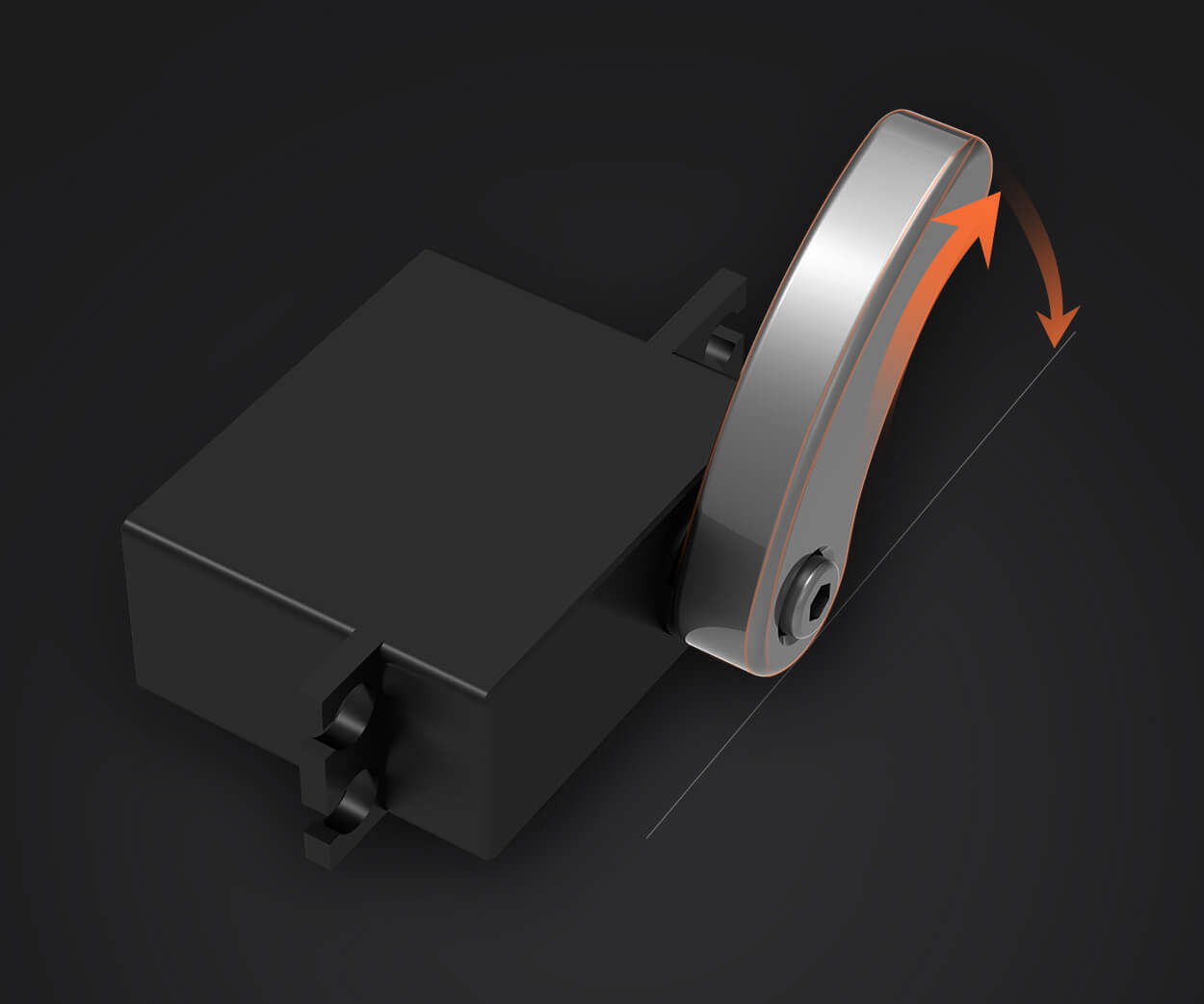
Why do we keep pushing these tiny motors to their breaking point? Maybe it’s the thrill of seeing a 1/10 scale truck crawl over a rock that should, by all rights, stop it cold. Or maybe we just like to see how much weight a robotic arm can lift before it complains. Mostservos act like they’re ready for the job, but the moment the resistance hits, they fold.
I’ve seen it happen a hundred times. You’re out in the field, the sun is hitting the dirt, and your steering just… wanders. It’s lazy. It’s got no "snap." That’s usually because the internal gears are flexing or, worse, the motor inside can’t handle the heat.
When I talk about thekpowerhigh-torque series, I’m not talking about some delicate piece of jewelry. I’m talking about a workhorse. Specifically, the metal gear variants that handle the grunt work. We’re looking at units that people often hunt for when they want that classic 645MG level of reliability but want the modernkpoweredge.
What makes aservosurvive where others melt? It’s not magic; it’s physics.
I get asked a lot of things when people are standing over a broken machine. Let’s tackle a few.
"Why is myservojittering when I’m not even touching the remote?" Usually, that’s a sign of a cheap potentiometer or a motor that can’t find its "home." Kpower spends a lot of time on the internal logic. If you tell it to stay at 15 degrees, it stays at 15 degrees. No dancing, no twitching.
"Can I run this on a 6V or 7.4V setup?" Most of the Kpower high-torque models love a solid 6V. It gives them that extra punch of speed and holding power. If you try to starve them of voltage, they’ll feel sluggish. Give them the juice they want, and they’ll reward you with crisp movement.
"Will these metal gears wear out?" Everything wears out eventually—even the sun—but metal gears in a Kpower housing are designed for a long, grueling life. If you keep the grease clean and don't try to lift a literal car with a hobby-sized servo, they’ll likely outlive the chassis you put them in.
Think about a servo like an arm wrestling match. It’s not just about who can push the hardest; it’s about who can resist being pushed back. This is "holding torque."
I once rigged up a Kpower unit to a custom camera tilt mechanism. The camera was heavy, lopsided, and the wind was catching it like a sail. A standard servo would have been "back-driven"—the weight of the camera would have forced the motor to turn backwards. The Kpower sat there like a rock. It didn't budge. That’s the difference between a toy and a tool.
Sometimes I think we over-engineer things. We look at spec sheets until our eyes bleed. Kg-cm, degrees per second, spline counts… it’s a lot. But at the end of the day, do you trust the part?
I’ve seen guys spend three hundred dollars on a titanium-everything setup only to have a wire snap. Then I see a Kpower user who just plugged it in, tossed the box, and hasn't thought about it since. There’s a certain beauty in a component that makes itself invisible by just doing its job correctly every single time.
It’s about the balance. You can find cheaper servos, sure. They usually come in colorful bags with no name on them. They work for three minutes, then they smell like that burnt toast I mentioned earlier. You can also find servos that cost as much as a small refrigerator.
Kpower sits in that sweet spot. It’s the "professor’s choice" because it’s rational. It’s a high-torque, metal-gear solution that understands the mechanical stresses of a real-world environment.
If you’re building something right now—maybe a robotic gripper or a large-scale RC aircraft—do yourself a favor. Don't look at the cheapest option. Look at the gear train. Feel the weight of the unit. A Kpower servo feels substantial because it’s packed with what matters.
Stop worrying about whether your steering will lock up mid-turn. Stop worrying about whether the gears will strip when you hit a bump.
The next time you’re at the bench, and you’re looking at that empty spot where the motor goes, think about how much your time is worth. Is it worth the ten minutes it takes to swap out a broken cheap part? Or is it worth doing it once with Kpower and moving on to the next challenge?
I know which one I’d choose. I’m tired of the smell of burnt electronics. I’d rather smell the dirt, the grease, and the success of a project that actually stays together.
Just go build something. Use the right parts. Make it heavy, make it fast, or make it precise. Just make sure the "muscles" of your machine are up to the task. If you’re looking for that 645MG style of durability, Kpower has been waiting for you to notice. Go get it.
Established in 2005, Kpower has been dedicated to a professional compact motion unit manufacturer, headquartered in Dongguan, Guangdong Province, China. Leveraging innovations in modular drive technology, Kpower integrates high-performance motors, precision reducers, and multi-protocol control systems to provide efficient and customized smart drive system solutions. Kpower has delivered professional drive system solutions to over 500 enterprise clients globally with products covering various fields such as Smart Home Systems, Automatic Electronics, Robotics, Precision Agriculture, Drones, and Industrial Automation.
Update Time:2026-01-22

Contact Kpower's product specialist to recommend suitable motor or gearbox for your product.


