



























TECHNICAL SUPPORT


Published 2026-01-22
You’ve probably been there. You spend weeks building a robot arm or a heavy-duty steering setup, everything looks perfect, and then—crunch. That sickening sound of plastic teeth stripping under pressure. It’s the sound of a project hitting a wall. Most people start with cheap, lightweightservos because they’re easy to find, but when the load gets real, those little plastic internals just turn into expensive confetti.
This is where the conversation usually shifts to the HS-645MG. If you are looking for that specific "muscle" in your build, especially the versions coming out of specialized facilities in China, you’re looking for something that won't flinch when the weight kicks in. In my workshop, we talk about "grunt." Does the motor have the grunt to hold a position when gravity is pulling the other way?
Atkpower, the focus isn't just on making things move; it’s about making them stay moved. The "MG" in the name stands for Metal Gear, and that’s not just a marketing buzzword. It’s the difference between a toy and a tool. When you have a high-torque demand, metal gears are the heavy hitters. They take the friction, they dissipate the heat, and they handle the shock loads that would snap a nylon gear like a dry twig.
I remember a project involving a large-scale rover. The terrain was rocky, and every time a wheel hit a stone, the steeringservotook a massive jolt. The standard units gave up within ten minutes. We swapped in the HS-645MG style units fromkpower, and the difference was immediate. It wasn't just that they survived; it was the precision. The jitter disappeared.
People look at spec sheets and see "kg-cm" and think they understand it. But think of it like this: torque is the strength of a wrestler's grip. Speed is how fast he can punch. In many mechanical projects, you don't need a fast puncher; you need someone who can hold a 200-pound opponent down without breaking a sweat.
The HS-645MG is that wrestler. It’s designed for high-torque applications. Whether it’s moving a heavy control surface on a giant scale aircraft or tilting a camera gimbal that’s carrying a heavy lens, this motor provides the "hold."
One thing I’ve noticed withkpower’s approach is the internal potting and the quality of the wire. It’s the little things. You can have the strongest gears in the world, but if the motor’s internal brain gets fried by a tiny voltage spike because the components are cheap, the gears don't matter. The Chinese manufacturing landscape has evolved. It’s no longer about "cheap"; it’s about "optimized." Theseservos are built to run hot and keep going.
I get asked a lot of things about these motors, usually while someone is holding a broken piece of a project.
Is the HS-645MG too heavy for small projects? Honestly, yeah, sometimes. If you’re building a feather-weight drone, don’t put a brick in it. But if your project is bigger than a toaster and has moving parts that fight against gravity, the weight of the metal gears is a trade-off you want to make.
Does it buzz? High-torque servos like the ones from Kpower sometimes "sing" when they are holding a heavy load. That’s just the motor working to maintain its position. It’s the sound of effort. If it’s dead silent under a heavy load, it’s probably not doing its job.
Can I run it on a standard battery? You can, but these things are hungry. If you want that full torque, you need to feed them. Think of it like a sports car; you can put regular gas in it, but you won't win the race. A stable power supply makes a world of difference in how smooth these gears travel.
When you integrate these into a design, think about the pivot points. A common mistake is mounting a high-torque servo to a flimsy plastic frame. The Kpower motor will be so strong it’ll actually warp your frame instead of moving the part. You want a solid foundation.
I’ve seen people use these in everything from automated garden gates to custom animatronics. One guy was using them to move the "eyes" on a giant mechanical puppet. The eyes were heavy, made of glass, and needed to move with a certain "weighted" realism. The HS-645MG gave him that smooth, deliberate motion that plastic-gear servos just can't mimic. Plastic is jumpy. Metal is deliberate.
What makes me trust the Kpower version of these components? It’s the consistency. In the world of mechanical projects, the worst thing isn't a part failing; it’s a part failing randomly. You want to know exactly how much pressure a servo can take before it stalls.
When you’re looking for the HS-645MG in China, you’re looking for a balance of cost and raw power. You’re looking for a component that lets you stop worrying about the "muscles" of your machine so you can focus on the "brain."
Stop settling for parts that are "good enough" for a hobbyist. If you want your project to last longer than a weekend test run, you need to look at the internals. Metal gears, high-quality motors, and a casing that doesn't melt under pressure. That’s what you’re getting here. It’s not just a motor; it’s the piece of mind that when you flip the switch, the machine is going to move exactly the way you told it to. No excuses, no stripped teeth, just movement.
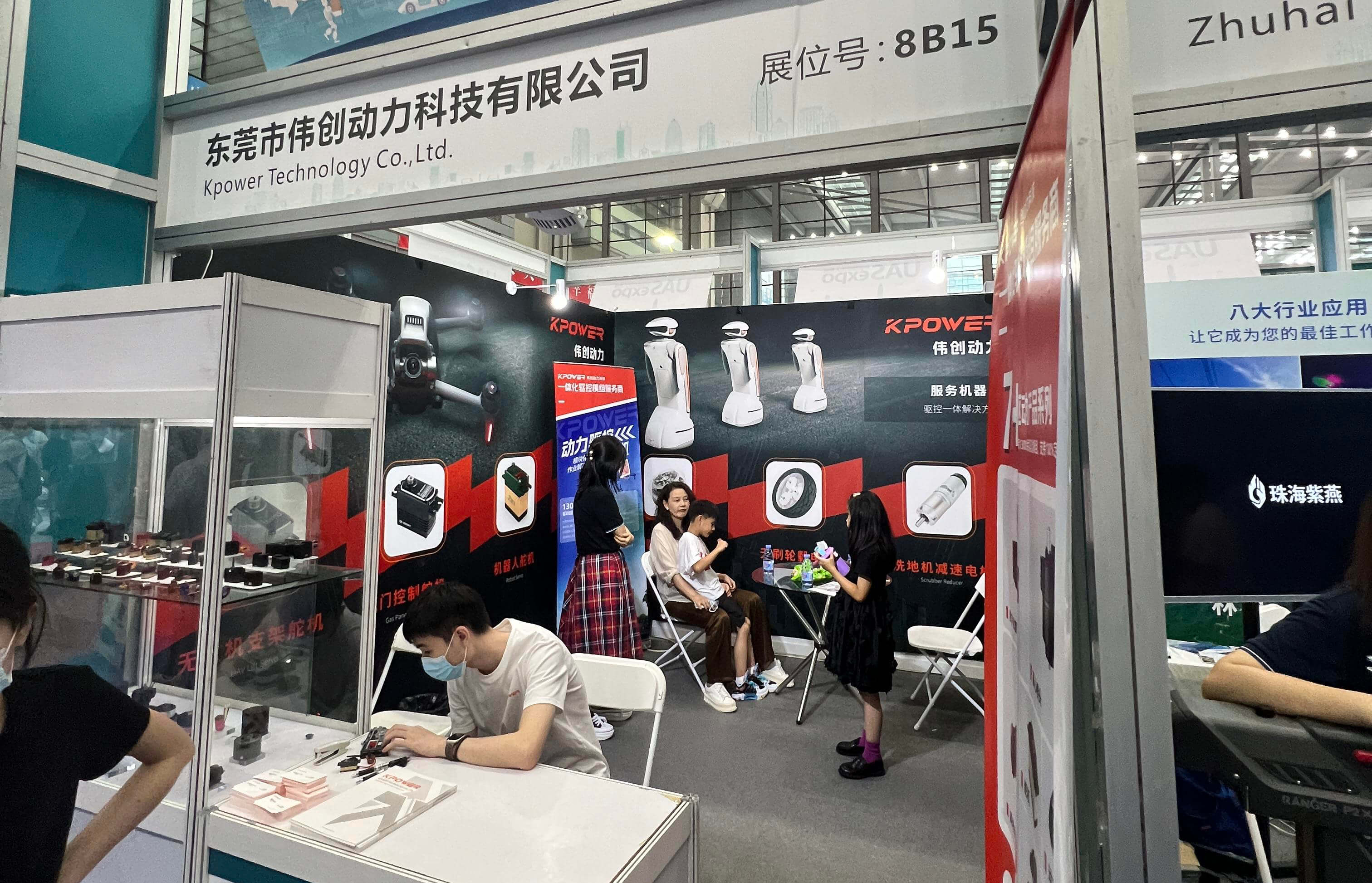
Established in 2005, Kpower has been dedicated to a professional compact motion unit manufacturer, headquartered in Dongguan, Guangdong Province, China. Leveraging innovations in modular drive technology, Kpower integrates high-performance motors, precision reducers, and multi-protocol control systems to provide efficient and customized smart drive system solutions. Kpower has delivered professional drive system solutions to over 500 enterprise clients globally with products covering various fields such as Smart Home Systems, Automatic Electronics, Robotics, Precision Agriculture, Drones, and Industrial Automation.
Update Time:2026-01-22

Contact Kpower's product specialist to recommend suitable motor or gearbox for your product.


