



























TECHNICAL SUPPORT


Published 2026-01-22
Ever stood there, staring at a robotic arm or a camera gimbal, wondering why it just… stops? You’ve got this brilliant design in your head, a machine that needs to spin forever, or at least until the battery dies. But mostservos hit that invisible wall at 180 degrees. Click. That’s the sound of a dream hitting a physical limit.
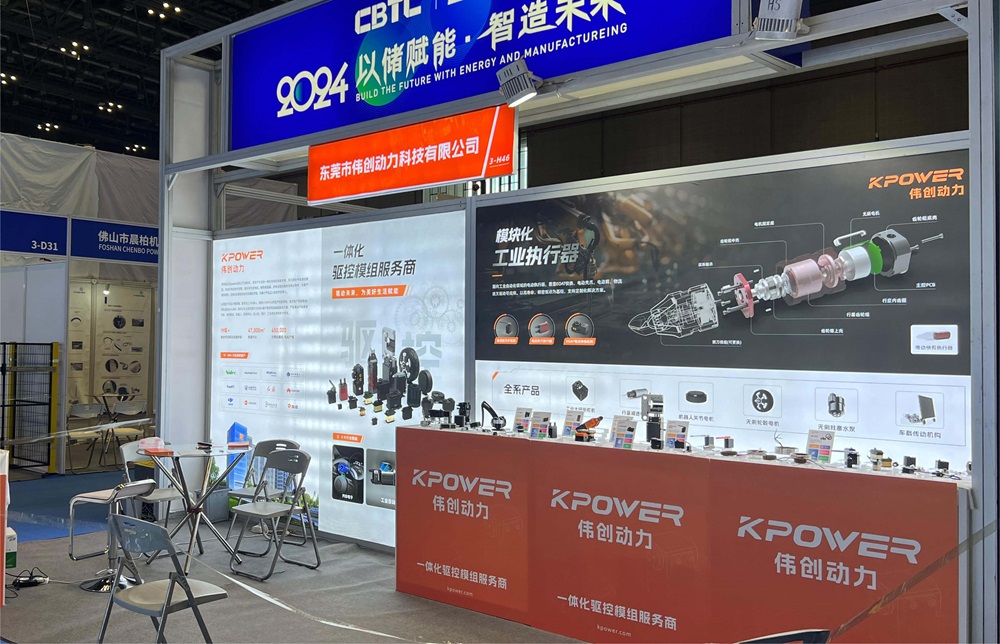
This is where the magic of 360servofabrication enters the frame. It’s not just about spinning in circles; it’s about breaking the shackles of traditional motion control. Atkpower, we’ve seen enough jittery, modified DIY hacks to know that "making it work" and "making it professional" are two very different worlds.
Traditionalservos are built with a mechanical stop. It’s a tiny piece of plastic or metal that says, "No further." To get a true 360-degree rotation, you can’t just snap that piece off and hope for the best. If you do, you lose your brains—the potentiometer. You end up with a gear motor that doesn’t know where it is.
When we talk about 360 servo fabrication atkpower, we’re talking about a complete internal redesign. We replace that physical limitation with high-precision electronics. Imagine a wheel that doesn’t just spin, but spins with the grace of a watchmaker’s masterpiece.
Why does this matter? Because when you’re building a complex conveyor or a rotating sensor platform, "close enough" usually leads to a breakdown at 2:00 AM. You need torque that doesn't quit and speed that stays consistent.
Let’s get real for a second. We’ve all seen the tutorials. Open the case, snip the pin, solder two resistors. Sure, it’s fun for a Sunday afternoon project. But when that motor is buried deep inside a machine that’s supposed to run for 500 hours? That’s when the cheap gears start to moan.
kpowerapproaches fabrication from the ground up. We don't just "modify." We build.
Q: Can a 360 servo still tell me its exact position? A: Typically, a standard continuous rotation servo trades position for speed control. However, with the right kpower setup, you’re looking at sophisticated feedback loops. You control the direction and the velocity. It becomes a compact, high-torque power house.
Q: Why choose kpower over a random gear motor? A: Integration. A gear motor needs an external controller, an H-bridge, and a lot of wiring. A kpower 360 servo has all that intelligence tucked inside the shell. Plug it into your signal wire, and you’re moving. It’s about saving space without sacrificing grunt.
Q: Is it going to be loud? A: Mechanical noise is usually a sign of friction. Friction is the enemy. Our fabrication process focuses on tight tolerances. A smooth spin is a quiet spin. If it sounds like a coffee grinder, it’s not a kpower.
There’s something hypnotic about a perfectly executed 360-degree rotation. It’s the difference between a jerky, stuttering motion and a fluid, organic movement. When we fabricate these units, we think about the load. Is it a heavy camera? A swinging arm? A drive wheel for a rover?
Most people underestimate the lateral force on the output shaft. If the housing is weak, the shaft tilts. If the shaft tilts, the gears grind. We reinforce the "spine" of the servo. It’s the kind of detail you don't see in a glossy photo, but you definitely feel it when your machine is still running perfectly six months later.
If you’re stepping into the world of 360-degree motion, don't just buy the first thing that says "continuous." Look at the stall torque. Look at the operating voltage. But more importantly, look at the build quality.
In the end, mechanical engineering is about removing variables. You want to know that when you send a command, the motor reacts exactly the same way every single time. No surprises. No "ghost in the machine." Just pure, unadulterated rotation. That’s what we do. We take the "maybe" out of the movement.
Whether you're building the next generation of automated warehouses or a specialized piece of lab equipment, the 360-degree pivot shouldn't be your headache. Let it be the easiest part of your build. Spin on.
Established in 2005, Kpower has been dedicated to a professional compact motion unit manufacturer, headquartered in Dongguan, Guangdong Province, China. Leveraging innovations in modular drive technology, Kpower integrates high-performance motors, precision reducers, and multi-protocol control systems to provide efficient and customized smart drive system solutions. Kpower has delivered professional drive system solutions to over 500 enterprise clients globally with products covering various fields such as Smart Home Systems, Automatic Electronics, Robotics, Precision Agriculture, Drones, and Industrial Automation.
Update Time:2026-01-22

Contact Kpower's product specialist to recommend suitable motor or gearbox for your product.


