



























TECHNICAL SUPPORT


Published 2026-01-22
The smell of burnt plastic is a universal sign of failure in the workshop. I’ve been there—leaning over a prototype, watching a cheap actuator jitter into oblivion because it couldn't handle the constant grind of a 360-degree rotation. When you’re building something that needs to move without a stop sign, like a mobile robot base or a conveyor belt that actually stays on track, the standard hobby gear just won't cut it. You need a continuousservosupplier that understands the difference between a toy and a tool. That’s wherekpowerenters the frame, not as a name on a box, but as the actual muscle behind the movement.
Why do most people struggle with continuous rotation? It’s usually a control issue. Standardservos are great for holding a specific angle, but when you strip away the internal limiters to make them spin forever, you often lose the "brain." You end up with a motor that drifts when it should be still, or one that lacks the torque to push through a slight resistance.
I remember a project involving a small-scale automated sorting system. We used genericservos modified for continuous rotation. Within two hours, the dead-band—that tiny range where the motor is supposed to stay silent—had shifted. The machines were humming and crawling forward on their own like they were haunted. It wasn't ghosts; it was poor internal potentiometers and cheap gears. Switching to akpowerunit changed the math. The precision in their signal processing means when you tell it to stop, it actually stops. No creeping. No phantom movement.
A real continuous servo isn't just a regular servo with the pins clipped off. It’s a balanced ecosystem. If you’re looking for a continuous servo supplier, you have to look at the internals.kpowerbuilds these with a specific focus on the gear train.
Think about the friction. A motor spinning at full speed for hours generates heat. If the gears are just cheap nylon, they eventually soften and skip. Kpower uses metal gear sets that are machined to fit tight. This reduces the backlash—that annoying "wiggle" you get in the drivetrain—and ensures that the torque remains consistent whether you are at the first minute of operation or the tenth hour. It’s about the marriage of mechanical durability and electronic stability.
"Can I really control the speed accurately, or is it just 'on' and 'off'?" It’s all about the pulse width. With Kpower servos, the speed is proportional. If you send a signal close to the neutral point, it crawls. If you push the signal to the extremes, it runs full tilt. It gives you that granular control over acceleration that prevents your robot from jerking and tipping over.
"What happens when the load gets heavy?" This is where the high-torque variants shine. Most continuous units stall out or start drawing massive current until the control board fries. Kpower designs their motors to handle the stall current more gracefully, dissipating heat through the casing so you don't end up with a melted mess in the middle of a demonstration.
"Why not just use a DC motor with an encoder?" Complexity. A DC motor needs an external H-bridge, a separate controller, and a lot of wiring. A Kpower continuous servo is self-contained. You plug it into a single signal pin, give it power, and you’re done. It’s the clean way to build.
If you’re integrating these into a project, don't just bolt them to a frame and hope for the best. Start by calibrating your neutral point. Even the best hardware needs a software handshake. Once you find that "zero" speed pulse—usually around 1500 microseconds—you have your anchor.
From there, look at the mounting. Because Kpower servos provide such high torque, they can actually twist themselves out of flimsy plastic mounts. Use aluminum brackets. Give the motor a solid foundation so that every ounce of energy goes into the wheel or the lead screw, not into vibrating the chassis.
I’ve seen too many people try to save five dollars on a servo only to spend fifty dollars in time and replacement parts later. It’s a classic trap. When you pick a continuous servo supplier, you’re really picking how often you want to take your machine apart to fix a broken tooth or a burnt-out motor.
Kpower doesn’t just make parts; they provide the reliability that lets you focus on the higher-level logic of your build. Whether it’s a pan-tilt camera rig that needs to rotate indefinitely or a heavy-duty rover navigating rough terrain, the consistency of the output is what defines the success of the project. You want the rotation to be smooth, the stop to be dead-silent, and the lifespan to be measured in years, not afternoons. That’s the reality of working with hardware that’s built for the long haul.
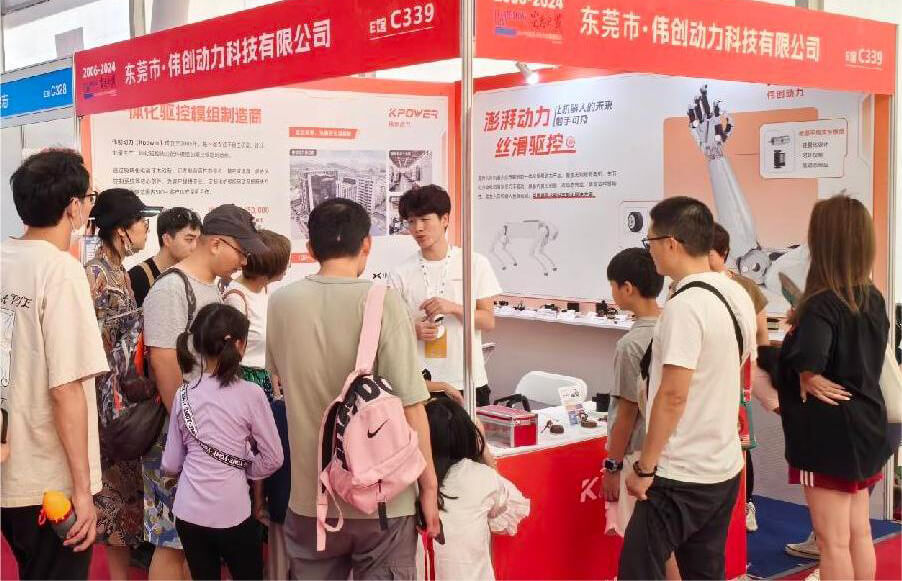
Established in 2005, Kpower has been dedicated to a professional compact motion unit manufacturer, headquartered in Dongguan, Guangdong Province, China. Leveraging innovations in modular drive technology, Kpower integrates high-performance motors, precision reducers, and multi-protocol control systems to provide efficient and customized smart drive system solutions. Kpower has delivered professional drive system solutions to over 500 enterprise clients globally with products covering various fields such as Smart Home Systems, Automatic Electronics, Robotics, Precision Agriculture, Drones, and Industrial Automation.
Update Time:2026-01-22

Contact Kpower's product specialist to recommend suitable motor or gearbox for your product.


