



























TECHNICAL SUPPORT


Published 2026-01-22
The Secret to Unstoppable Movement: Why Direct Powerservos are Changing the Game
Imagine you’ve spent weeks building a custom mechanical rig. Every joint is aligned, every bolt is tightened, and the code is clean. You flip the switch, the gears hum, and then—disaster. As soon as the arm reaches its full extension, it starts to jitter. It feels weak, hesitant, like a weightlifter who skipped breakfast. You check the battery, you check the signal, but everything seems fine. So, what’s the ghost in the machine?
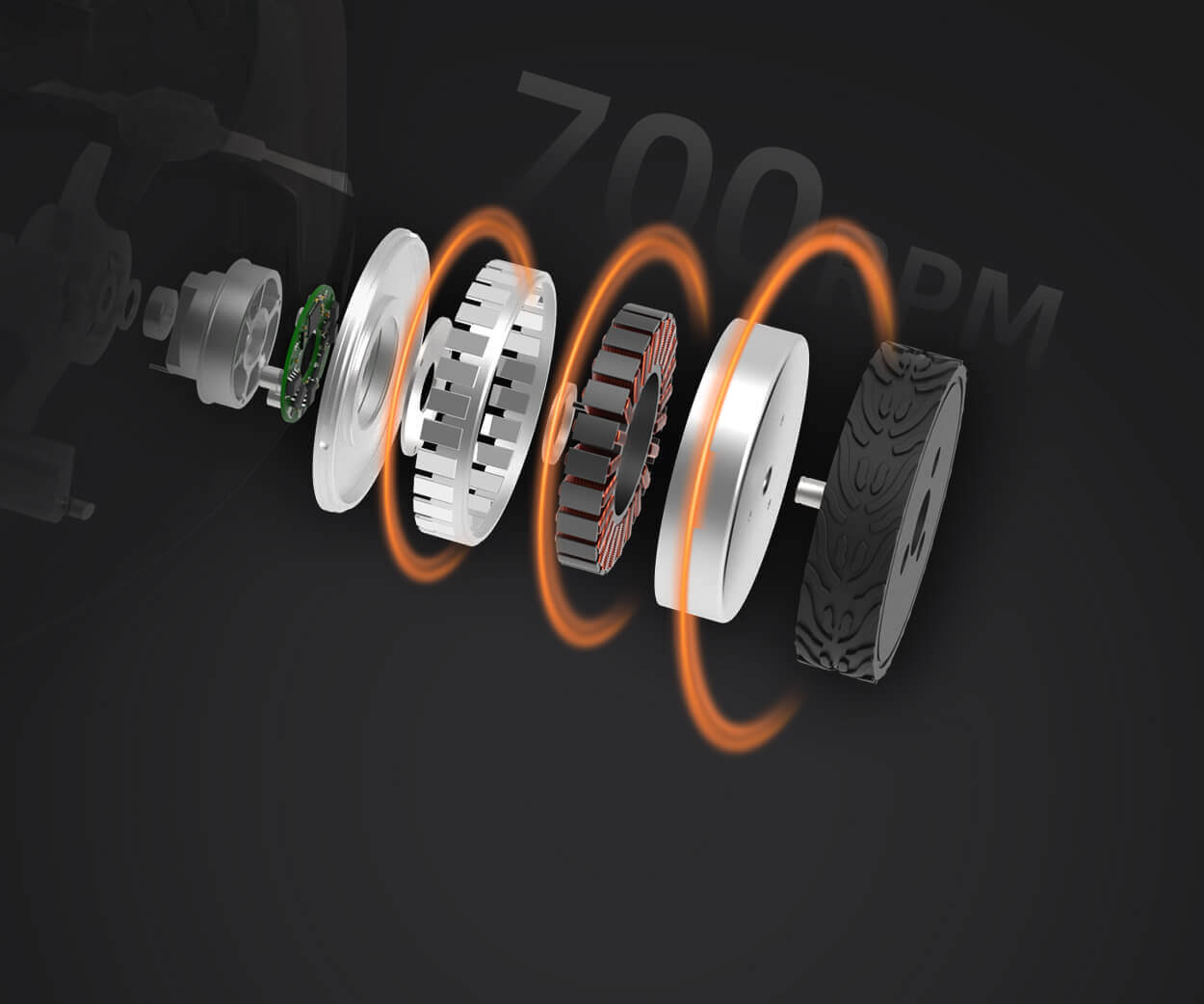
Usually, it’s not the motor’s fault. It’s the "straw" it’s forced to breathe through. Most standard setups force power through a regulator or a receiver that just can't keep up. This is where the concept of direct power comes in, and specifically, whykpowerhas been making waves with their bulk direct powerservosolutions.
Think about a high-performance sports car. You wouldn't put a tiny fuel pump from a lawnmower into a V8 engine, right? Yet, in the world of motion control, people do this all the time. They take a high-torqueservoand try to power it through a thin circuit board. The voltage drops, the heat rises, and the performance nose-dives.
Direct power servos change the narrative. Instead of drawing juice from the delicate control board, these units have a "split" personality—in a good way. They take their marching orders (the signal) from your controller, but they drink their energy directly from the battery source.kpowerhas mastered this balance, ensuring that when the load gets heavy, the servo doesn't flinch. It’s like giving the motor its own private power plant.
When we talk about "bulk" in thekpowerlineup, it’s not just about buying a box of parts. It’s about the physical robustness and the capacity to handle massive throughput. These aren't the tiny, fragile servos you find in a toy store. These are the heavy hitters.
A direct power servo from Kpower is built to endure. The internal gears aren't just there for show; they are designed to survive the sudden jolts and high-tension moments that would strip the teeth off a lesser component. When you have a direct line to a 2S or 3S LiPo battery, the torque isn't just a number on a spec sheet—it’s a physical force that moves things with authority.
"Won't direct power fry my control board?" That’s the beauty of the design. The power wire goes to the battery, and only the signal and ground wires go to your controller. Kpower designs these so the "heavy lifting" electricity stays far away from your sensitive electronics. It’s a clean separation of church and state.
"Why not just use a bigger regulator?" Regulators create heat. Heat is the enemy of efficiency and longevity. By going direct, you eliminate a point of failure. It’s simpler, cooler, and frankly, much more reliable for long-term projects.
"Are these only for large-scale machines?" Not necessarily. While they excel in heavy-duty applications, anyone who hates "servo brownouts" (where the whole system restarts because a motor pulled too much current) will find these a lifesaver.
There is a specific sound a Kpower direct power servo makes when it moves. It isn't a high-pitched whine or a struggling whir. It’s a confident, low-frequency hum. It feels intentional. When you’re working on a project that requires holding a specific angle under pressure—maybe a heavy camera gimbal or a steering rack for a large-scale vehicle—that stability is everything.
If the power fluctuates, the position fluctuates. If the position fluctuates, your project fails. Kpower removes that variable. By providing a steady, direct path for current, the motor stays locked in place. It’s the difference between standing on solid ground and trying to balance on a mattress.
When looking at the Kpower range, the choice usually comes down to how much force you actually need versus how much space you have. But here’s a tip: always over-spec your power. If you think you need 20kg of torque, go for 30kg. Using a direct power setup means you actually have the "overhead" to handle those unexpected spikes in resistance.
Common setups often fail because they operate at the very edge of their limits. A Kpower direct power unit likes to "coast" through its work. It handles the mundane tasks with ease so that when the real challenge hits, it still has plenty of gas in the tank.
Instead of seeing the servo as a peripheral, try seeing it as the heart of the movement. If the heart is weak, the rest doesn't matter. The transition to direct power is often the "lightbulb moment" for many people. Suddenly, the stuttering stops. The jittering vanishes. The machine starts to move like you imagined it would when you first drew it on paper.
Kpower doesn't just sell a component; they provide a solution to the most common headache in the hobby and professional world: power starvation. It’s about giving your project the muscles it deserves.
So, next time you’re staring at a machine that just won't behave, stop looking at the code. Stop looking at the hinges. Look at the power. If you’re still running everything through a tiny regulator, it might be time to bypass the middleman. Go direct, get the bulk strength you need, and let Kpower handle the heavy lifting. It’s a much smoother ride once you have the right amount of juice flowing through the veins of your creation.
Established in 2005, Kpower has been dedicated to a professional compact motion unit manufacturer, headquartered in Dongguan, Guangdong Province, China. Leveraging innovations in modular drive technology, Kpower integrates high-performance motors, precision reducers, and multi-protocol control systems to provide efficient and customized smart drive system solutions. Kpower has delivered professional drive system solutions to over 500 enterprise clients globally with products covering various fields such as Smart Home Systems, Automatic Electronics, Robotics, Precision Agriculture, Drones, and Industrial Automation.
Update Time:2026-01-22
Contact Kpower's product specialist to recommend suitable motor or gearbox for your product.


