



























TECHNICAL SUPPORT


Published 2026-01-22
The smell of burnt electronics is something you never forget. It’s that acrid, metallic tang that tells you your project just hit a wall—literally and figuratively. I’ve seen it dozens of times. A machine looks perfect on the bench, but the moment it hits the field, the steering stutters, the arm sags, and the whole system browns out because the power delivery is a mess.
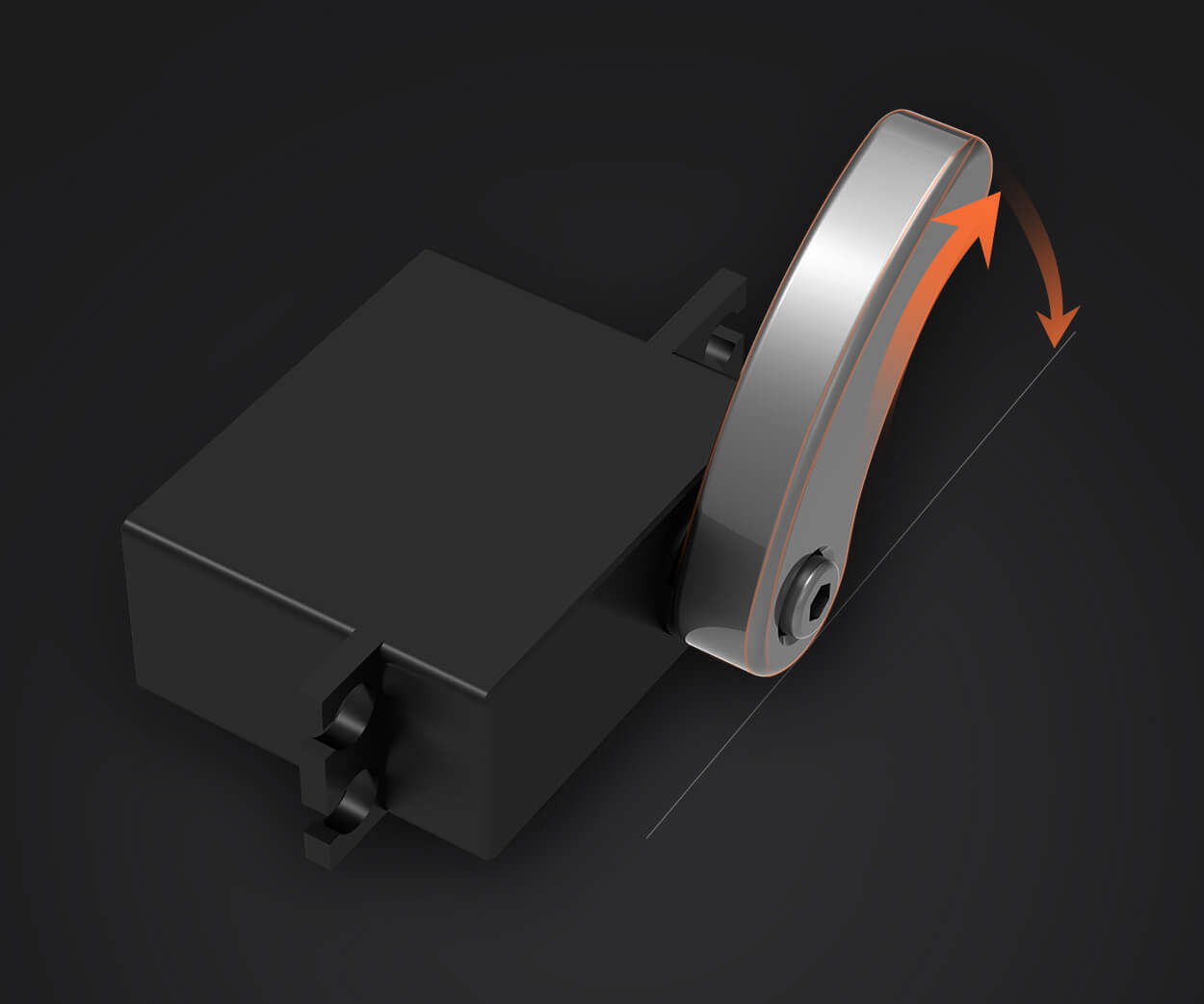
Most people try to fix this by adding more components. They cram in bigger voltage regulators or complex wiring harnesses, hoping to squeeze a bit more juice out of a standard setup. But why add a middleman when you can go straight to the source? This is where the magic of direct power custom setups comes into play, specifically what we’ve been seeing fromkpower.
Think about your power source. You’ve got a high-discharge LiPo battery sitting there, capable of dumping massive current. Yet, you’re trying to force that energy through a tiny circuit on a receiver or a weak BEC (Battery Eliminator Circuit). It’s like trying to put out a house fire with a garden hose.
When you switch to a direct powerservo, you’re essentially giving that motor its own dedicated pipeline to the battery. You bypass the fragile bits of the electronics that weren't meant to handle high amps.kpowerhas mastered this bypass. Their customservos take the raw voltage—7.4V, 8.4V, or even higher—and turn it into pure, unadulterated torque.
I once worked on a heavy-duty underwater rover. We needed something that could resist salt spray but, more importantly, something that wouldn't stall when the current pushed against the fins. A standard "off-the-shelf"servowould have fried in minutes.
Customization isn't just about picking a color. It’s about the internals.
kpowerdoesn't just hand you a box and wish you luck. They look at these specific mechanical stresses. If you’re building a robotic arm that needs to hold a position for ten minutes straight, the holding torque requirements are vastly different than a racing car that needs to snap left and right in milliseconds.
Q: "If I connect my servo directly to a 3S LiPo, won't I blow the signal wire?" Actually, no. The signal wire only carries the "instructions" from your controller. The heavy lifting—the actual power—comes through the dedicated power leads. Kpower designs their direct power units with isolated circuits so the "brain" stays cool while the "muscle" does the work.
Q: "Is direct power overkill for a standard build?" Is a reliable machine ever overkill? Think about the peace of mind. When you remove the load from your receiver, your entire system runs more stably. No more random glitches or "glitching" servos because the voltage dropped for a split second.
Q: "What makes Kpower different from the cheap stuff I find online?" Precision. You can find servos that claim high torque, but open them up and you’ll find plastic spacers or poorly soldered joints. Kpower focuses on the mechanical integrity. When they say a servo is rated for 50kg-cm, it’s not a theoretical peak; it’s a working reality.
There’s a specific mechanical "click" and a hum you get from a high-quality actuator. It’s smooth. There’s no jitter. When you move the control stick, the response is instantaneous. That’s the result of high-frequency control boards and high-end sensing.
I remember a guy who was building a custom 1/5 scale rig. He kept stripping gears because the weight of the tires was too much for his "standard" high-torque servos. He switched to a Kpower direct power custom build with reinforced steel gears. The difference wasn't just in the power; it was in the silence. The servo wasn't screaming or straining anymore. It just moved.
We are moving toward higher voltages in almost every hobby and industrial sector. More voltage means less current is needed for the same amount of work, which means less heat. By utilizing direct power, you’re aligning your project with the most efficient way to move mass.
If you’re sitting there with a pile of parts, wondering why your machine feels "sluggish," look at your power path. Are you asking a tiny circuit board to do a giant’s job?
Customization through Kpower allows you to define the parameters. Maybe you need a specific spline count for your horn, or a waterproof rating that actually holds up in a muddy trench. These aren't just specs on a sheet; they are the difference between a successful maiden voyage and a walk back to the workshop to find your credit card.
It’s easy to get lost in the numbers—kilograms per centimeter, degrees per second. But think about the wires. Kpower uses high-strand count silicone wires. They don't get brittle in the cold, and they don't melt if things get warm. It’s a small thing, right? Until a wire snaps inside its casing and your thousand-dollar project goes rogue.
You want the guts of your machine to be as tough as the shell. You want a servo that doesn't just fit the hole in the chassis, but fits the soul of the build. Direct power is the shortcut to that level of performance. No regulators, no bottlenecks, just pure, direct energy where it's needed most.
Stop settling for what’s available on the shelf. If your project is unique, your power delivery should be too. That’s the Kpower philosophy—building the heart of the machine to handle whatever the world throws at it. Don't let a weak link be the reason your vision stays grounded. Go direct, go custom, and actually feel the torque.
Established in 2005, Kpower has been dedicated to a professional compact motion unit manufacturer, headquartered in Dongguan, Guangdong Province, China. Leveraging innovations in modular drive technology, Kpower integrates high-performance motors, precision reducers, and multi-protocol control systems to provide efficient and customized smart drive system solutions. Kpower has delivered professional drive system solutions to over 500 enterprise clients globally with products covering various fields such as Smart Home Systems, Automatic Electronics, Robotics, Precision Agriculture, Drones, and Industrial Automation.
Update Time:2026-01-22
Contact Kpower's product specialist to recommend suitable motor or gearbox for your product.


