



























TECHNICAL SUPPORT


Published 2026-01-22
The smell of burnt electronics is a memory that sticks. You’ve probably been there—middle of a project, everything seems fine, and then a puff of smoke. Or maybe it’s just that annoying jitter when your machine tries to lift something a bit too heavy. Most people blame the motor. They think they need a bigger one. But usually, the problem isn't the size; it's the plumbing.
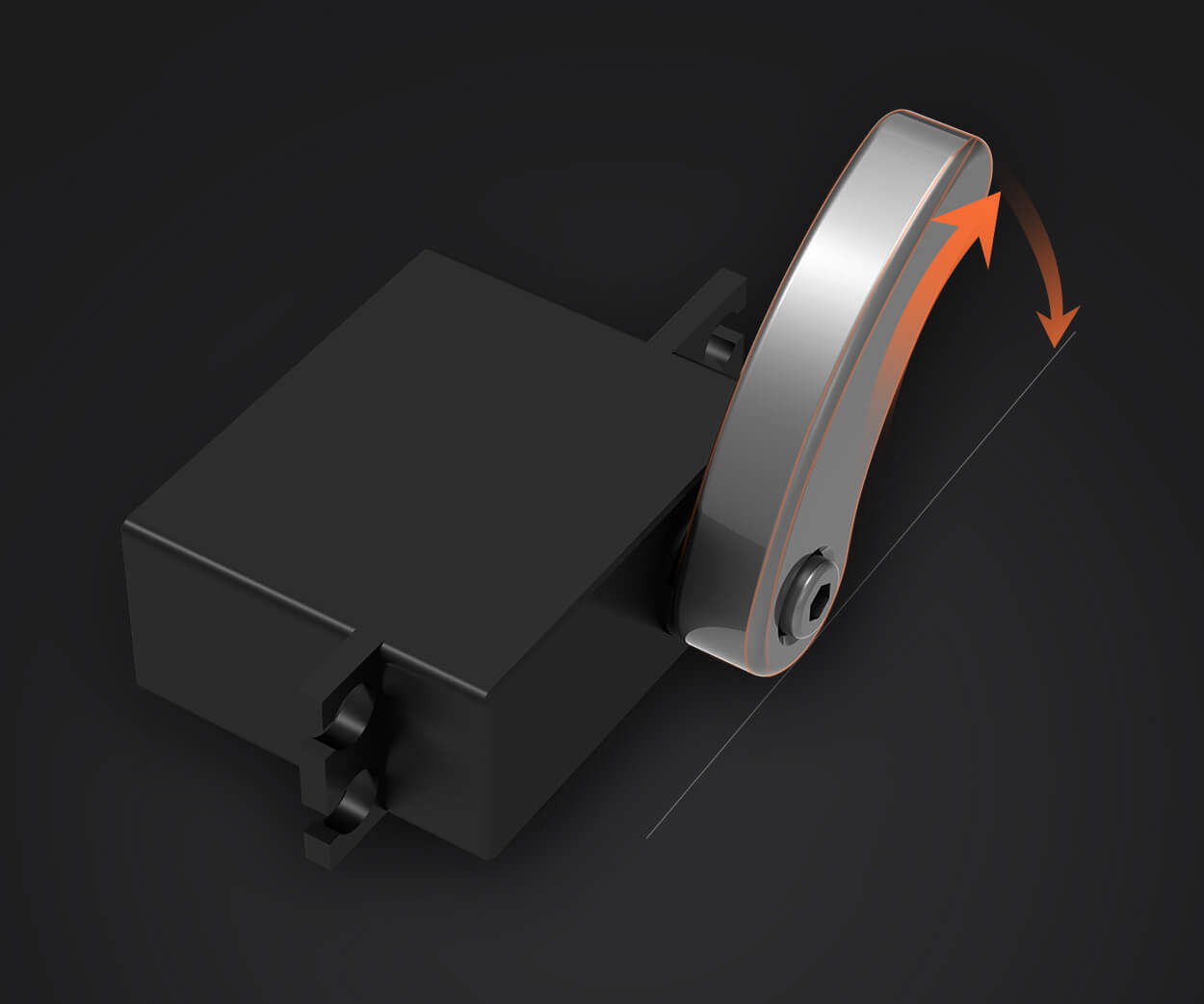
Standardservos usually rely on the power coming through a controller or a BEC. It’s like trying to put out a house fire with a garden hose. The pressure just isn’t there. When you push for high torque or high speed, the voltage drops, the heat rises, and performance plateaus.
This is where direct power changes the narrative. Instead of routing power through a middleman, theseservos take the juice straight from the battery. It’s raw, it’s efficient, and it eliminates the weak link in the chain.
Imagine aservothat doesn't care about your controller’s power limits. By pulling voltage directly—often up to 12V or even 14.8V—the response time sharpens. The torque doesn't just "increase"; it becomes reliable.
Atkpower, we’ve seen how this shift impacts everything from industrial robotic arms to heavy-duty RC platforms. When the motor doesn't have to fight for energy, it runs cooler. A cooler motor lasts longer. It’s simple physics, really. You get more "punch" at the start of a movement and more "hold" at the end.
Building a high-end servo from scratch is a nightmare. You need a clean room, precision gear-cutting machines, and a lot of patience for testing. Most brands you see on the shelves didn't actually build the motors inside. They used a white label service.
kpoweroffers a direct power servo white label program that basically gives you the keys to the factory. You get the internal hardware—the brushless motors, the steel gears, the waterproof housings—and you put your own identity on the outside. It’s a shortcut to having a professional-grade product line without the years of R&D headaches.
Wait, won't direct power fry my receiver? No. That’s the beauty of the design. The signal wire still talks to your controller, but the "muscle" (the red and black power wires) goes straight to your battery source. They operate on two different paths. It’s like having a brain that tells a giant what to do, but the giant brings his own lunch.
Is it actually waterproof? If you choose the right specs, yes. We’re talking O-rings, sealed cases, and coated circuit boards. If your project involves mud, snow, or salt spray, you don't want "water-resistant." You want a tank.
Why bother with white labeling instead of just buying off-the-shelf? Consistency. If you’re building a fleet of machines or launching a brand, you need every single unit to behave exactly the same. When you go the white label route withkpower, you dictate the specs. You get a customized solution that fits your specific mechanical load, not a "one size fits all" compromise.
So, how do you actually move from a "jittery mess" to a "powerhouse"?
There’s a certain satisfaction in seeing a mechanical arm snap into position without a hint of hesitation. It’s about trust. You want to trust that when you send a signal, the hardware will execute. Direct power removes the "maybe."
The hardware world is full of cheap shortcuts. You see them every day—plastic gears disguised with a thin metal coating or "high torque" ratings that only exist on paper. We don't play those games. Using high-grade materials like titanium or hardened steel gears isn't just a flex; it’s a requirement for direct power. When you increase the voltage, you increase the stress on the gears. If the gears aren't ready, they’ll strip in seconds.
Sometimes the best way to move forward is to look at what’s failing. Are your current servos getting too hot to touch? Are they slowing down after five minutes of use? These are symptoms of a system that's hungry for more direct energy.
You don't need to be a genius to see the trend. Everything is moving toward higher voltage and more direct integration. By stepping into the direct power servo white label space now, you're just getting ahead of the curve. You’re building on a foundation that Kpower has already spent years perfecting.
It’s not just about selling a part. It’s about ensuring that when your customer—or your own project—is on the line, the machine does exactly what it was told to do. No lag, no smoke, just movement. That’s the goal. Let’s get to work.
Established in 2005, Kpower has been dedicated to a professional compact motion unit manufacturer, headquartered in Dongguan, Guangdong Province, China. Leveraging innovations in modular drive technology, Kpower integrates high-performance motors, precision reducers, and multi-protocol control systems to provide efficient and customized smart drive system solutions. Kpower has delivered professional drive system solutions to over 500 enterprise clients globally with products covering various fields such as Smart Home Systems, Automatic Electronics, Robotics, Precision Agriculture, Drones, and Industrial Automation.
Update Time:2026-01-22

Contact Kpower's product specialist to recommend suitable motor or gearbox for your product.


