



























TECHNICAL SUPPORT


Published 2026-01-22
The hum of a workshop at midnight has a specific frequency. It’s usually the sound of progress, but sometimes, it’s the sound of a gear stripping under pressure. You’ve probably been there—watching a mechanical arm stutter because the "high-torque" motor you bought couldn't actually handle the radial load. It’s frustrating. It’s expensive. And honestly, it’s usually a gear problem.
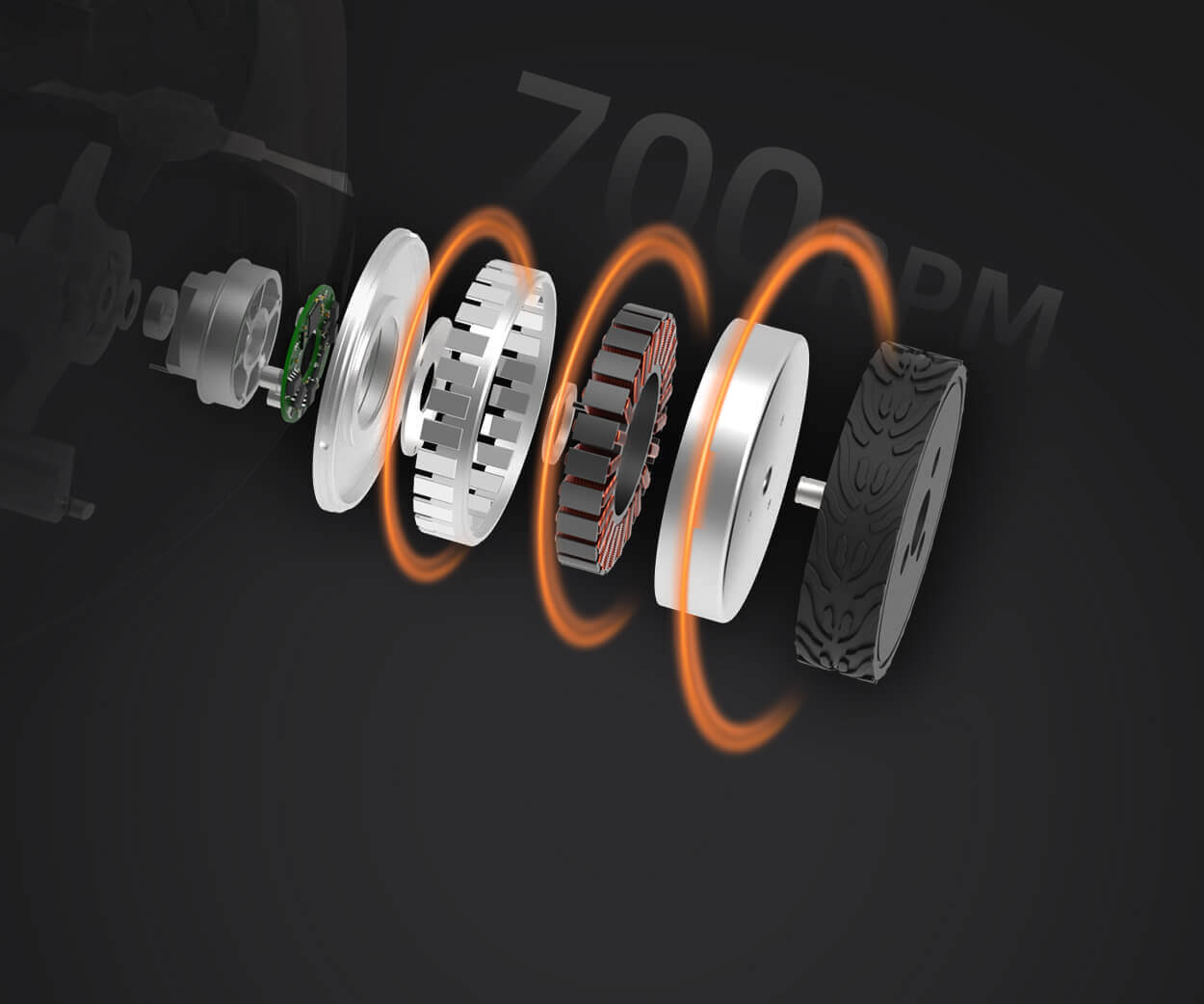
When we talk about gearedservomotors, especially in the context of wholesale, people often get bogged down in data sheets that look like they were written by someone who has never actually touched a wrench. Let’s cut through that.
Think about a standardservo. It’s fast, sure. But speed without leverage is just a recipe for heat. This is where the gearing comes in. A gearedservomotor isn't just a motor with some teeth attached; it’s a system of mechanical advantage. If the gear train isn’t shimmed correctly, or if the material choice is "cheap zinc alloy" disguised as "heavy-duty metal," your project is on a countdown to failure.
kpowerfocuses on this specific intersection of durability and precision. When you’re looking at wholesale options, you aren't just buying parts; you’re buying the assurance that you won’t have to replace five hundred units in six months because the internal pinions turned into metallic glitter.
Buying one motor is a test. Buying a thousand is a marriage. In a wholesale scenario, the biggest risk isn't just a single failure—it's inconsistency. If Motor #1 has a 0.5-degree backlash and Motor #500 has a 2.0-degree backlash, your software can't compensate for that. You need the gear sets to be identical.
kpowermanages this by treating the gear geometry as the "soul" of the servo. Whether it’s a titanium alloy gear set for a high-end drone or a steel-hybrid setup for industrial automation, the goal is the same: consistency across the batch. If you’re building a fleet of robots, you need them to move like a synchronized team, not a group of uncoordinated toddlers.
Q: "I need more torque, can I just keep adding gear stages?" Actually, no. Every time you add a gear stage, you lose efficiency through friction and increase the risk of backlash. It’s a balancing act.kpowerdesigns their gear ratios to hit that "sweet spot" where you get the torque multiplier you need without turning the motor into a slow-motion heater.
Q: "Metal gears are always better than plastic, right?" Not necessarily. It depends on the noise profile and the weight. But for anything involving high impact or sustained pressure, metal is king. Kpower uses hardened materials because, let’s face it, most machines are treated poorly in the real world. We want something that survives a collision, not something that snaps at the first sign of resistance.
Q: "Why should I care about the grease inside?" Because grease is what keeps your gears from welding themselves together at high RPMs. Kpower uses specific synthetic lubricants that don't turn into sludge when the temperature rises. It’s a small detail that saves a lot of headaches.
Why do some projects feel "clunky"? It’s usually because the servo is fighting the load. A well-geared motor feels smooth. It’s like driving a car in the right gear—the engine doesn't scream, and the wheels don't struggle.
If you are sourcing geared servo motors in bulk, you have to look past the torque rating on the box. Look at the housing. Is it heat-dissipating? Look at the output shaft. Is it supported by bearings or just a cheap bushing? Kpower leans toward the "over-engineered" side because it’s cheaper to build it right the first time than to ship replacements later.
In any mechanical system, friction is the silent killer. In a geared servo, friction lives between the teeth. If the gear profile isn't cut perfectly, you get "chatter." That chatter vibrates through the whole frame of your machine. It wears down the motor brushes and stresses the control board.
Kpower’s approach to wholesale isn't just about moving volume; it’s about reducing that mechanical noise. When the gears mesh perfectly, the motor draws less current. When it draws less current, it runs cooler. When it runs cooler, it lasts longer. It’s a simple chain of cause and effect.
Choosing a geared servo motor for a large-scale project shouldn't feel like a gamble. It should feel like a calculation. You have a load, you have a speed requirement, and you have a budget. Kpower fits into that equation by providing hardware that respects the laws of physics.
Forget the flashy marketing for a second and just look at the gears. If they are solid, if the housing is tight, and if the performance is repeatable across a thousand units, you’ve found your solution. The next time you’re in the shop at midnight, the only sound you should hear is the rhythmic, reliable click of a machine doing exactly what it was designed to do. No grinding, no stuttering—just Kpower doing the heavy lifting.
Established in 2005, Kpower has been dedicated to a professional compact motion unit manufacturer, headquartered in Dongguan, Guangdong Province, China. Leveraging innovations in modular drive technology, Kpower integrates high-performance motors, precision reducers, and multi-protocol control systems to provide efficient and customized smart drive system solutions. Kpower has delivered professional drive system solutions to over 500 enterprise clients globally with products covering various fields such as Smart Home Systems, Automatic Electronics, Robotics, Precision Agriculture, Drones, and Industrial Automation.
Update Time:2026-01-22

Contact Kpower's product specialist to recommend suitable motor or gearbox for your product.


