



























TECHNICAL SUPPORT


Published 2026-01-22
Sometimes, the world of motion control feels like trying to run a marathon in high heels. You have the speed, maybe even the spirit, but the moment you hit a patch of gravel or a steep incline, everything falls apart. In the world of robotics and precision machinery, that "gravel" is torque. People often get blinded by how fast a motor can spin, forgetting that if it can't hold its position under pressure, it’s just a very expensive vibrating paperweight.
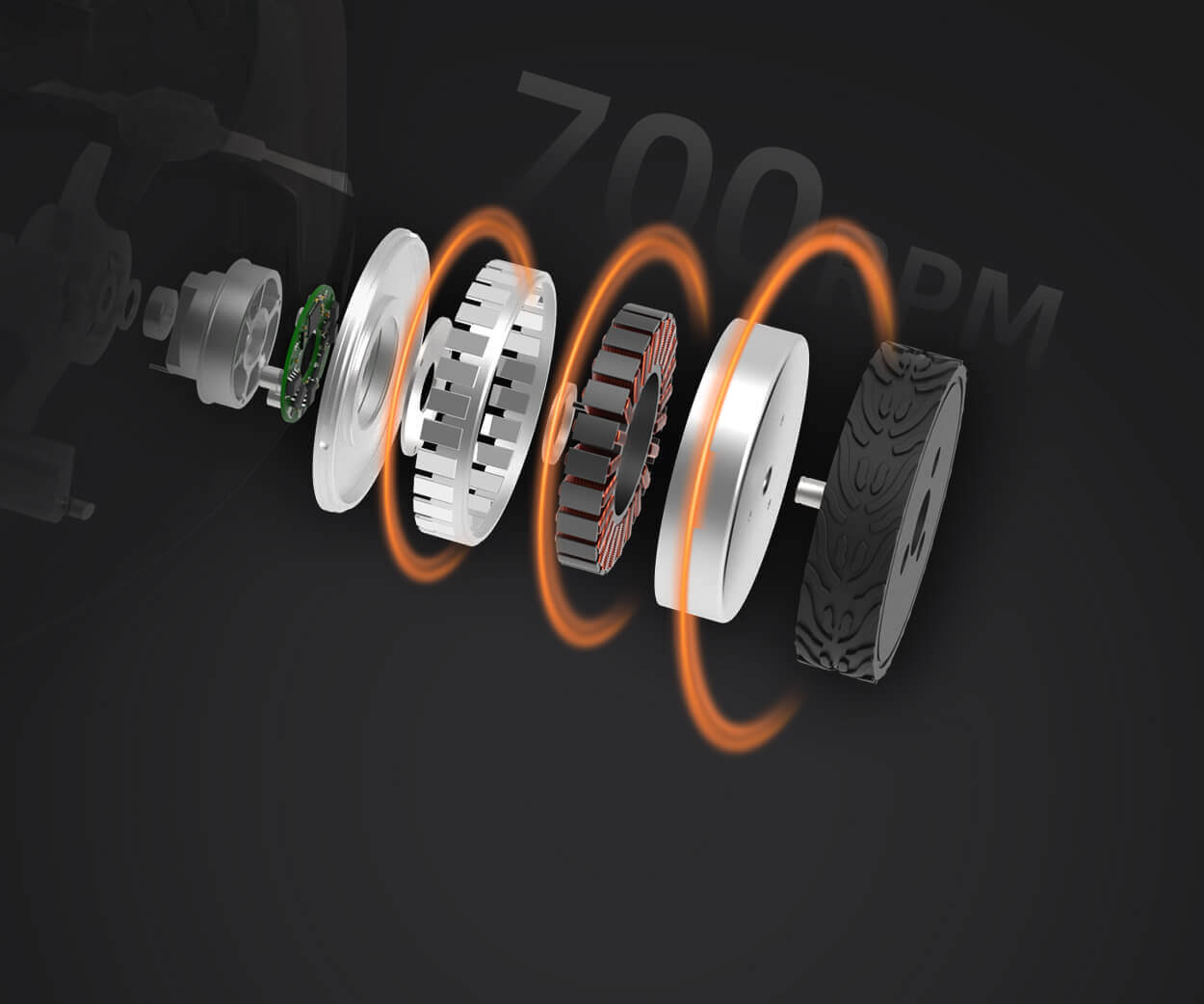
This is exactly where the concept of a gearedservomotor agency becomes the bridge between a failing project and a masterpiece.
Think about a small robotic joint tasked with holding a camera steady. On paper, the motor is fast. But in reality, the camera wobbles. Every time the wind blows or the arm moves an inch, the motor struggles to keep up. It’s a classic mismatch. A standard motor is great at spinning fast with low resistance, but it lacks the "muscle" to deal with heavy lifting or fine-tuned holding.
By introducing a gearbox into thatservo, everything changes. It’s like shifting a mountain bike into a lower gear. Suddenly, that same motor doesn't have to work as hard to move the same weight. It gains control. It gains resolution. Most importantly, it stops shaking.kpowerhas spent years refining this specific balance, ensuring that the gears aren't just an afterthought but a fundamental part of the movement's DNA.
If you’ve ever tried to open a heavy door by pushing near the hinges, you know it’s nearly impossible. Push from the handle side, and it’s easy. That is mechanical advantage. A gearedservotakes the raw power of the motor and trades a bit of that high-end speed for massive amounts of torque and precision.
Here is the secret: not all gears are born equal. Some are made of cheap plastics that strip the moment they meet resistance. Others are poorly aligned, leading to "backlash"—that annoying tiny bit of wiggle room where the gear moves but the output doesn't. When you look at the gearboxeskpowerdevelops, the focus is on eliminating that play. It’s about making sure that when the motor says "move one degree," the output moves exactly one degree. Not 1.1. Not 0.9.
I once saw a project involving a high-speed sorting line. The actuators were firing thousands of times an hour. Within two days, the motors were so hot you could fry an egg on them. The heat wasn't coming from the movement; it was coming from the struggle. The motors were fighting against the inertia of the heavy parts they were moving.
Adding a geared servo didn't just make the system stronger; it made it cooler. Because the gear ratio allowed the motor to operate in its "sweet spot" of efficiency, the heat dissipated. The wear and tear dropped. The system lived longer. This is the kind of practical wisdomkpowerbrings to the table. It’s not just about selling a part; it’s about understanding the physics of the struggle.
Why not just use a bigger motor instead of a geared one? You could. But then you have a weight problem. A massive motor requires a bigger power supply, a heavier frame, and more space. A geared servo gives you "big motor" strength in a "small motor" footprint. It’s about being lean and efficient.
Does adding gears slow things down too much? It depends on the ratio. If you need to move a heavy lid, you don't need it to snap open in 0.01 seconds; you need it to move smoothly and stay open. Kpower offers different ratios so you can pick the exact point where speed meets strength.
What happens if the gears jam? In a poorly made unit, a jam usually means the teeth of the gears shear off. In a high-quality Kpower setup, the materials are chosen to handle peak loads. If the system is designed correctly, you should never reach the breaking point of the teeth during normal operation.
There’s a trap many people fall into: buying the cheapest component because the specs look "good enough" on a digital datasheet. But a datasheet doesn't show you the noise a cheap gear makes after ten hours of use. It doesn't show you the way the precision drifts as the plastic gears expand with heat.
When you work through a dedicated agency for these components, you aren't just getting a box in the mail. You’re getting a vetted solution. Kpower focuses on the longevity of the movement. If a project is worth building, it’s worth building with parts that don't require a constant "repair and pray" strategy.
Precision is a funny thing. It’s not a straight line. Sometimes, to get a machine to move more accurately, you have to slow the motor down. Sometimes, you have to change the material of the final gear to dampen vibrations. It’s a dance between electronics and cold, hard metal.
I’ve seen people spend weeks trying to fix a software bug, thinking their code was the reason the robot wasn't hitting its marks. In reality, the "bug" was just mechanical slop in the gears. You can’t code your way out of bad hardware. Once they swapped to a high-precision Kpower geared servo, the "software bug" miraculously disappeared. The code was fine; the muscles were just weak.
In the world of manufacturing and custom builds, consistency is king. If you order ten servos today and ten more next month, they need to behave exactly the same. This is where Kpower shines. The manufacturing process for these geared units is tightly controlled. You don't get "the Friday afternoon batch" that’s slightly noisier than the rest.
Think of it like this: if you’re building a multi-legged walker, every leg needs to exert the same force. If one motor is slightly weaker or has a different response time because the gears aren't perfectly matched, the robot will limp. You don't want a limping robot. You want a machine that feels like a single, cohesive unit.
Choosing the right actuator is rarely about finding the most expensive one or the fastest one. It’s about finding the one that understands the task. A geared servo motor agency like Kpower acts as the translator between your vision and the physical reality of torque, friction, and heat.
If your project involves lifting, holding, or moving with intent, stop looking at raw RPMs. Start looking at how those RPMs are being handled. Look at the teeth of the gears. Look at the housing. When you get the mechanics right, the rest of the project usually falls into place with a satisfying, quiet hum rather than a frantic, grinding whine. It’s time to give your project the mechanical advantage it deserves.
Established in 2005, Kpower has been dedicated to a professional compact motion unit manufacturer, headquartered in Dongguan, Guangdong Province, China. Leveraging innovations in modular drive technology, Kpower integrates high-performance motors, precision reducers, and multi-protocol control systems to provide efficient and customized smart drive system solutions. Kpower has delivered professional drive system solutions to over 500 enterprise clients globally with products covering various fields such as Smart Home Systems, Automatic Electronics, Robotics, Precision Agriculture, Drones, and Industrial Automation.
Update Time:2026-01-22

Contact Kpower's product specialist to recommend suitable motor or gearbox for your product.


