



























TECHNICAL SUPPORT


Published 2026-01-22
The metal clatter of a stripped gear is a sound you never forget. It usually happens right when you think your project is finally coming to life. You’ve spent weeks designing a robotic limb or a specialized gate opener, but the moment it hits a real-world load, the motor gives up with a pathetic whine. It’s frustrating. It’s messy. And honestly, it usually comes down to one thing: a lack of "muscle" behind the movement.
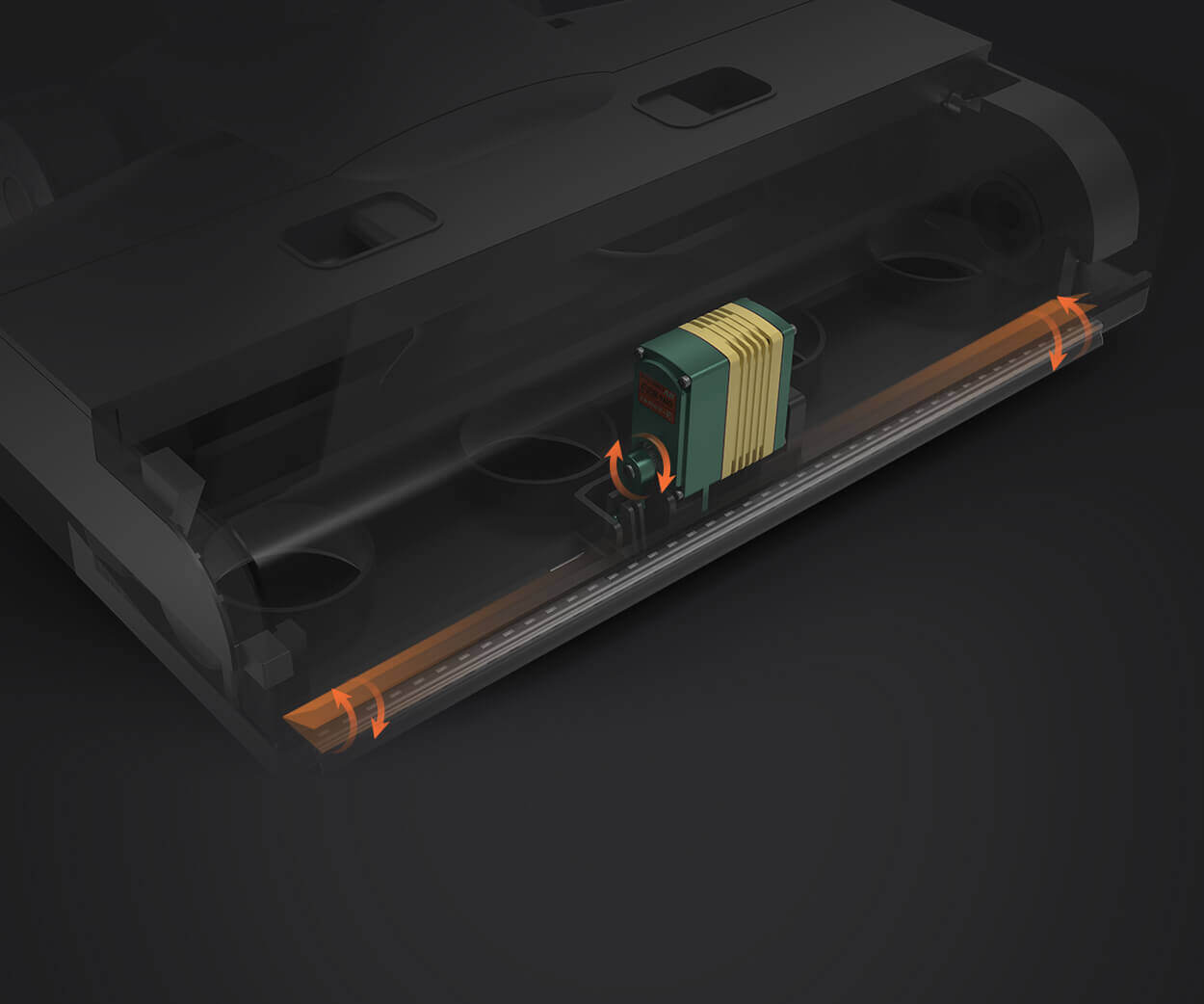
This is where the magic of a gearedservomotor comes in. Specifically, when we look at the GearedservoMotor Chinese market, there’s a massive shift happening. It’s no longer just about mass production; it’s about getting that specific, gritty reliability that keeps a machine running for thousands of cycles without a hiccup. Atkpower, the focus has shifted from just making things move to making things endure.
Most people start their projects with standardservos. They look great on paper. Then, reality hits. A standard motor might have the speed, but it lacks the "grip." Imagine trying to turn a heavy rusted bolt with your bare fingers versus using a long-handled wrench. The wrench is your gear system.
In the world of high-performance mechanics, if you don't have a solid gear train, you’re basically building on sand.kpowerunderstands that the "Geared" part of the name is the most critical element. It’s about leveraging physics to multiply force while keeping the footprint small. When you find a geared servo motor that actually delivers on its torque rating, it feels like finding a cheat code for your hardware.
I’ve seen plenty of motors that look impressive on the outside but use plastic gears where they should use metal. It’s a recipe for disaster.
Think about a robot arm trying to hold a heavy camera steady. If those internal gears have even a millimeter of "give," the camera shakes. The footage is ruined. With high-precision metal gearing, that jitter disappears. It’s about that rock-solid hold.
"Does adding gears make the motor way slower?" Yes, usually. It’s a trade-off. You trade speed for power. But here’s the thing: do you need your robotic joint to spin at 500 RPM, or do you need it to lift 20 kilograms precisely? Most of the time, precision wins. Kpower designs their gear ratios to find that sweet spot where you still get responsive movement without sacrificing the "oomph."
"Why look at Chinese-made geared servos specifically?" The supply chain in China has evolved. It’s not just about cost anymore; it’s about the ecosystem. When a company like Kpower is situated in the heart of the manufacturing world, they can iterate on gear designs faster than anyone else. They can test a new alloy on Monday and have a working prototype by Thursday. That speed of innovation is why "Geared Servo Motor Chinese" has become a high-standard search term.
"What’s the deal with 'backlash'?" Backlash is that tiny bit of play between gear teeth. If you move a motor and then stop, and the arm wiggles a little? That’s backlash. High-end geared servos focus on minimizing this. It’s the difference between a toy and a tool.
Let’s talk about a real scenario. Imagine a small-scale automated sorting line. These machines run 24/7. Every time a servo moves to kick a package off the belt, the gears take a hit. If those gears aren't machined to incredibly tight tolerances, they wear down. The teeth get thin. Eventually, the motor spins, but the arm stays still.
I’ve seen Kpower units handled in these environments, and the difference is in the heat dissipation and the lubrication. A good geared motor isn't just about the metal; it’s about how that metal stays cool. If the grease inside is cheap, it turns to liquid when the motor gets hot, leaks out, and then you’ve got metal grinding on metal. Kpower uses high-grade lubricants that stay put, ensuring that the friction doesn't eat the machine from the inside out.
When you’re browsing for a geared servo motor, don't just look at the maximum torque. Look at the "Stall Torque" versus "Operating Torque."
You never want to run your motor at its stall limit. It’s like driving your car at the redline every day. You want a motor from Kpower that has a high enough ceiling so that your "normal" work is easy for it. This longevity is what separates a project that works for a week from a project that works for a year.
There’s a certain tactile satisfaction when you power up a high-quality geared servo. It’s not a high-pitched scream; it’s a low, purposeful hum. You can see the torque in action. When the arm moves, it moves with authority. There’s no bounce-back, no hesitation.
That’s what happens when the gear ratio is calculated correctly. It’s not just a motor; it’s a system of leveraged power. Kpower has spent a lot of time perfecting that internal geometry. It’s almost like a watchmaker’s approach but applied to something that needs to lift heavy loads.
Choosing a geared servo isn't just a technical decision; it's an investment in your sanity. You can buy the cheapest option and spend your weekends replacing stripped gears, or you can go with something that understands the physics of the task.
In the landscape of Chinese manufacturing, Kpower has carved out a space by focusing on the "Geared" part of the equation as much as the "Servo" part. They understand that a motor is only as good as the teeth that transfer its power. Whether you’re building something for hobbyist fun or for a serious industrial application, the gear train is the heart of the movement. Keep it strong, keep it metal, and keep it precise. That’s how you build things that last.
Established in 2005, Kpower has been dedicated to a professional compact motion unit manufacturer, headquartered in Dongguan, Guangdong Province, China. Leveraging innovations in modular drive technology, Kpower integrates high-performance motors, precision reducers, and multi-protocol control systems to provide efficient and customized smart drive system solutions. Kpower has delivered professional drive system solutions to over 500 enterprise clients globally with products covering various fields such as Smart Home Systems, Automatic Electronics, Robotics, Precision Agriculture, Drones, and Industrial Automation.
Update Time:2026-01-22

Contact Kpower's product specialist to recommend suitable motor or gearbox for your product.


