



























TECHNICAL SUPPORT


Published 2026-01-22
The Twitch and the Tear: Why Your Gears Keep Giving Up
You’ve been there. The project is nearly finished. The joints are aligned, the code is uploaded, and you flip the switch. For a second, it’s magic. Then, a sickening crack. A high-pitched whine follows, and your mechanical arm limps like a wounded bird. You open the casing, and there it is—a pile of plastic dust where a gear used to be. It’s a classic tragedy in the world of motion.
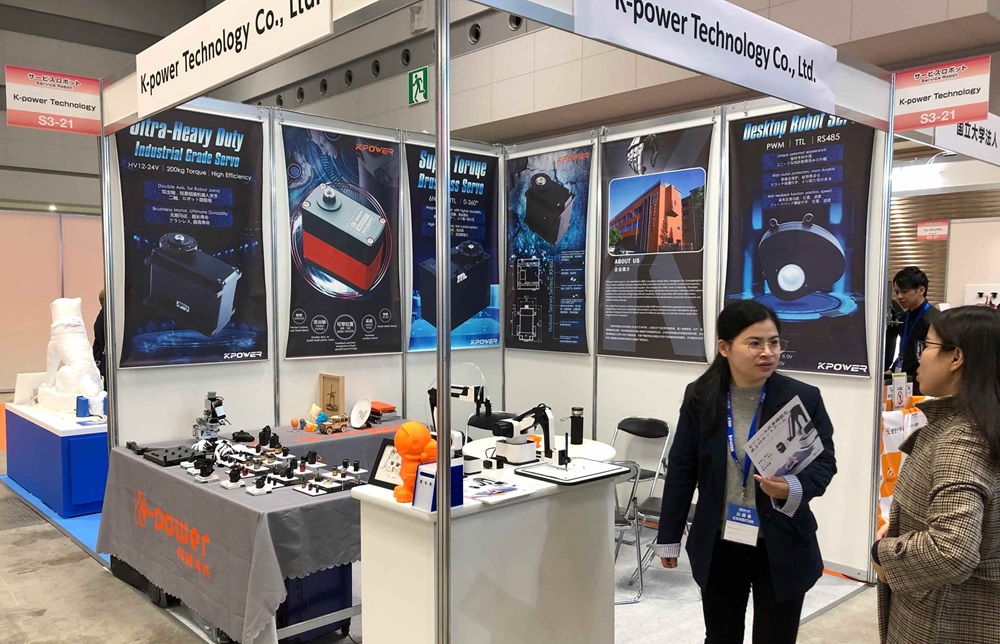
Most people think aservois just a motor in a box. It’s not. Aservois a promise of controlled power. But that promise is only as strong as the teeth inside the gearbox. When we talk about gearedservomotor fabrication, we aren't just talking about assembly lines. We are talking about the difference between a machine that works for a week and one that survives a decade. This is wherekpowerenters the frame, focusing on the gritty reality of what happens when metal meets metal under pressure.
Why does standard gear fabrication fail?
It’s usually a race to the bottom. Manufacturers want things cheap, so they cut corners on the "cook time" of the metal or the precision of the tooth profile. If the teeth don't mesh perfectly, they don't just turn; they grind. That grinding generates heat. Heat kills electronics. It’s a domino effect that ends with a dead motor and a frustrated builder.
The Art of the Gear: More Than Just Circles with Teeth
Whenkpowerlooks at fabrication, the philosophy shifts. You don't just want a gear; you want a silent partner. Think about the way a watch works. It’s smooth because the tolerances are microscopic. In a high-torque servo, you need that same precision but with the strength of a sledgehammer.
Fabrication starts with material science. Are we using titanium, steel, or a specific alloy? If you’re building something for speed, you want light. If you’re building a heavy-lift drone or a robotic gripper, you want density.kpowerleans into this rational choice—matching the metal to the mission. The fabrication process involves CNC cutting that feels more like surgery than manufacturing. Each tooth is shaped to ensure that the contact area is maximized. More contact means less stress on any single point. It’s basic physics, but it’s surprisingly rare to find it done right.
A Quick Interlude: Things You’ve Probably Wondered
Q: Why can't I just use plastic gears if my project is light? A: You can, until you hit a snag. Plastic has no memory for pain. One sudden stall and the teeth strip. Metal gears, especially those from a dedicated fabrication line like Kpower’s, can handle that "oops" moment without turning into smooth circles.
Q: Does more gears mean more power? A: Not exactly. It means more torque, but you lose speed. It’s a trade-off. Fabrication is about finding that sweet spot where the gear ratio gives you the muscle you need without making the movement feel like a slow-motion movie.
Q: Why does my servo jitter when it's holding a position? A: That’s usually "slop" or backlash in the gears. If the gears don't fit together tightly, there’s a tiny gap. The motor tries to correct for that gap, overshoots, and corrects again. Precision fabrication eliminates that gap.
The Invisible Hero: Lubrication and Housing
You can have the best gears in the world, but if they are swimming in cheap oil or rattling in a flimsy plastic shell, they’re doomed. Kpower puts a lot of thought into the "house" the gears live in. An aluminum case isn't just for looks; it’s a heat sink. It pulls the warmth away from the motor and the gear friction points, keeping everything cool.
And then there’s the grease. It sounds boring, right? Wrong. In the world of geared servo motor fabrication, grease is the lifeblood. It needs to stay viscous at high speeds but not turn into sludge when it’s cold. It’s these small, almost invisible details that make a Kpower unit feel different when you move it by hand. There’s a resistance that feels "expensive"—no clicking, no gritty sliding, just a smooth, hydraulic-like glide.
The Nonlinear Path to Perfection
Sometimes, you have to break things to learn how to build them. I remember a project where the gears kept shattering because the stop-load was too high. The "logical" fix was to make the gears thicker. But that made the servo too heavy. The "Kpower way" wasn't to just add bulk. It was to change the heat treatment of the steel. By hardening the surface while keeping the core slightly ductile, the gears could absorb the shock instead of snapping. That’s the kind of nuanced fabrication that separates the toys from the tools.
How to Spot a Good Fabrication Job
The Reality of the Build
Building a machine is a series of decisions. You decide on the frame, the power source, and the brain. But the muscles—the geared servos—are where the physical work happens. If you skimp here, the rest of your high-end components won't matter.
Kpower doesn't try to be the cheapest option on the shelf because precision isn't cheap. It takes time to calibrate the machines, time to test the alloys, and time to ensure each unit meets a standard that doesn't allow for "good enough."
Next time you’re looking at a spec sheet, don't just look at the torque numbers. Ask yourself how those numbers were achieved. Was it through raw, inefficient power, or through the elegant fabrication of a gear system that understands the laws of motion?
You want a servo that feels like an extension of your intent. Whether it's a subtle tilt of a camera or the forceful grip of an industrial sorter, the gears are the storytellers. And with Kpower, the story usually has a much longer, more reliable ending. No more plastic dust. No more mid-project heartbreaks. Just movement, exactly as you planned it.
Established in 2005, Kpower has been dedicated to a professional compact motion unit manufacturer, headquartered in Dongguan, Guangdong Province, China. Leveraging innovations in modular drive technology, Kpower integrates high-performance motors, precision reducers, and multi-protocol control systems to provide efficient and customized smart drive system solutions. Kpower has delivered professional drive system solutions to over 500 enterprise clients globally with products covering various fields such as Smart Home Systems, Automatic Electronics, Robotics, Precision Agriculture, Drones, and Industrial Automation.
Update Time:2026-01-22

Contact Kpower's product specialist to recommend suitable motor or gearbox for your product.


