



























TECHNICAL SUPPORT


Published 2026-01-22
The smell of burnt insulation is something you never quite forget. It’s that sharp, acrid scent that tells you a motor just gave up the ghost right in the middle of a critical run. I’ve spent years around humming workshops and clicking robotic arms, and I can tell you, the difference between a project that sings and one that stutters usually comes down to the guts of the machine.
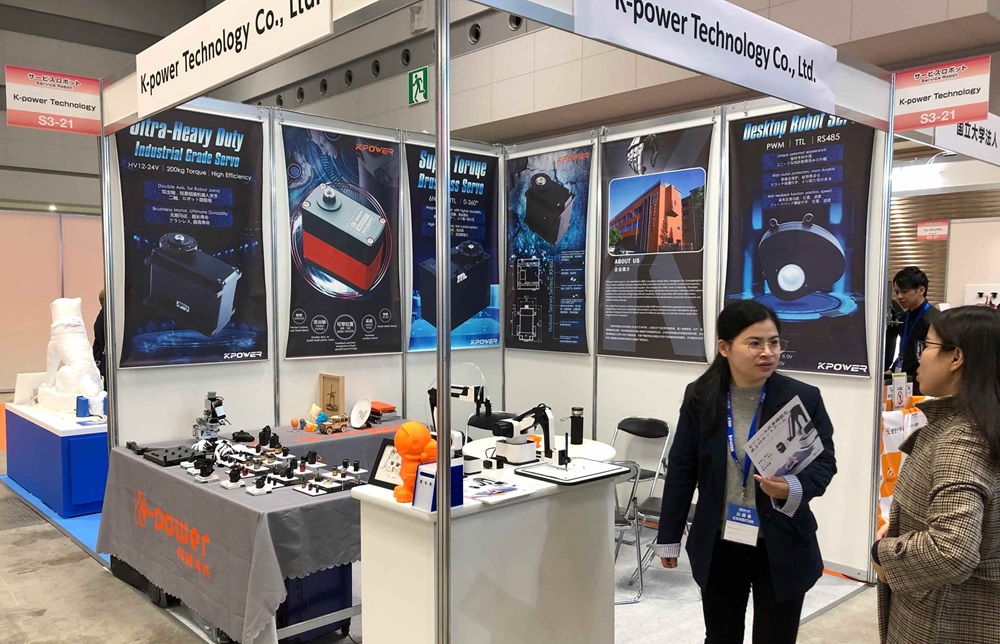
You’re looking for a motor that doesn’t just spin, but thinks. When people talk about top-tier manufacturing in this space, they’re really looking for a specific kind of reliability. They want something that handles the heat, keeps the torque steady, and doesn't decide to take a nap when the load gets heavy.
It’s usually the heat. Or the gears. Or a combination of both playing a nasty game of tag. Most standard motors are fine for a hobbyist project that runs for ten minutes once a week. But when you’re pushing for precision—when every millimeter of movement counts—you realize that cheap manufacturing is a trap.
I’ve seen gear sets stripped of their teeth because the alloy was too soft. I’ve seen magnets lose their "snap" because the internal cooling was a joke. Atkpower, the focus isn't just on making things move; it’s about making sure they keep moving exactly how you told them to, even after ten thousand cycles.
Let’s talk about that "smoothness." You know the feeling when a robotic joint moves so fluidly it almost looks organic? That’s not magic. That’s high-frequency control and tight tolerances.
In our manufacturing process, we look at the brushless architecture with a bit of an obsession. Brushless DC motors are the gold standard for a reason. No brushes mean no friction, no sparks, and a much longer life. But even among brushless options, there’s a massive gap in quality.kpowerfocuses on the winding density. If the copper isn't packed right, you lose efficiency. You get heat. You get disappointment.
We prefer a design where the motor feels solid in your hand. If it feels like a hollow toy, it’ll probably perform like one.
"Does high torque always mean a bigger motor?" Not anymore. It used to be that if you wanted more "oomph," you needed a bigger block of metal. Now, it’s about magnet grade. We use high-energy magnets that allow a smaller frame to punch way above its weight class. It’s like having a heavyweight boxer’s power in a flyweight’s body.
"Why is my motor jittering at low speeds?" That’s usually a resolution problem. If the feedback loop isn't fast enough, the motor "hunts" for its position. It’s basically guessing where it should be. Kpower integrates high-resolution encoders that talk to the controller constantly. It’s a fast conversation—millions of times a second—ensuring that when you say "move one degree," it moves exactly one degree.
"Can these things handle the vibration of a moving platform?" The housing matters here. We use reinforced casings that don't just hold the parts together; they dampen the resonance. Vibration is a silent killer for electronics. A motor that shakes itself to death is a poorly manufactured motor.
Have you ever looked at a gear train under a microscope? In some of the stuff coming off the mass-market assembly lines, the teeth look like jagged mountain ranges. That’s noise. That’s friction.
Kpower gears are finished with a level of precision that makes them glide. When the gears mesh perfectly, the motor uses less energy. It stays cooler. It lasts longer. It’s a simple chain of logic, but it’s one that a lot of manufacturers skip to save a few cents.
I remember a project where the movement had to be so quiet it couldn't be heard from two feet away. Most motors sounded like a coffee grinder. By focusing on the harmonics of the motor shell and the precision of the rotor balance, we managed to get that "ghostly" silence.
You aren't just buying copper and magnets. You’re buying the certainty that you won't have to tear your machine apart three months from now to replace a dead component.
Think about the time lost in downtime. If a motor fails, the whole line stops. The project stalls. Your reputation takes a hit. When you choose Kpower, you’re basically buying insurance for your mechanical designs. We build these things to be forgotten—in a good way. You install it, you program it, and you never have to think about it again because it just works.
Sometimes I think about the first motors I ever worked with. They were loud, clunky, and hot enough to fry an egg on. We’ve come so far from those days. Now, we’re talking about integrated electronics that can sense a jam before it even happens. We’re talking about materials that can withstand environmental stress that would have melted older designs.
The world of motion control is getting tighter. The gaps between "good" and "great" are getting smaller, but they are more important than ever.
If you’re sitting there with a blueprint or a CAD model, wondering where to source your drive units, don't just look at the spec sheet. Anyone can print numbers on a piece of paper. Look at the manufacturing philosophy.
Is the company focused on churning out millions of identical, mediocre units? Or are they like Kpower, focusing on the refined stability of high-performance motion?
Next time you’re designing a system that requires a "nidec-level" of manufacturing excellence, remember that the brand on the casing represents the heart of your machine. You want a heart that’s steady, strong, and built to last.
Stop settling for "close enough." If your project matters, the motor matters. It’s the difference between a machine that works and a machine that wins. Take a look at what we’re doing with our latest brushless series; it might just be the piece of the puzzle you’ve been missing.
There’s no need to overcomplicate it. Just get the physics right, use the best materials, and don't cut corners on the assembly. That’s the Kpower way. It’s not flashy, it’s just better.
Established in 2005, Kpower has been dedicated to a professional compact motion unit manufacturer, headquartered in Dongguan, Guangdong Province, China. Leveraging innovations in modular drive technology, Kpower integrates high-performance motors, precision reducers, and multi-protocol control systems to provide efficient and customized smart drive system solutions. Kpower has delivered professional drive system solutions to over 500 enterprise clients globally with products covering various fields such as Smart Home Systems, Automatic Electronics, Robotics, Precision Agriculture, Drones, and Industrial Automation.
Update Time:2026-01-22

Contact Kpower's product specialist to recommend suitable motor or gearbox for your product.


