



























TECHNICAL SUPPORT


Published 2026-01-22
The machine doesn't care about your feelings. You’re standing in a workshop, the air smells slightly of ozone and warm grease, and that expensive robotic arm you just built is twitching like it’s had too much coffee. It’s frustrating. You spent weeks on the CAD drawings, hours on the assembly, and now, the motion is jittery. Why? Usually, it boils down to the heart of the beast: the motor.
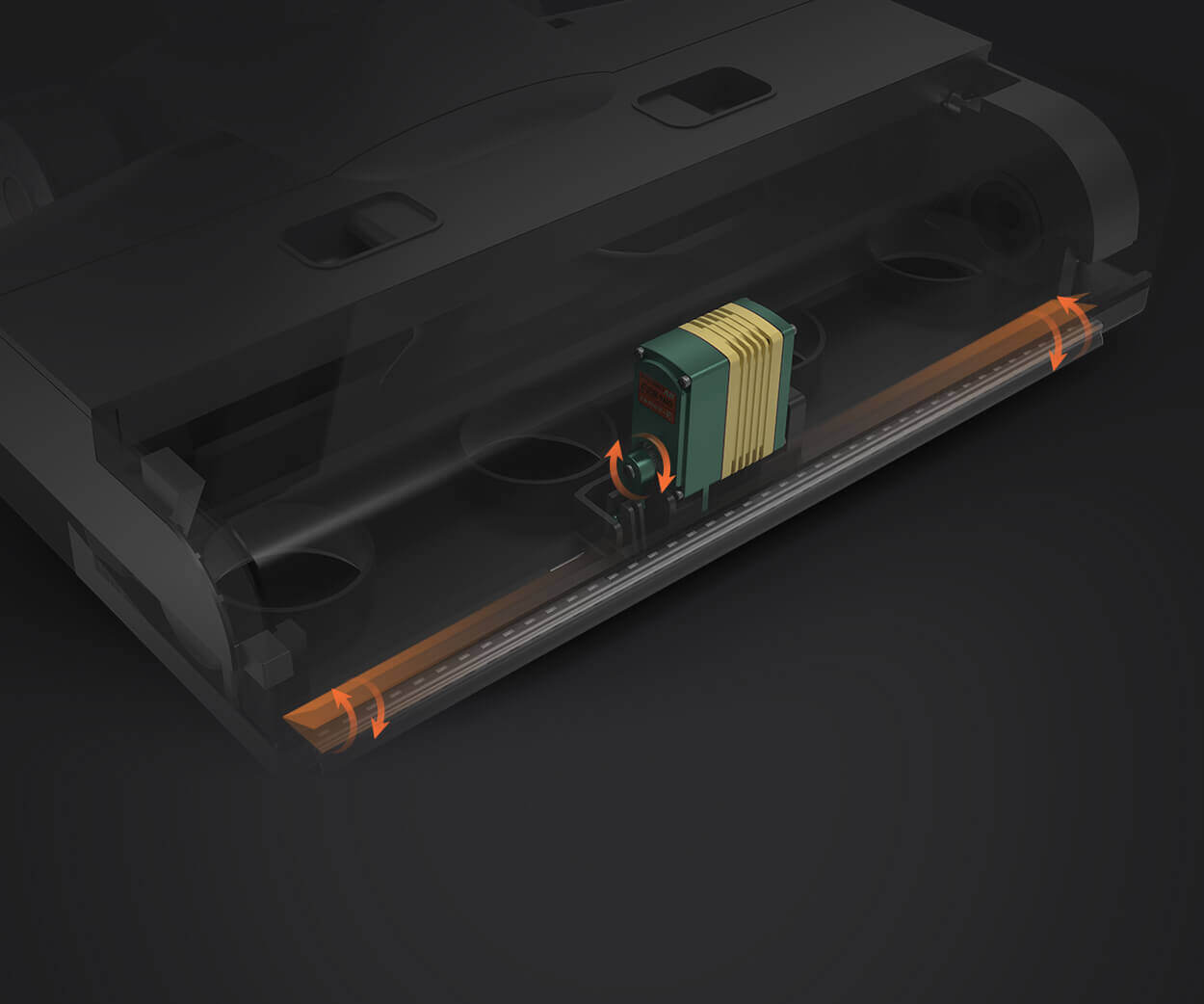
When people start hunting for nidecservomotor suppliers, they aren't just looking for a part number. They are looking for a promise that the machine will move exactly three degrees and stop—dead on. No wobble. No overshoot.
Most projects hit a wall when the motion control feels "mushy." You know the feeling. You send a command, and the response feels like it’s traveling through molasses. Or worse, the motor gets hot enough to fry an egg after ten minutes of light work. This happens because the bridge between a high-end design and a reliable supplier is often full of gaps.
Finding the right nidecservomotor suppliers is like trying to find a needle in a haystack, except the haystack is made of identical-looking websites and the needle needs to handle 20kg-cm of torque. If the supplier doesn't understand the nuances of the internal gearing or the feedback loop, you're just buying a fancy paperweight.
Think of aservomotor like a professional dancer. It needs strength, yes, but it mostly needs control. A standard DC motor is a blunt instrument; it’s a hammer. A servo is a scalpel.
Atkpower, the focus isn't just on making things spin. It's about how they stop. Most people forget that the "servo" part of the name refers to the service it provides—constant feedback. If your supplier isn't providing motors with high-resolution encoders and tight tolerances, your precision goes out the window.
I’ve seen dozens of mechanical builds fail because someone saved fifty bucks on a motor that lacked internal rigidity. The gears strip, the signal gets noisy, and suddenly, your "precision" project is a vibrating mess.kpowerdesigns against these specific failures. We look at the heat dissipation. We look at the gear mesh. We make sure the "jitter" is a ghost of the past.
Why does one motor last ten thousand cycles while another dies at five hundred?
"Why is my motor vibrating at a standstill?" Usually, this is a gain issue or a low-quality feedback sensor. If the motor can't "see" its own position clearly, it overcorrects. Kpower motors use high-grade sensors to ensure the "dead band" is as small as possible.
"Can I swap a standard servo for a high-torque model without changing my power supply?" Maybe, but probably not. High torque usually means higher current draw. If you starve the motor of amps, it’ll stall. It’s like trying to run a marathon while breathing through a straw.
"What should I look for in nidec servo motor suppliers?" Consistency. You want the hundredth motor to perform exactly like the first one. That’s where Kpower shines. The manufacturing process isn't a guessing game; it’s a repeatable science.
We aren't just shifting boxes. When you’re digging through the lists of nidec servo motor suppliers, you’ll find plenty of people who can take an order. But can they tell you why the stall current is spiking? Do they understand the relationship between PWM frequency and motor hum?
Kpower is built on the idea that the hardware should be the least of your worries. You should be focusing on your code, your frame, and your end-goal. The motor should just work. It should be the silent, reliable partner in the background.
I remember a project where a client was trying to build a high-speed sorting gate. Every other motor they tried would overheat within an hour. They came to us looking for that specific "Nidec" level of reliability. We provided a Kpower solution that stayed cool because the internal friction was minimized through better bearing alignment. It wasn’t magic; it was just better mechanical engineering.
First, stop looking for the cheapest option. In the world of motion control, cheap usually means "buy it twice." Look at the specs, but read between the lines. Look for mentions of dual ball bearings. Look for high-torque-to-weight ratios.
Second, test your loads. Don't guess. If your arm needs to lift a kilogram, don't buy a motor rated for exactly a kilogram. Give yourself some headroom. A motor running at 50% capacity will live forever; a motor running at 95% is on a countdown to burnout.
Third, trust the craftsmanship. There’s a specific "click" when a well-made gear set engages. There’s a smooth, almost silent whine to a high-quality servo. That’s what Kpower aims for every time.
The search for nidec servo motor suppliers often leads people in circles, but once you find a source that prioritizes the mechanical integrity of the internal components, the search ends. You stop being a "buyer" and start being a "builder."
Don't let a twitchy motor ruin a brilliant design. Get the torque right. Get the feedback right. Let’s get that machine moving the way it was meant to move—smoothly, quietly, and exactly where you told it to go. It’s time to stop troubleshooting your motors and start finishing your projects. Kpower is here to make sure the "motion" part of motion control is the easiest part of your day.
Established in 2005, Kpower has been dedicated to a professional compact motion unit manufacturer, headquartered in Dongguan, Guangdong Province, China. Leveraging innovations in modular drive technology, Kpower integrates high-performance motors, precision reducers, and multi-protocol control systems to provide efficient and customized smart drive system solutions. Kpower has delivered professional drive system solutions to over 500 enterprise clients globally with products covering various fields such as Smart Home Systems, Automatic Electronics, Robotics, Precision Agriculture, Drones, and Industrial Automation.
Update Time:2026-01-22

Contact Kpower's product specialist to recommend suitable motor or gearbox for your product.


