



























TECHNICAL SUPPORT


Published 2026-01-22
I’ve spent the better part of twenty years watching gears grind, belts snap, and motors hum—or, more often than not, scream in agony because someone picked the wrong component. You’d think by now, with all the tech we have, choosing a motor would be like buying a loaf of bread. But it isn't. It’s more like choosing a heart for a marathon runner. If the heart flutters at the wrong moment, the whole race is over.
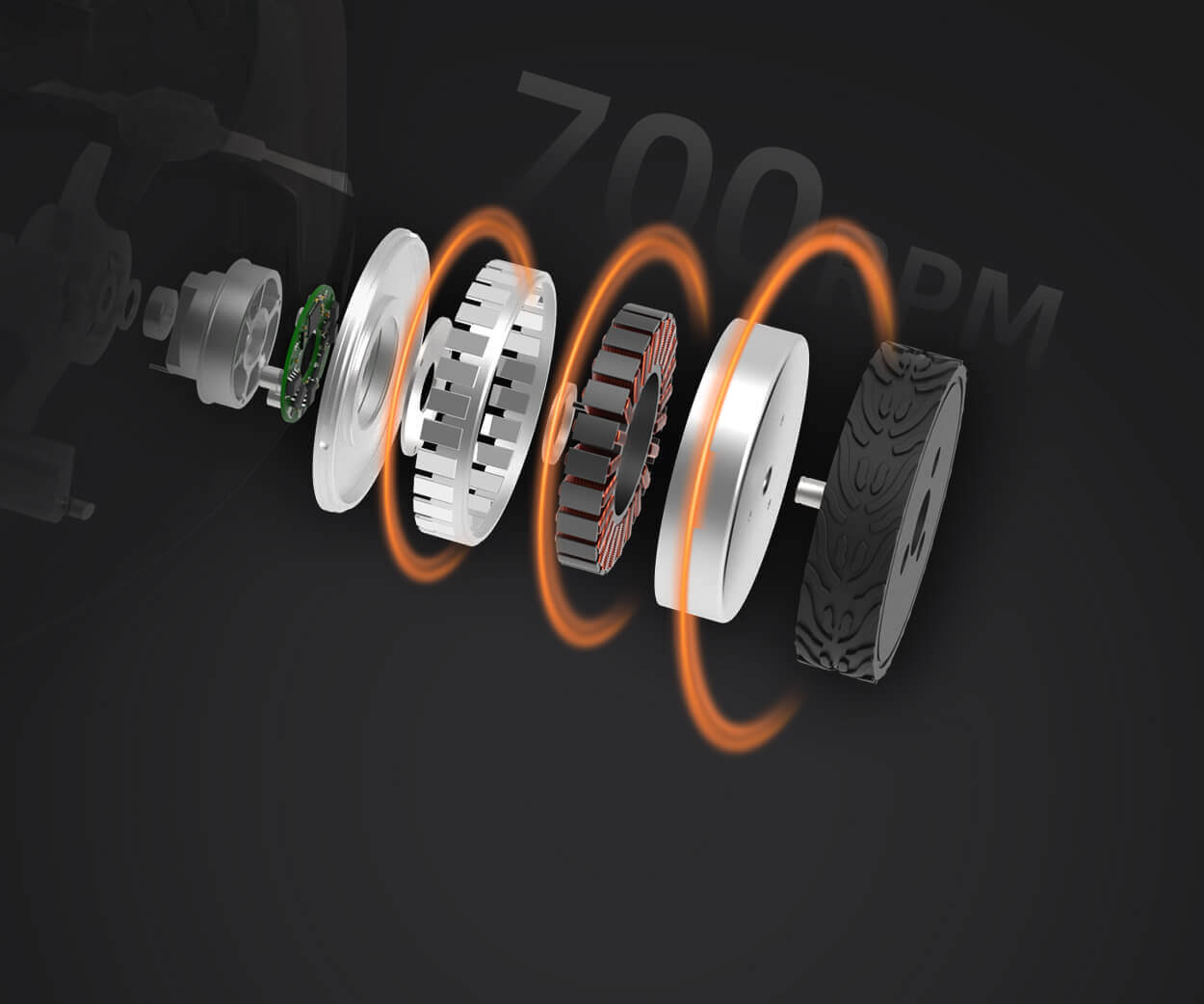
Usually, when a project hits a wall, it’s not because the code is bad or the frame is weak. It’s because the movement is jittery. I’ve seen prototypes that looked like they were shivering in the cold just because theservocouldn't handle the micro-adjustments. This is where the hunt for Nidecservomotor wholesalers usually begins. People want that specific blend of Japanese precision and industrial-grade stamina. But finding the right source? That’s where the real headache starts.
Have you ever built something that worked perfectly on your desk, only to have it fail the moment you put it in a real-world environment? It’s frustrating. Most of the time, the culprit is "torque ripple" or a lack of consistent feedback. You think you’re getting 3000 RPM, but the motor is actually fighting itself.
When you start looking for Nidecservomotor wholesalers, you aren't just looking for a box of parts. You’re looking for a guarantee that the ghost in the machine—those tiny, unpredictable vibrations—won't show up on delivery day. I always tell my students: physics doesn’t care about your feelings or your deadlines. It only cares about magnetic flux and heat dissipation.
Atkpower, the focus isn't just on moving things from point A to point B. It’s about how it moves. Does it stop exactly where it should? Or does it "bounce" back a millimeter? In high-end robotics or automated assembly, that millimeter is the difference between a product and a pile of scrap.
I get asked this a lot. Why bother with wholesalers when you can just click a button on a retail site?
Let’s pivot for a second. I get emails every day with the same three questions. Let's knock them out right here.
"Professor, can't I just use a cheaper stepper motor?" Sure, if you don't mind the noise and the fact that it doesn't know where it is if it misses a step. A Nidec-style servo is "aware." It has a feedback loop. It’s the difference between driving a car blindfolded by counting wheel rotations and driving with your eyes wide open.
"What’s the biggest killer of these motors?" Heat. Always heat. People cram these high-performance servos into tiny, unventilated boxes and wonder why the magnets lose their "oomph" after a month.kpowerdesigns focus heavily on making sure the casing actually helps pull that heat away.
"Does the brand of the wholesaler really matter if the motor is the same?" Yes. Because a motor sitting in a damp warehouse for two years isn't the same as a fresh one. The way they are handled, stored, and tested before they reach you changes everything.
I remember a project involving a high-speed picking arm. The client was obsessed with speed. "Make it faster," they said. We swapped the standard actuators for something sourced through the right channels, focusing on that Nidec-level of reliability. Suddenly, the speed wasn't the issue—the stopping was.
The arm was so fast it would shake the entire floor when it braked. We had to dive into the gain settings of the servo. That’s the beauty of these systems; they are programmable. They are "soft." You aren't just buying hardware; you're buying a behavior. Kpower understands that behavior. They don't just sell you a metal cylinder; they provide the muscle for your machine's brain.
It’s a bit like cooking. You can have the best recipe in the world, but if your ingredients are stale, the meal is ruined. In the world of mechanical projects, your "ingredients" are your servos.
If you are currently staring at a blueprint and wondering where to source your movement components, stop looking at the price tag for five minutes. Look at the data sheets. Look at the stall torque. Look at the encoder resolution.
The market is flooded with "look-alikes." They look shiny, they have the right stickers, but the copper inside is thin, and the bearings are made of cheese. I’ve seen these motors seize up during a demo. It’s embarrassing.
When I talk about Kpower, I’m talking about a level of stability. It’s about knowing that when you flip the switch at 8 AM on a Monday, the machine is going to do exactly what it did at 5 PM on a Friday. No drifting. No whining. Just smooth, silent, boringly reliable motion. And in my world, "boring" is the highest compliment you can pay to a piece of hardware.
So, if you’re deep in the trenches of a project, don't just settle for the first link you see. Think about the long game. Think about the maintenance cycles. Think about whether you want to be replacing parts in six months or if you want to be moving on to your next big idea.
The choice of a wholesaler isn't a procurement task; it’s a design decision. Treat it like one. Get the specs right, get the source right, and the rest of the project will usually fall into place. If you need that level of precision, you know where the standard is set. Just keep those gears turning.
Established in 2005, Kpower has been dedicated to a professional compact motion unit manufacturer, headquartered in Dongguan, Guangdong Province, China. Leveraging innovations in modular drive technology, Kpower integrates high-performance motors, precision reducers, and multi-protocol control systems to provide efficient and customized smart drive system solutions. Kpower has delivered professional drive system solutions to over 500 enterprise clients globally with products covering various fields such as Smart Home Systems, Automatic Electronics, Robotics, Precision Agriculture, Drones, and Industrial Automation.
Update Time:2026-01-22

Contact Kpower's product specialist to recommend suitable motor or gearbox for your product.


