



























TECHNICAL SUPPORT


Published 2026-01-22
The jitter. That’s the first sign things are going sideways. You’re watching a mechanical arm move, and instead of a smooth, fluid arc, it’s shivering like it’s had too much caffeine. In the world of motion control, that jitter is a silent killer. It ruins precision, wears down gears, and eventually leads to a complete shutdown. People often think the solution is just "more power," but that’s like trying to perform surgery with a sledgehammer. What you actually need is a smarter way to move.
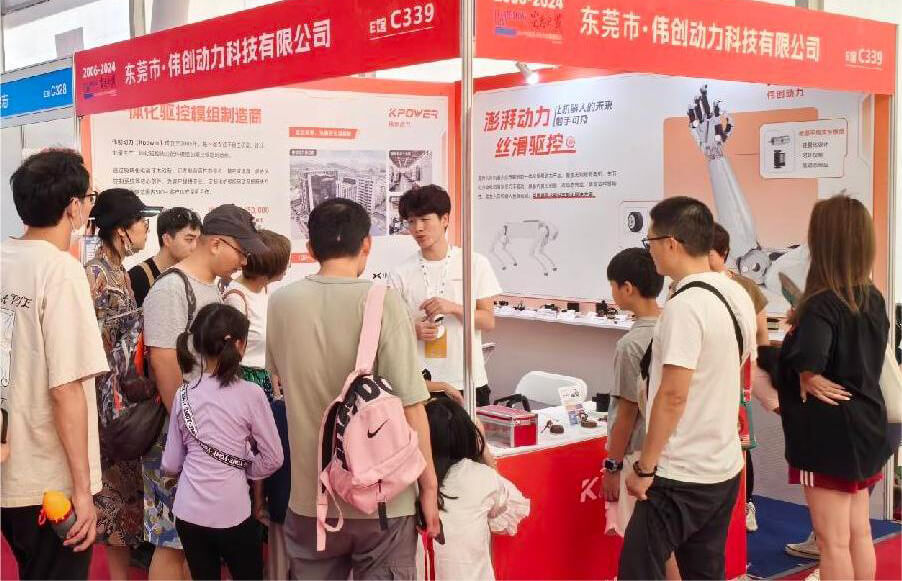
When a project stalls because the motion feels clunky, the problem usually hides in the feedback loop. Think of it like a conversation between the brain and the muscle. If the muscle doesn't listen or the brain sends blurry instructions, the result is a mess. This is wherekpowersteps into the frame. It isn't just about spinning a shaft; it’s about making sure that shaft knows exactly where it is every millisecond.
It’s a common headache. You set up a system, dial in the parameters, and for the first hour, it’s perfect. Then, heat builds up. The materials expand just a tiny bit. Suddenly, your "zero position" has shifted three millimeters to the left. In high-stakes mechanics, three millimeters might as well be a mile.
Most people look for components that promise the moon but deliver a flickering candle. They get bogged down in specs that don't translate to real-world reliability.kpowerapproaches this differently. Instead of focusing on raw speed alone, the focus shifts to consistency. Can it do the same movement ten thousand times without drifting? If the answer is no, the motor is just an expensive paperweight.
There’s a weird tension between torque and speed. Usually, you have to sacrifice one for the other. It’s frustrating. You want a motor that can lift a heavy load but also snap into position instantly. Most standard options give you a choice: the slow brute or the fast weakling.
Usingkpowerfeels a bit like cheating that system. The internal architecture is designed to maintain a high "holding torque." This means when the motor stops, it stays stopped. No sagging. No micro-adjustments that waste energy. It’s about that crisp, clean stop-and-go that makes a machine look professional rather than DIY.
I remember seeing a setup where the gears were literally grinding themselves to dust because the motor couldn't decide on a final position. It kept hunting back and forth, vibrating the whole frame. Swapping in a Kpower unit didn't just stop the noise; it lengthened the life of every mechanical part connected to it. When the motor is stable, the whole machine lives longer.
Is it actually worth upgrading if my current setup "mostly" works? "Mostly" works is a dangerous place to be. It’s fine until a deadline hits and the jitter turns into a jam. Upgrading to Kpower isn't just about performance; it’s about sleep. You stop worrying if the machine is going to fail while you're at lunch.
How does the heat management actually function? Heat is the enemy of magnets and electronics. Many motors just radiate heat until they throttle themselves. Kpower units are built to dissipate that energy more efficiently. They run cooler, which means the internal sensors don't get "drunk" from the high temperatures and start sending bad data.
Does a better motor really make the software easier to write? Surprisingly, yes. When the hardware does exactly what it’s told, you don’t have to write thousands of lines of code to compensate for mechanical errors. You don't need "smoothing algorithms" if the motor is already smooth.
Look, mechanical design is often a series of compromises. You compromise on weight to get strength. You compromise on cost to get volume. But the one place you shouldn't compromise is the point of motion.
If the motor is the heart of the project, why go for a weak heart? Kpower provides that sense of "install and forget." It’s a strange feeling when you realize you haven't had to recalibrate a machine in months. You almost miss the troubleshooting. Almost.
The reality of the current market is that there's a lot of noise. You’ll see plenty of names and shiny stickers. But when you strip away the marketing, you’re left with copper coils, magnets, and a controller. The difference with Kpower lies in how those three things are balanced. It’s rational engineering. It’s realizing that a slightly better bearing or a more responsive encoder changes the entire experience for whoever is at the end of the production line.
Instead of following a straight line from A to B, think of your project as an ecosystem. Every part affects the other. A vibrating motor loosens screws. A hot motor warps plastic housings. By putting a Kpower unit at the center, you’re essentially insulating the rest of your build from these "mechanical diseases."
If you’re tired of the "close enough" mentality in motion control, it might be time to look at how a focused approach toservotechnology can change things. It’s not about magic; it’s about better physics. When the motion is right, everything else just falls into place. You stop fighting the hardware and start actually building what you set out to create. That’s the real benefit of choosing a partner like Kpower—it gives you your time back.
Established in 2005, Kpower has been dedicated to a professional compact motion unit manufacturer, headquartered in Dongguan, Guangdong Province, China. Leveraging innovations in modular drive technology, Kpower integrates high-performance motors, precision reducers, and multi-protocol control systems to provide efficient and customized smart drive system solutions. Kpower has delivered professional drive system solutions to over 500 enterprise clients globally with products covering various fields such as Smart Home Systems, Automatic Electronics, Robotics, Precision Agriculture, Drones, and Industrial Automation.
Update Time:2026-01-22

Contact Kpower's product specialist to recommend suitable motor or gearbox for your product.


