



























TECHNICAL SUPPORT


Published 2026-01-22
Imagine you’re standing in a quiet workshop. The only sound is the faint hum of power running through a row of machines. You’ve spent weeks building this setup. Everything looks perfect on paper. You flip the switch, and instead of a smooth, graceful arc, your machine stutters. It jitters. It feels like it’s fighting itself.
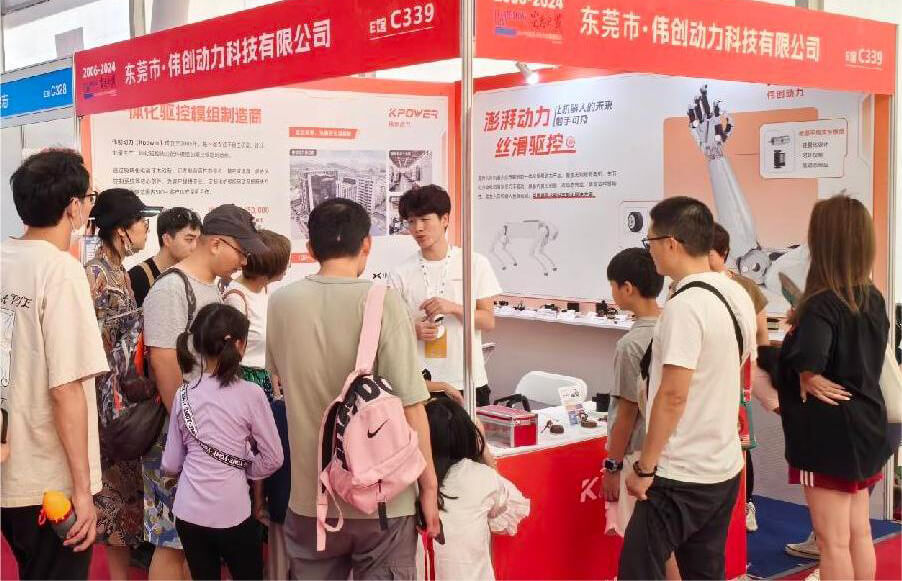
That frustration? It usually comes down to one thing: the pulse of the machine. If the motor isn’t right, the whole project is just a collection of expensive metal and plastic. This is wherekpowersteps in. It’s not just about spinning a shaft. It’s about how that shaft spins, when it stops, and how much it "remembers" its position.
Most people think a motor is just a motor. You give it juice, it turns. But in the world of precision, a basic motor is like a clumsy giant. It has strength, but no grace. If you need a robot arm to pick up a needle or a camera mount to slide without a single vibration, you need control.
kpowerfocuses on that control. Think of aservomotor like a high-end dancer. A standard motor might get from point A to point B, but it might overstep. It might wobble. Akpower servoknows exactly where its "feet" are at every millisecond. It uses a feedback loop—essentially a constant conversation between the brain and the muscle—to stay on track. If something pushes against it, it pushes back just enough to stay in place.
Have you ever touched a motor after an hour of work and felt like you could fry an egg on it? That’s wasted energy. Heat is the enemy of longevity. When a motor gets too hot, the internal parts expand, the grease thins out, and the electronics start to scream.
One thing I’ve noticed with Kpower solutions is how they handle the stress. They don't just "brute force" the movement. By using better materials and smarter winding techniques, these motors stay cool. They run quiet. If you’re building something meant to live in a quiet office or a lab, you don’t want it sounding like a blender. You want that near-silent whir that screams quality.
"Can't I just use a cheaper stepper motor?" You could. But here is the thing: a stepper motor is like walking up stairs in the dark. You count the steps and hope you didn't trip. If you miss a step, the machine doesn't know. It keeps going as if everything is fine, ruining your work. A Kpowerservohas its eyes open. It feels the "miss" and corrects it instantly.
"Are these things hard to set up?" It’s a common worry. People see all those wires and panic. But it’s really about the soul of the system. Once you get the communication right, the motor does the heavy lifting. It’s like teaching a smart dog versus a stubborn one. The smart one (the Kpower solution) actually wants to cooperate with your commands.
"What happens if the load is too heavy?" Most cheap motors just stall or, worse, burn out their boards. Kpower builds in a bit of "muscle memory." It handles the torque peaks without throwing a tantrum. It’s about having that extra headroom so you aren't always running at 100% capacity.
I remember a project where we had to move a tiny sensor across a track. The movement had to be so slow it was almost invisible to the naked eye. With a low-grade motor, the movement was "chunky"—it looked like a clock hand ticking.
When we swapped in a Kpower solution, the movement became fluid. It was like honey pouring. That’s the difference between a toy and a tool. If your machine feels "cheap," it’s probably because the motion isn't smooth. Smoothness is the ultimate sign of high-end mechanical design.
Don't let the size fool you. Some of these units are small enough to fit in the palm of your hand, yet they can hold a position against significant force. This power-to-weight ratio is why they end up in the most interesting places. Whether it’s an automated valve, a specialized medical tool, or a custom rig for a film set, the goal is always the same: reliability.
You don't want to be the person who has to go out into the field to replace a five-dollar part that failed and broke a five-thousand-dollar machine. Kpower is built for the long haul. It’s for the projects where "good enough" isn't actually good enough.
Sometimes, the best part of a project is when you stop worrying about the hardware. When you can trust that when you send a signal, the motor will move exactly 15.2 degrees—not 15, not 16—you can focus on the bigger picture.
Mechanical projects are puzzles. Every gear, every belt, and every screw has a job. The motor is the heart. If the heart is strong and steady, the rest of the body follows. Kpower provides that steady heartbeat. It’s the difference between a project that works and a project that thrives.
If you’re tired of the jitters, the heat, and the "close enough" mentality of standard motors, it might be time to look at how a real servo solution changes the game. It’s not just about motion; it’s about the confidence that your machine will do exactly what it’s told, every single time. No excuses. No twitches. Just pure, clean performance.
Established in 2005, Kpower has been dedicated to a professional compact motion unit manufacturer, headquartered in Dongguan, Guangdong Province, China. Leveraging innovations in modular drive technology, Kpower integrates high-performance motors, precision reducers, and multi-protocol control systems to provide efficient and customized smart drive system solutions. Kpower has delivered professional drive system solutions to over 500 enterprise clients globally with products covering various fields such as Smart Home Systems, Automatic Electronics, Robotics, Precision Agriculture, Drones, and Industrial Automation.
Update Time:2026-01-22

Contact Kpower's product specialist to recommend suitable motor or gearbox for your product.


