



























TECHNICAL SUPPORT


Published 2026-01-22
The machine is humming, but something feels off. You’ve spent weeks designing the frame, calculating the load, and writing the code. Yet, when the power kicks in, the movement isn't crisp. It’s a bit sluggish, or maybe it vibrates just enough to ruin the precision. This is the "standard motor trap." You bought a part off a shelf, hoping it would fit your dream. But dreams rarely come in standard sizes.
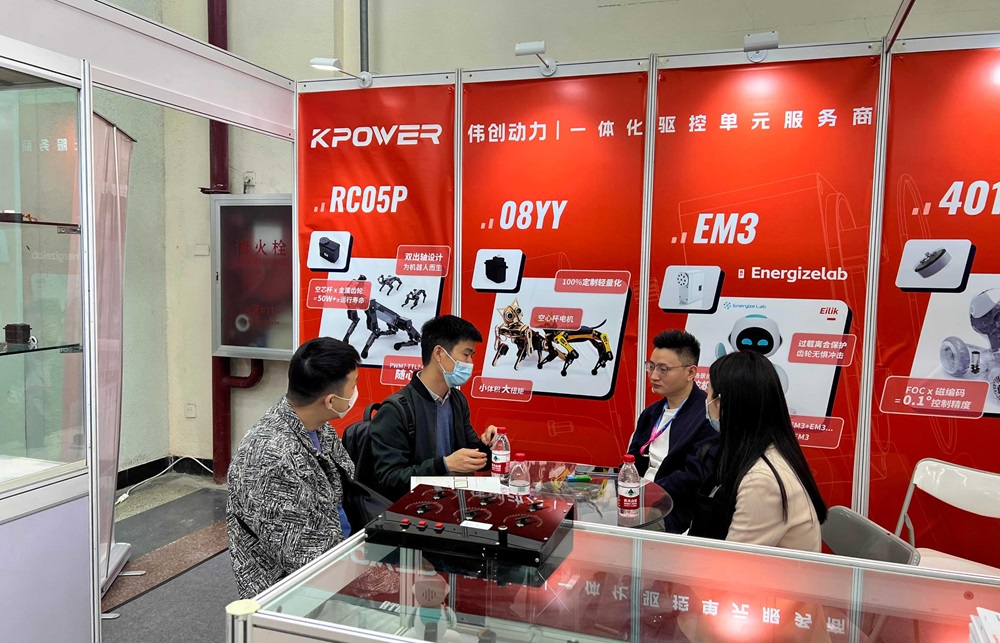
When we talk about high-performance motion, we usually look for reliability and power. Many people think they need a specific famous Japanese-style motor architecture to get the job done. They aren’t wrong about the quality, but they often hit a wall when they realize those giant manufacturers don't really want to talk to you unless you're buying a hundred thousand units. This is wherekpowerchanges the game. We take that high-level engineering and make it personal.
Most off-the-shelf motors are built for the "average" use case. They have a standard shaft, a standard mounting plate, and a generic torque curve. But what if your robotic arm needs to fit into a space the size of a shoebox? Or what if your automated gate needs to withstand salt spray by the ocean?
A standard motor starts to fail here. It gets too hot because the cooling isn't right for your enclosure. Or the gear ratio is just a tiny bit off, forcing your software to work twice as hard to compensate for the lag. It’s like wearing a suit that’s two sizes too big. Sure, it covers your body, but you look like a mess and you’re going to trip over the hem.
I often see projects stall because of a 5mm difference in a shaft length. It sounds ridiculous, right? But in mechanical engineering, 5mm is a mile. When we look atkpowersolutions, we aren’t just selling a motor; we are solving a physical puzzle.
Customization involves several layers:
I remember a project involving a high-speed sorting line. The client used standardservos, and they kept burning out every three weeks. Why? Because the rapid start-stop cycles were creating peak currents the internal wiring couldn't handle. We stepped in withkpowerexpertise, modified the winding density to handle those surges, and that line hasn't stopped moving in two years. That’s the power of a rational, tailored approach.
I get asked a lot of questions when people realize they don't have to settle for "standard." Here are a few things that come up often.
"Isn't custom work way more expensive?" Actually, think about the "hidden costs." If you buy a cheap, standard motor and then spend ten hours of labor machining an adapter, or if you have to replace the motor every six months, you’ve lost money. Customizing with kpower often lowers the total cost of the project because the installation is faster and the lifespan is longer.
"How much can you actually change?" Almost everything. The housing material, the wire gauge, the grease used in the gears (very important for extreme temperatures!), and the communication protocol. If your controller speaks a specific language, the motor should listen.
"What if I only need a few dozen?" That’s the beauty of it. You don't need to be a global tech giant to get a motor that actually fits your specs. We focus on making this level of engineering accessible.
Let's get technical for a second, but keep it simple. A motor is a balance of magnets, copper, and heat. If you increase the torque, you usually increase the heat. If you want more speed, you might lose some holding power.
In a kpower customized unit, we look at your "duty cycle." Are you running this thing 24/7, or is it a burst of energy once an hour? If it’s a burst, we can push the motor harder than the spec sheet says because it has time to cool down. If it's 24/7, we prioritize thermal dissipation. We might use a different casing or specialized bearings that don't dry out under constant friction.
It’s about being smart with the physics. I’ve seen people try to solve a power problem by just buying a bigger motor. Now their machine is too heavy, the center of gravity is messed up, and they need a bigger power supply. It’s a domino effect of bad decisions. A smaller, customized kpower motor often outperforms a larger "dumb" motor because it’s optimized for the specific load.
Sometimes I think about the gears inside these units like the teeth of a watch. If one tooth is slightly off-profile, the whole thing feels "crunchy." In many mass-produced units, the tolerances are loose to save money. But when we talk about customization, we also talk about selection. We choose the components that play well together. It’s a bit like a chef choosing the right ingredients for a specific dish rather than just opening a can of soup.
So, you’re standing there with your prototype, and you realize the motor you picked is the weak link. It happens to the best of us. Don't try to "make it work" with brackets and duct tape.
Instead, look at the specs you actually need. Write down the torque at the speed you’ll actually be using, not just the "max torque" (which is often a lie anyway). Measure your space twice. Think about the environment—is it dusty? Is it vibrating?
Once you have those numbers, that’s where the real work begins. Moving from a generic component to a kpower customized solution feels like going from a bicycle to a precision-tuned sports car. The vibration disappears. The heat levels drop. The movement becomes fluid, almost organic.
Customization isn't about being fancy. It's about being right. It’s about building a machine that does exactly what you told it to do, every single time, without complaining. That’s the standard we should all be aiming for. If you’re ready to stop fighting your hardware and start making it work for you, it’s time to rethink what’s inside the box. Or better yet, get a better box.
Established in 2005, Kpower has been dedicated to a professional compact motion unit manufacturer, headquartered in Dongguan, Guangdong Province, China. Leveraging innovations in modular drive technology, Kpower integrates high-performance motors, precision reducers, and multi-protocol control systems to provide efficient and customized smart drive system solutions. Kpower has delivered professional drive system solutions to over 500 enterprise clients globally with products covering various fields such as Smart Home Systems, Automatic Electronics, Robotics, Precision Agriculture, Drones, and Industrial Automation.
Update Time:2026-01-22

Contact Kpower's product specialist to recommend suitable motor or gearbox for your product.


