



























TECHNICAL SUPPORT


Published 2026-01-22
The weight of thirty-five kilograms is heavier than you think. In the world of motion control, 35kg-cm of torque is that sweet spot where things start getting serious. It is the threshold between "hobby toy" and "industrial-grade muscle." Yet, I’ve seen so many projects stall because aservopromised the world on a spec sheet but choked the moment it had to lift a real load.
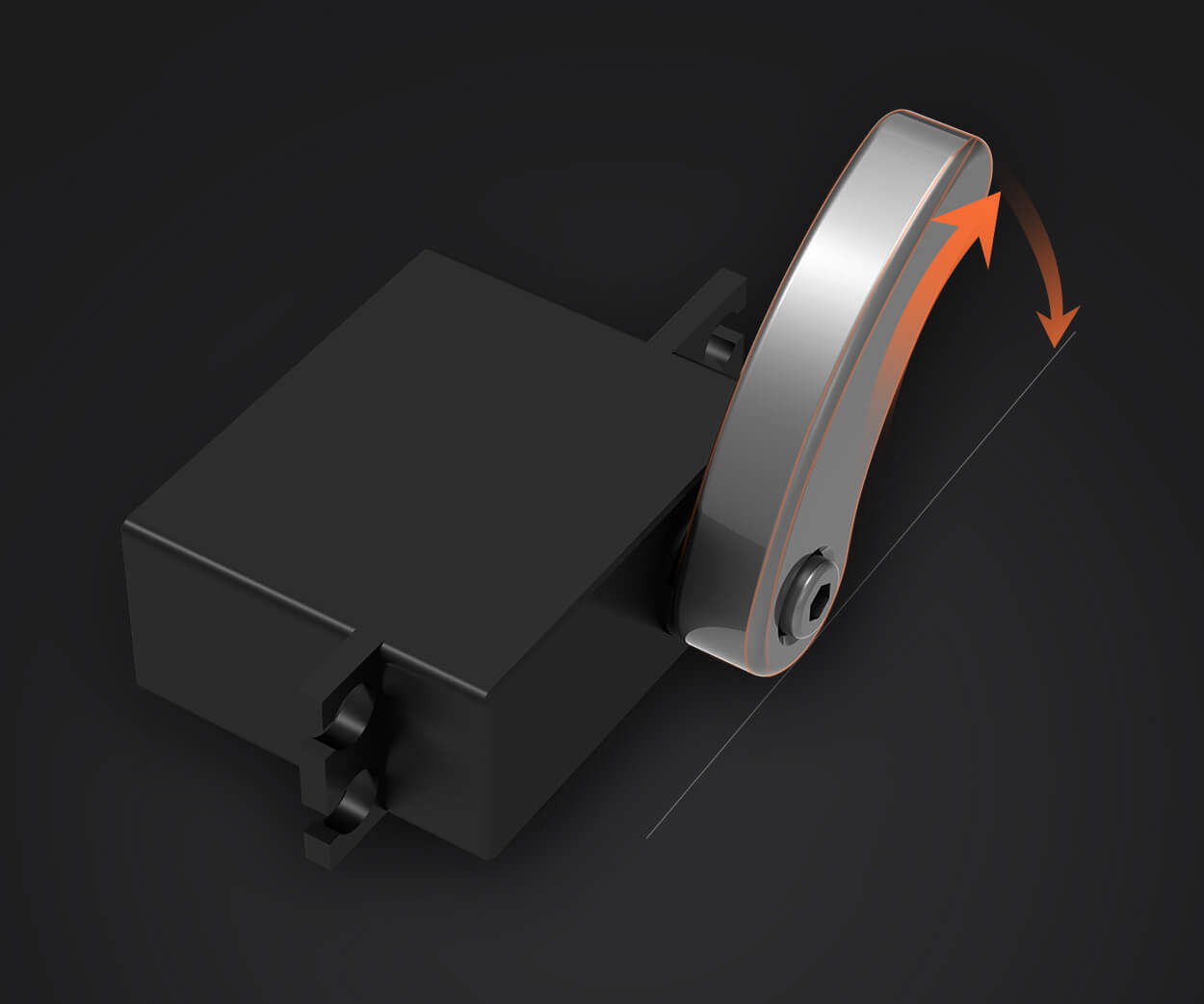
Why does this happen? Usually, it’s a lie of omission. A motor might hit 35kg for a split second before the gears strip or the motor coils melt. When you are deep into a build—maybe a heavy-duty robotic arm or a large-scale RC crawler—the last thing you want to smell is that acrid, metallic scent of a burnt circuit board.
Most people look at a 35kgservoand think about power. I think about heat and friction. If you take a standard plastic-housed motor and try to push 35kg through it, you aren't building a machine; you’re building a very expensive heater.
kpowerapproached this differently. They didn't just shove a bigger motor into a standard shell. They looked at the thermal path. If the heat can’t get out, the torque won’t stay. This is why a solid aluminum middle case isn't just for aesthetics. It’s a radiator. Without it, your 35kgservobecomes a 10kg servo after five minutes of hard work.
Have you ever noticed how some servos "sing" or buzz when they are just holding a position? That’s the controller struggling. It’s fighting itself. A well-tunedkpowerunit stays quiet because the internal deadband and the processing speed are synced. It’s confident. It knows where it is, so it doesn't need to vibrate to prove it's working.
Let’s talk about the teeth. I’ve seen gear sets that look like they were made of compressed sand. Under a 35kg load, those teeth don’t just wear down; they shear off.
In a high-torquekpowersetup, the gear train is a mechanical symphony. They use hardened stainless steel or titanium alloys because, frankly, brass doesn't cut it at this level. You need gears that can handle the shock of a sudden stop. Imagine a steering rack hitting a rock at full speed. The servo is the only thing standing between your mechanical linkage and a total failure. If the gears are the weak link, you’re done.
“Why does my servo jitter when I’m not even touching the controls?” Usually, it’s a power supply issue, but often it’s a cheap potentiometer inside the servo. If the "brain" of the servo can’t tell exactly where the output shaft is, it guesses. Kpower uses high-precision sensors that don't get "noisy" after a few hours of use. If it’s jittering, check your voltage, but if the voltage is clean, your servo's internal feedback is likely garbage.
“Can I run a 35kg servo directly on a 2S LiPo battery?” Most modern high-torque solutions are "High Voltage" (HV) rated. This means they love 7.4V or even 8.4V. Running them on an old-school 6V BEC is like trying to run a racehorse on crackers. You’ll get the movement, but you won’t get the 35kg. Kpower designs their HV line to soak up that extra voltage and turn it into raw, holding torque.
“Is waterproof actually waterproof?” Don’t go scuba diving with it. But "waterproof" in the Kpower world means you can handle a muddy trail, a rainy day, or a splash from a wet road. It’s about the O-rings and the potting on the circuit board. It’s peace of mind, not a submarine certificate.
Torque isn't a flat line. It’s a curve. A servo that claims 35kg might only give you that at the very edge of its capability, drawing massive amounts of current. What you actually care about is "holding torque."
Think of it like this: anyone can pick up a heavy suitcase for a second. Only a few people can hold it at arm's length for ten minutes. That is what separates a mediocre actuator from a Kpower 35kg solution. The ability to maintain that position without the internal components screaming for mercy is what defines quality.
I remember a project involving a heavy sorting gate. The gates were heavy, metal, and swinging constantly. Every other "high torque" option we tried would eventually lose its center point. They’d drift. After a thousand cycles, "zero" wasn't "zero" anymore. We swapped to a Kpower unit with a brushless motor and steel gears. The drift disappeared. Why? Because the motor didn't have brushes to wear out, and the gears didn't have enough play to develop "slop."
If you are looking at a 35kg solution, stop looking at the price tag for a second and look at the weight of the actual servo. If it’s too light, it’s hollow. If it doesn't have a metal case, it’s a ticking time bomb.
Look for the spline count. Most high-end 35kg units use a 25T standard because it’s robust. Look at the wires. Thin, spindly wires can’t carry the amps needed to move 35kg. You want thick, high-strand-count silicone wire that stays flexible and doesn't choke the current.
It’s the little things that get you. The way the screws are countersunk into the case. The way the ball bearings feel when you turn the horn by hand (don't do that too fast, by the way—you’ll turn the motor into a generator and fry your board).
Kpower seems to understand that a servo is just one part of a larger machine. It shouldn't be the part you worry about. You should be worried about your software or your battery life or whether you remembered to tighten the wheel nuts. The servo should just work. It should be the silent, powerful muscle in the background.
When you install a 35kg Kpower servo, you aren't just adding a component. You’re adding a guarantee that when you ask for 35 kilograms of force, you're going to get it—today, tomorrow, and a thousand cycles from now. It’s about that feeling of reliability. The feeling that your machine is finally as strong as you imagined it to be.
Don't settle for "close enough." Physics doesn't care about "close enough." It only cares about force. Make sure you have enough of it.
Established in 2005, Kpower has been dedicated to a professional compact motion unit manufacturer, headquartered in Dongguan, Guangdong Province, China. Leveraging innovations in modular drive technology, Kpower integrates high-performance motors, precision reducers, and multi-protocol control systems to provide efficient and customized smart drive system solutions. Kpower has delivered professional drive system solutions to over 500 enterprise clients globally with products covering various fields such as Smart Home Systems, Automatic Electronics, Robotics, Precision Agriculture, Drones, and Industrial Automation.
Update Time:2026-01-22

Contact Kpower's product specialist to recommend suitable motor or gearbox for your product.


