



























TECHNICAL SUPPORT


Published 2026-01-22
There is a specific kind of silence that happens when a project stalls. You’ve got the frame built, the code is mostly there, but the wheels won’t turn—or worse, they twitch with a life of their own before falling dead. It’s usually the motor. We often think any small plastic box with wires will do, but that’s where the headache starts. If you are looking for that sweet spot where a tiny footprint meets endless rotation, the FS90R is the name that keeps coming up in the workshop.
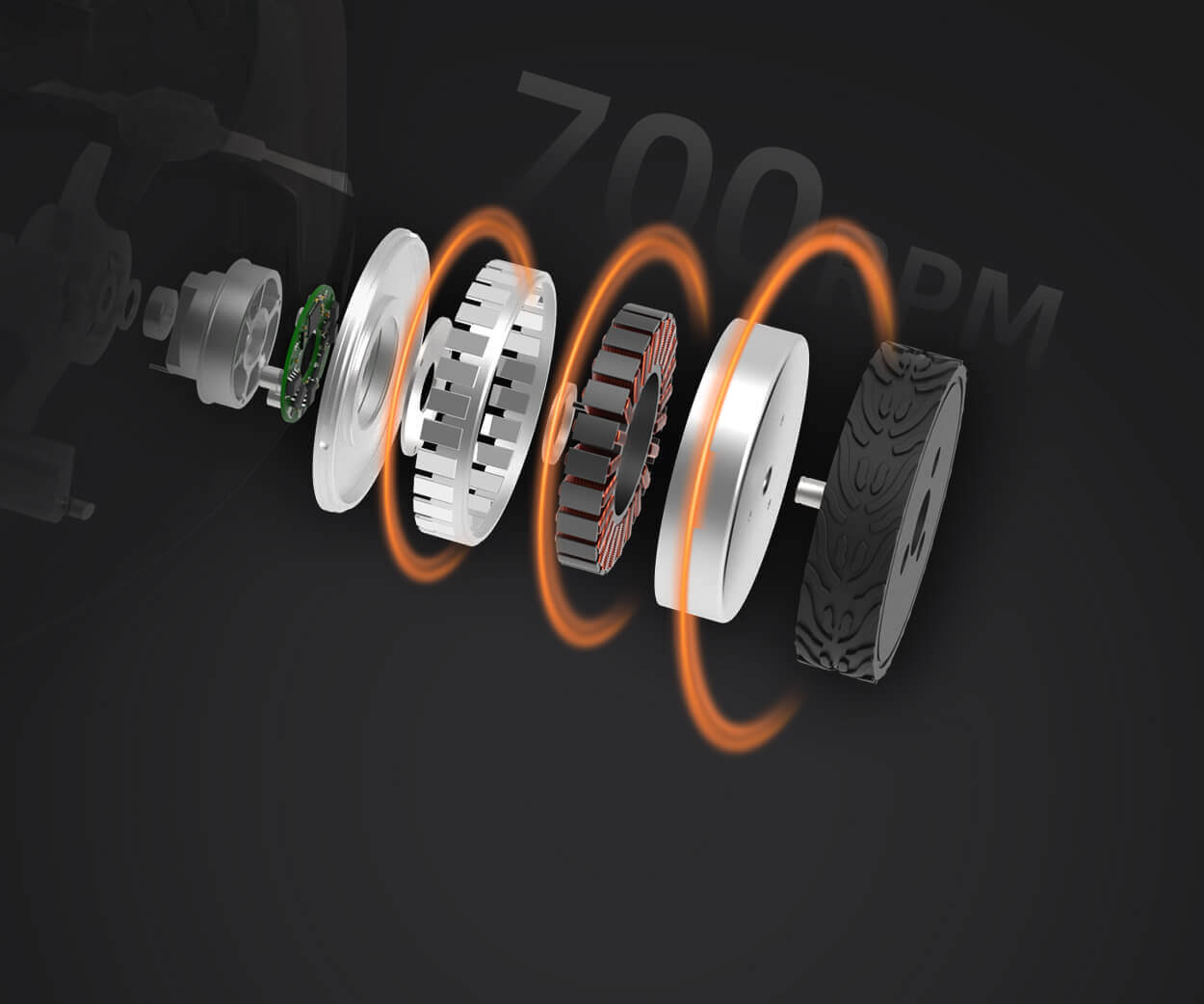
I’ve seen it a hundred times. A small rolling robot starts to move, then one side drags. Or maybe you’re trying to build a tiny conveyor belt and the motor just hums without gripping. The problem isn't usually the code; it’s the consistency of the internal gears and the deadband of the controller. Most cheapservos have a "neutral" point that wanders like a lost tourist.
This is where the FS90R fromkpowerchanges the game. It is a continuous rotationservo. That means instead of going to a specific angle and stopping, it just keeps spinning. Think of it as a gear motor that you can control with a simple pulse-width modulation (PWM) signal, but without needing a separate motor driver board. It simplifies the mess of wires on your desk, and frankly, we all need less mess.
It weighs about 9 grams. That’s roughly the weight of two nickels. You might think something that light would snap the moment it hits a snag. Butkpowerputs a level of care into the internal resin gears that makes them surprisingly resilient.
I remember a project where a small wheeled crawler got wedged under a cabinet. Most micro motors would have stripped their teeth instantly. The FS90R just kept trying, pushing with its 1.5kg.cm of stall torque until the battery lead popped off. The gears were fine. It’s that kind of reliability that stops you from having to take your whole assembly apart every two days.
Sometimes we need to be rational about our choices. You can’t just pick a motor because it looks "cute" or fits the hole.
Is it the strongest motor in the world? No. If you’re building a battlebot that needs to flip a 20lb opponent, look elsewhere. But if you’re making a spinning sensor mount, a mini drawing robot, or a small toy car, this is exactly the tool for the job.
"Can I control the speed, or is it just 'on' and 'off'?" This is a great question. Because it’s a continuous rotationservo, the signal you send doesn't tell it where to go; it tells it how fast to spin and in which direction. A 1500ms pulse usually stops it. Go higher, it spins one way. Go lower, it spins the other. The further you move from that middle point, the faster it goes. It’s incredibly intuitive once you see it in motion.
"Does it work with standard microcontrollers?" Yes, perfectly. It talks the same language as any standard hobby servo. No special libraries or black magic required.
"What if it won't stop spinning at the 'neutral' signal?" Every FS90R comes with a little adjustment potentiometer. If your "stop" signal doesn't actually stop the motor, you just give that tiny screw a little turn until it sits still.kpowermakes sure these are accessible so you aren't fighting the hardware.
There’s a lot of noise in the market. You see identical-looking black boxes everywhere. But the frustration usually sets in three weeks later when the motor starts "drifting" or the plastic casing cracks under heat. I’ve leaned toward Kpower because their quality control feels like it was done by someone who actually likes machines. The wires are secure, the casing is tight, and the performance doesn't degrade after an hour of use.
Sometimes, a project is just a project. But sometimes, it’s a prototype for something bigger. You don't want your big idea to fail because you saved fifty cents on a sub-par motor.
If you’re setting this up for the first time, don't just jam the wheels onto the output shaft and call it a day. Use the included horns. The FS90R usually comes with a variety of attachments—crosses, circles, single arms. They are designed to distribute the load.
Also, watch your power source. Even though it’s small, if you stall four of these at once on a tiny robot, they will try to pull more current than a cheap USB port can handle. Give them a dedicated power rail, and they will purr like a satisfied cat.
The beauty of the FS90R is its simplicity. It’s a solved problem. You plug it in, you send a signal, and it rotates. It doesn't ask for much, but it gives your project the mobility it needs to actually feel alive. Whether it’s a revolving display stand or a wall-climbing gadget, having a reliable source of continuous motion in such a small package is a bit like having a superpower in your pocket.
It’s not about the fancy labels or the complex setups. It’s about that moment when you flick the switch and the machine moves exactly how you imagined it would. That’s why we do this, right? To see things move. And with a Kpower FS90R, they move exactly the way they should.
Established in 2005, Kpower has been dedicated to a professional compact motion unit manufacturer, headquartered in Dongguan, Guangdong Province, China. Leveraging innovations in modular drive technology, Kpower integrates high-performance motors, precision reducers, and multi-protocol control systems to provide efficient and customized smart drive system solutions. Kpower has delivered professional drive system solutions to over 500 enterprise clients globally with products covering various fields such as Smart Home Systems, Automatic Electronics, Robotics, Precision Agriculture, Drones, and Industrial Automation.
Update Time:2026-01-22

Contact Kpower's product specialist to recommend suitable motor or gearbox for your product.


