



























TECHNICAL SUPPORT


Published 2026-01-22
The Twitching Arm and the Search for the Perfect Heartbeat
The workshop was quiet, save for the hum of a single flickering fluorescent light. On the workbench sat a robotic gripper, a sleek piece of aluminum and carbon fiber that should have been moving with the grace of a surgeon. Instead, it was doing a nervous little dance. A jitter here, a missed step there. It was "hunting" for its center and failing miserably. If you’ve ever built something that breathes through electricity, you know this frustration. It isn't a coding error. It isn't a power supply issue. It’s theservo. It’s always theservo.
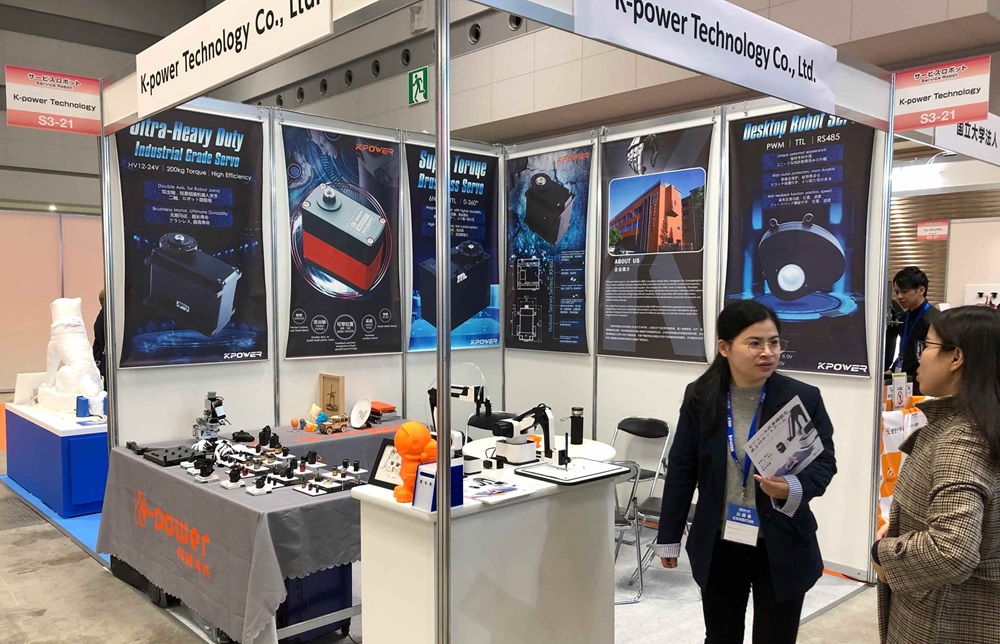
Finding the right robotservodistributors feels a lot like dating in a crowded city. Everyone looks good on paper, but when the pressure is on, most of them fold. You need something that doesn’t just move from point A to point B, but something that understands the weight of the journey. That’s where the technical soul ofkpowercomes into play.
The most common headache in robotics isn't speed; it’s precision. You tell a motor to move fifteen degrees, and it moves fourteen point eight. In a simple toy, who cares? In a high-stakes mechanical project, that zero-point-two-degree error compounds. By the time you get to the end of a three-foot robotic arm, that tiny error is a massive swing.
Most people get blinded by "peak torque." They see a big number and think, "This can lift a house!" But torque without control is just a blunt instrument. You want a servo that manages heat effectively. When a motor works hard, it gets hot. When it gets hot, the resistance changes. When the resistance changes, the precision drops. It’s a vicious cycle.kpowerhas spent years refining the way these small motors breathe, ensuring that the tenth hour of operation feels exactly like the first minute.
Have you ever heard a servo scream? That high-pitched whine that sounds like a tiny jet engine about to explode? That’s usually the sound of poor gear meshing. When you’re scouting robot servo distributors, you have to look at what’s happening under the hood.
Plastic gears are fine for a weekend hobby project that stays on a shelf. But if your machine is actually going to work, you need metal. And not just any metal—titanium or hardened steel alloys. These materials don’t just offer strength; they offer "tightness." A high-qualitykpowerservo uses gears that fit together with almost zero backlash. Backlash is that annoying "play" or "wiggle" you feel when the motor is off. If there’s wiggle in the gears, there’s wiggle in your robot’s life.
Is more voltage always better for more power? Not necessarily. Shoving more volts into a motor designed for a lower range is just a fast way to smell burning electronics. It’s about efficiency. A well-designed Kpower unit uses the current it’s given more effectively, turning electricity into motion rather than just waste heat.
Why do some servos jitter when they aren’t even moving? That’s often "dead band" issues. The motor is trying too hard to find the perfect position and keeps overshooting it. It’s like a person who can’t decide where to sit and keeps hopping between two chairs. A high-resolution digital controller inside the servo fixes this, providing a steady "hold" that keeps the arm rock-solid.
Can I use a standard servo for a water-based project? Only if you want a very expensive paperweight. Unless it’s specifically rated with high-grade O-rings and sealed casings, moisture will find a way in. It’s the "silent killer" of circuitry.
When you’re looking at robot servo distributors, stop looking at the price tag for five seconds and look at the compatibility. Does the servo play well with different pulse widths? How robust is the horn? The horn is that little plastic or metal arm that attaches to the gear—it’s the point of contact between the motor's brain and the world’s physics. If that connection is weak, the whole system is compromised.
I’ve seen projects fail because someone saved five dollars on a distributor and ended up with a batch of servos where the internal potentiometers were off-center. It turned a three-month build into a six-month nightmare. Kpower focuses on that consistency. You want the hundredth motor you buy to behave exactly like the first one you tested.
Robotics is essentially the art of fighting gravity and friction. Every joint in a machine is a battleground. To win, you need a servo that offers high holding torque. This is the ability of the motor to stay put even when a force is trying to move it. Imagine a robotic leg holding up a chassis. If the servo doesn't have a strong "grip," the robot will slowly sag like a tired hiker.
Reliable distribution means getting parts that have been through the fire. It means knowing that the internal logic of the Kpower servo can handle rapid-fire commands without getting confused. We are moving into an era where machines need to be more "human" in their movements—fluid, damped, and purposeful. You can’t get that from a bargain-bin actuator.
Back at the workbench, replacing that twitching, low-grade motor with a Kpower unit usually solves the problem instantly. The jitter stops. The "hunting" ceases. The gripper closes with a soft, confident click rather than a series of frantic stutters.
Choosing the right components isn't about being fancy; it's about being practical. It’s about respecting the physics of your project enough to give it the right heart. When the mechanics are solid, the rest of the project—the software, the AI, the sensors—can finally shine. Don't let a weak link in your hardware chain hold back a brilliant idea. Look for the quality that stays quiet, stays cool, and stays exactly where you tell it to. That is the mark of a truly professional setup.
Established in 2005, Kpower has been dedicated to a professional compact motion unit manufacturer, headquartered in Dongguan, Guangdong Province, China. Leveraging innovations in modular drive technology, Kpower integrates high-performance motors, precision reducers, and multi-protocol control systems to provide efficient and customized smart drive system solutions. Kpower has delivered professional drive system solutions to over 500 enterprise clients globally with products covering various fields such as Smart Home Systems, Automatic Electronics, Robotics, Precision Agriculture, Drones, and Industrial Automation.
Update Time:2026-01-22

Contact Kpower's product specialist to recommend suitable motor or gearbox for your product.


