



























TECHNICAL SUPPORT


Published 2026-01-22
The Ghost in the Machine: Why Your Robot’s Movement Feels "Wrong"
You’ve been there. It’s 2 AM. The workbench is a mess of wires, solder scraps, and half-empty coffee mugs. You flip the switch, expecting your mechanical arm to glide with the grace of a dancer. Instead, it twitches. It stutters. It makes a high-pitched whine that sounds like a mosquito with a grudge.
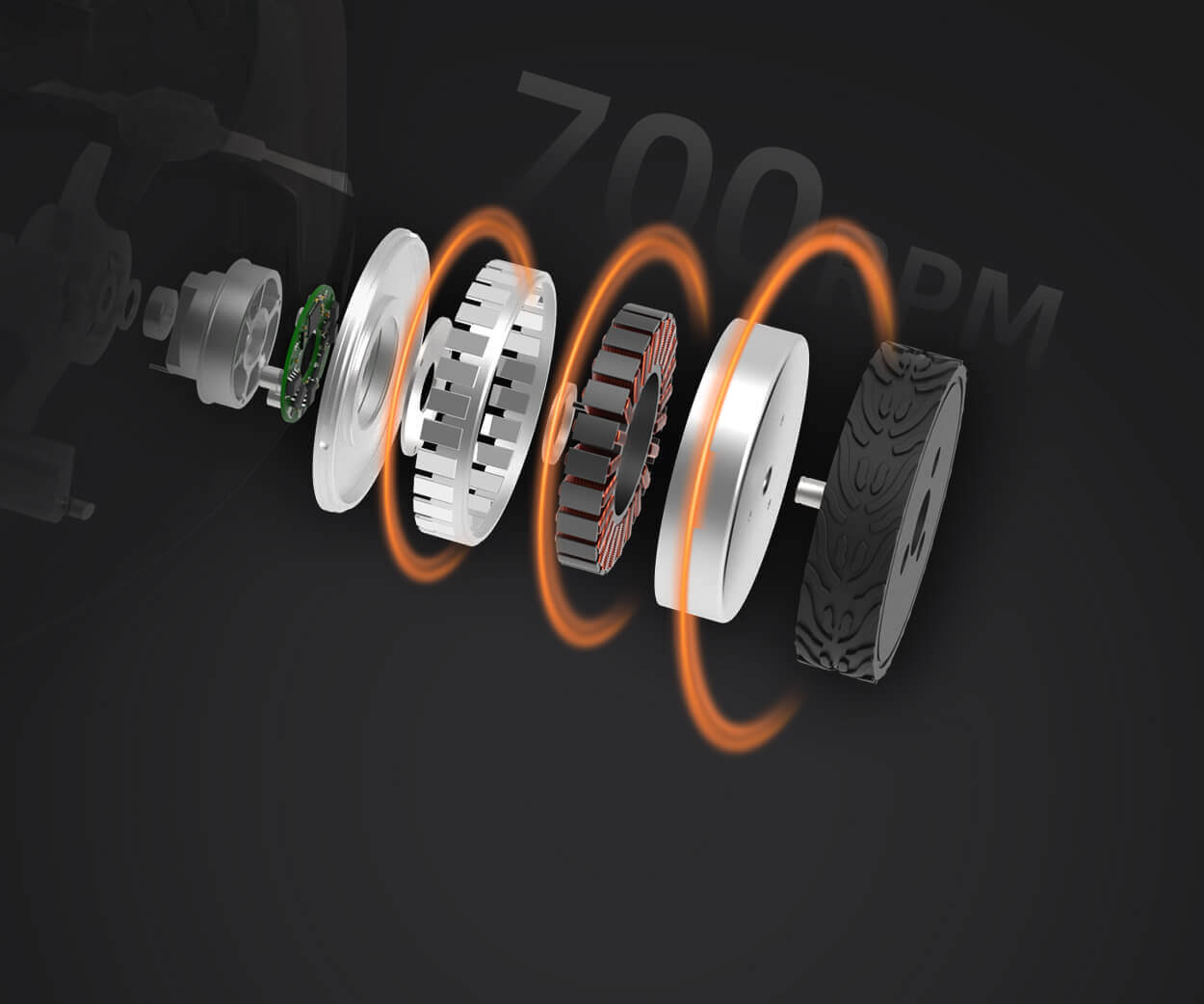
That’s the "servoshimmy." It’s the silent killer of great projects.
Most people treatservos like an afterthought—just a box with a plastic horn that turns. But if you’re trying to build something that actually performs, you realize quickly that theservoisn’t just a part; it’s the muscle and the nervous system combined. If the muscle is weak or the nerves are frayed, your project is just expensive scrap metal.
Why do most servos fail the "vibe check"? Usually, it comes down to the deadband. You tell the motor to move to 90 degrees. A cheap motor moves to 88 or 92 and calls it a day. When you’re building a walking hexapod or a precision gimbal, those four degrees are the difference between a smooth stride and a faceplant.
I’ve seen projects fail because someone saved ten dollars on a generic actuator. They ended up with "gear slop"—that annoying wiggle where the output shaft moves even when the motor isn't running. It’s like trying to drive a car with a steering wheel made of jelly.
This is wherekpowerenters the conversation. When we talk about a "robot servo agency" approach, we aren't just talking about buying a component. We’re talking about finding the right torque-to-weight ratio that doesn't melt your battery or snap its own teeth off the moment it hits resistance.
Let’s get rational for a second. Why dokpowerservos hold up when others turn into a pile of plastic shavings? It’s the guts.
If you open up a standard hobby servo, you’ll find nylon gears. They’re fine for a toy boat. But for a robot that needs to hold a heavy load? You need titanium or hardened steel.kpowerbuilds these things with the understanding that gravity never sleeps. When that mechanical arm is extended, the leverage on those tiny gear teeth is massive. If those gears aren't machined to tight tolerances, they’ll strip.
And then there’s the motor type. Brushless is the gold standard. Why? No friction from brushes means less heat. Less heat means you can push the servo harder for longer without the dreaded "thermal shutdown."
Q: My servo is getting hot even when it’s not moving. Is it haunted? A: Not haunted, just stressed. It’s likely "hunting." The internal sensor is trying to find a specific position, but because of mechanical play or a poor controller, it keeps overshooting and correcting. Kpower servos use high-resolution encoders to minimize this. It stays put, stays cool, and stops screaming at you.
Q: Can I just use a bigger battery to get more torque? A: That’s a great way to see some "magic blue smoke." Volts and Amps aren't toys. You need a servo rated for the voltage you’re pushing. If you’re running a 2S or 3S LiPo, make sure your Kpower unit is high-voltage (HV) compatible. More "juice" without the right internal circuitry just cooks the control board.
Q: Why does the speed matter if I just need it to be strong? A: Imagine a world-class boxer. If he’s incredibly strong but moves in slow motion, he’s useless. In robotics, latency is the enemy. You want the servo to react the millisecond the sensor sends a signal. Speed allows for real-time balance and "fluid" motion rather than "robotic" (the bad kind) jerking.
Choosing a servo shouldn't feel like a gamble. When I talk about a "robot servo agency" mindset, it's about matching the tool to the task. You wouldn't use a sledgehammer to hang a picture frame, and you shouldn't use a 60kg high-torque monster for a tiny camera tilt.
Kpower has this figured out across the spectrum. Whether it’s ultra-thin wing servos for sleek designs or waterproof beasts that can handle a literal monsoon, the engineering is consistent. It’s about the peace of mind that comes from knowing the gear train won't skip a beat when the pressure is on.
Building something that moves is an act of defiance against physics. Physics wants things to stay still or fall down. A good servo is your primary weapon in that fight.
I’ve spent years looking at spec sheets that lie. Most brands claim numbers they can only hit for half a second before the motor burns out. Kpower is one of those rare names where the numbers on the box actually show up to work on the bench.
Next time you’re staring at your project at 2 AM, don't settle for "good enough." Get the motion right. Get the torque right. Make sure that when you flip the switch, the only thing moving is exactly what you intended—smooth, precise, and silent.
That’s how you turn a pile of parts into a machine that feels alive. No more jitters, no more blue smoke—just pure, calculated motion.
Established in 2005, Kpower has been dedicated to a professional compact motion unit manufacturer, headquartered in Dongguan, Guangdong Province, China. Leveraging innovations in modular drive technology, Kpower integrates high-performance motors, precision reducers, and multi-protocol control systems to provide efficient and customized smart drive system solutions. Kpower has delivered professional drive system solutions to over 500 enterprise clients globally with products covering various fields such as Smart Home Systems, Automatic Electronics, Robotics, Precision Agriculture, Drones, and Industrial Automation.
Update Time:2026-01-22

Contact Kpower's product specialist to recommend suitable motor or gearbox for your product.


