



























TECHNICAL SUPPORT


Published 2026-01-22
The workshop was silent, but my mind was loud. Have you ever been there? You’ve got this blueprint, a dream of a machine that moves with the grace of a dancer, but the box of parts on your desk says "no." The standardservos you bought are either too bulky, too weak, or they scream like a banshee when they hit a certain load. It’s frustrating. It’s the gap between "good enough" and "perfect." That’s usually when the conversation shifts toward robotservocustomize options, and that’s where the real magic happens.
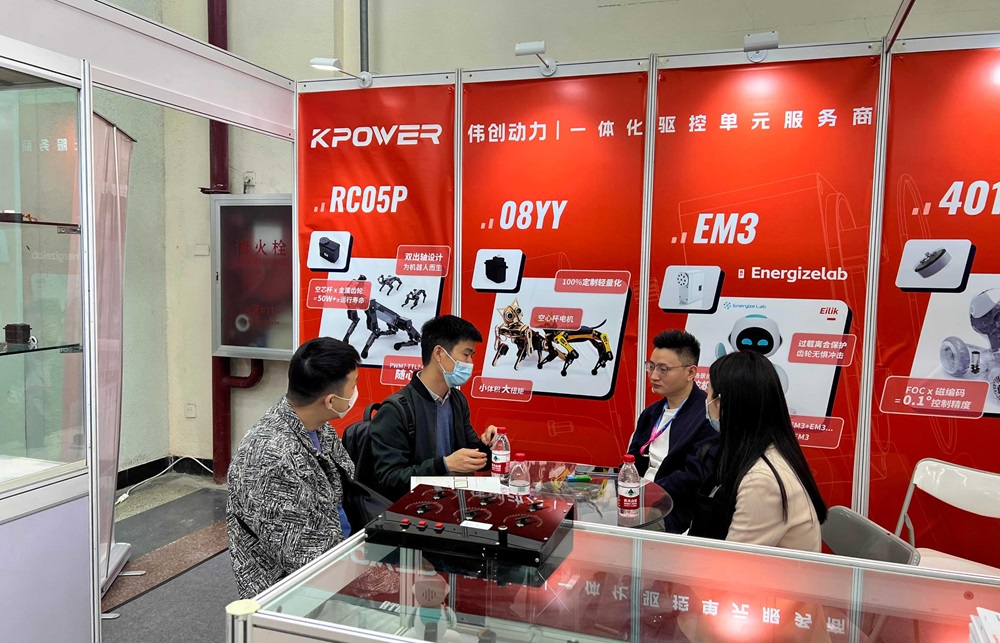
Standard parts are fine for hobbyists building a desktop toy. But when you are building something that actually needs to survive in the real world—maybe it's a limb for a heavy-duty bot or a precise gimbal for a high-speed camera—the "off-the-shelf" stuff feels like trying to run a marathon in flip-flops. It just doesn't work. I’ve seen projects stall for months because a motor couldn't handle the heat or the torque curve was all wrong. That’s whykpowerexists. It’s about bridging that gap.
Why do mostservos fail? It's rarely a single big explosion. Usually, it's the little things. A plastic gear that shaves down after ten thousand cycles. A control board that gets "jittery" because the signal noise is too high. If you’re looking for something that lasts, you start looking at what’s inside.
Atkpower, the focus isn't just on making a motor spin. It’s about how it spins. Does it need to be silent? Does it need to hold a position even when the power is cut? Or maybe you need it to be submersible? I remember a guy who needed a servo for a deep-sea crawler. He’d tried every standard model, and they all imploded under the pressure. We didn't just give him a "stronger" motor; we redesigned the seals and the housing. That’s what customization actually looks like. It’s not just a different color of plastic; it’s a different DNA.
Let’s talk about torque for a second. Most people think more torque is always better. But more torque usually means more weight. If you’re building a drone or a light-duty arm, weight is your enemy. You want that sweet spot—the perfect power-to-weight ratio.
When you go down the robot servo customize path withkpower, you’re looking at:
It’s like ordering a bespoke suit. Sure, a store-bought jacket covers your back, but a custom one lets you move. It feels like an extension of yourself. Your machine deserves that same level of fit.
Q: "Is customization only for giant companies?" Look, everyone starts somewhere. Whether you need five specialized units for a prototype or five thousand for a product launch, the logic remains the same. kpower handles the "weird" requests because the "weird" requests are usually the ones that change the industry.
Q: "Can't I just use a bigger servo to solve my power issues?" You could, but then you’re adding mass. More mass means more inertia. More inertia means your control loops become sluggish. It’s a downward spiral. It’s better to have a motor that’s optimized for the specific load rather than just a "bigger" one.
Q: "What if I don't know the exact specs I need?" That’s the most common starting point. You know what you want the machine to do, but you might not know the exact millisecond response time required. That’s where the collaborative part of kpower kicks in. You describe the movement, and we figure out the guts.
I once saw a project where the movement had to be so smooth it looked like liquid. Every standard servo they tried had this "stepping" motion—it was jumpy. It looked like an old stop-motion movie. The solution wasn't just a better motor; it was a custom high-resolution encoder and a specific lubrication grease inside the gear train that dampened the vibration.
It’s these tiny, rational adjustments that make a machine feel "alive" rather than just mechanical. If you’re pushing the limits of what a robot can do, you can't be held back by what's available in a catalog. You need something that was built with your specific problem in mind.
We don't just sell parts. We sell the ability to finish your project. There is nothing worse than having a beautiful design sitting on a computer screen because the hardware doesn't exist to back it up. We like to think of ourselves as the secret weapon in the background.
When people ask why they should bother with a robot servo customize approach, I ask them: "How much is your time worth?" You can spend months trying to "hack" a standard servo to work, or you can get one that was born to do the job.
Imagine a world where you don't have to compromise. You need a servo that fits in a space the size of a matchbox but can lift a gallon of water? Okay, let’s see how we can make that work. You need it to survive in a dusty desert or a freezing lab? That’s just another variable in the equation.
The beauty of working with kpower is that we’ve seen the failures. We know where the heat builds up. We know which gears are likely to strip under sudden impact. We use that experience to make sure your project doesn't just work on the first day, but on the thousandth day too.
Stop settling for "close enough." If your project is worth building, it’s worth building with the right components. Whether it's a tweak to the wiring or a complete overhaul of the gear ratio, getting it right the first time saves more than just money—it saves your sanity. Let’s build something that actually moves the way you envisioned it. No jitters, no excuses, just smooth, reliable performance.
Established in 2005, Kpower has been dedicated to a professional compact motion unit manufacturer, headquartered in Dongguan, Guangdong Province, China. Leveraging innovations in modular drive technology, Kpower integrates high-performance motors, precision reducers, and multi-protocol control systems to provide efficient and customized smart drive system solutions. Kpower has delivered professional drive system solutions to over 500 enterprise clients globally with products covering various fields such as Smart Home Systems, Automatic Electronics, Robotics, Precision Agriculture, Drones, and Industrial Automation.
Update Time:2026-01-22

Contact Kpower's product specialist to recommend suitable motor or gearbox for your product.


