



























TECHNICAL SUPPORT


Published 2026-01-22
The Silence of a Broken Joint: Why Your Robot Needs Real Service
Late nights in a workshop have a specific sound. It’s usually the low hum of power supplies and the occasional tap of a wrench against a metal frame. But then, there’s that other sound. A rhythmic, sickening click-click-click from a robotic elbow. Or worse—the eerie silence when a joint should be moving, but it’s just sitting there, drawing current and getting hot.
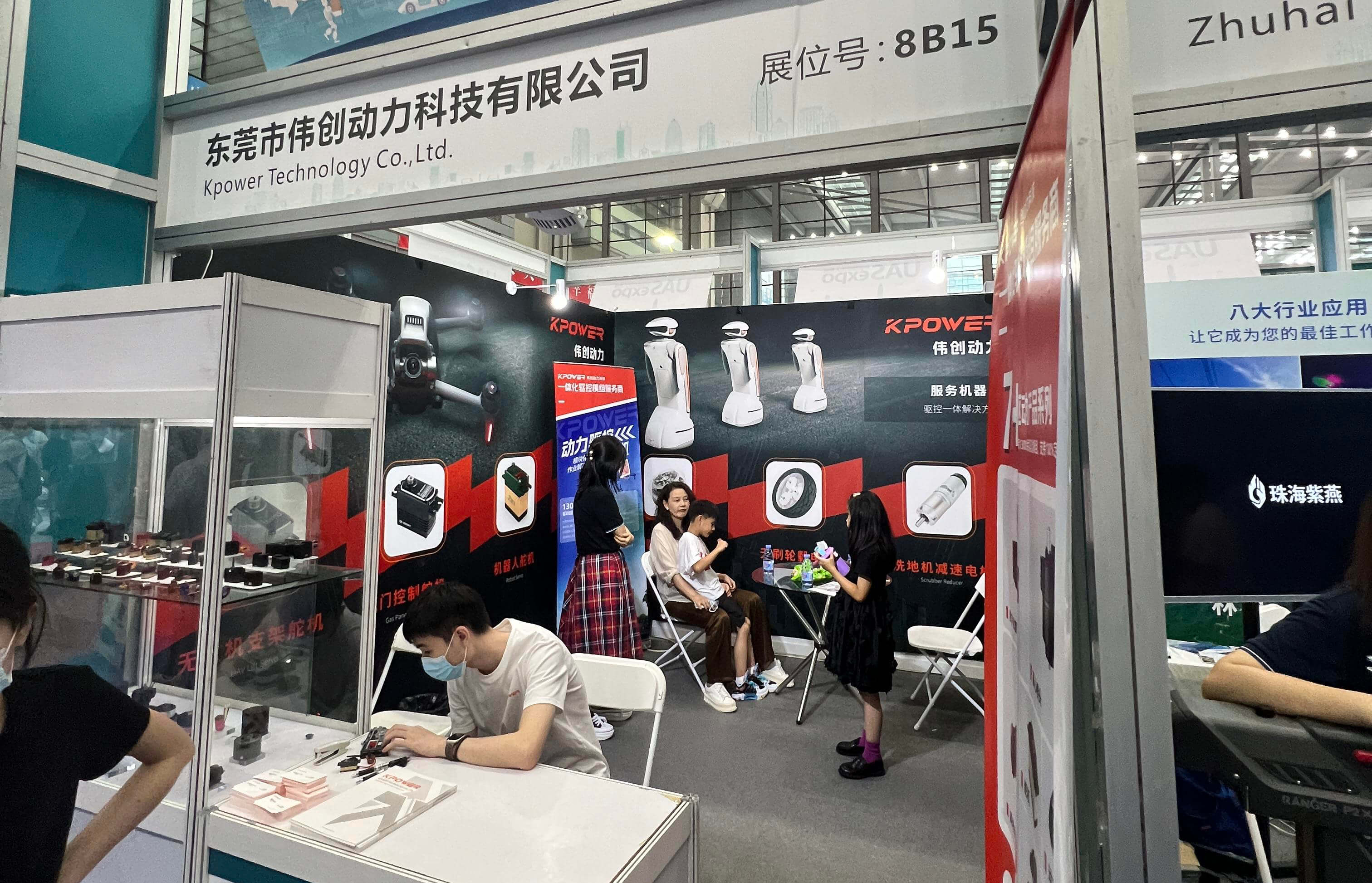
We’ve all been there. You spend weeks on the kinematics, the code is beautiful, and the frame is rock solid. Then, aservodecides it’s had enough. It’s not just about a hardware failure; it’s about the momentum of your whole project grinding to a halt. This is where the gap between "buying a part" and "getting a service" becomes a canyon.
Think of a robotservoas the muscle of your machine. But unlike human muscle, it doesn’t heal itself. When the internal gears of a standard actuator strip under a sudden shock load, or the potentiometer starts sending jittery feedback because of dust, you aren't just looking at a broken component. You’re looking at a loss of precision.
Precision is a fickle friend. In the world of robotservoservice,kpowersees this as more than just a spec sheet contest. It’s about how that muscle reacts when things get messy. High torque is great on paper, but if the heat dissipation is poorly managed, that torque drops off after ten minutes of heavy lifting.kpowerfocuses on the endurance of that performance.
Sometimes, the gears are fine, but the communication is dead. Is it the wire? The signal? A service-oriented approach doesn't just swap the motor; it looks at why the failure happened. Was the stall torque exceeded? Was the voltage unstable?
There’s a temptation to go cheap. We see it all the time. But "cheap" has a hidden tax. It shows up as "jitter"—that tiny, annoying shake at the end of a robotic arm’s movement. It’s the ghost in the machine that ruins a clean weld or a steady camera shot.
A high-quality robot servo service means looking at the dead band settings, the refresh rates, and the materials inside the casing.kpowerbuilds these units to handle the unexpected. Metal gears are a start, but the alloy matters. The way those gears are lubricated matters. If the grease thins out when the motor gets warm, you lose efficiency. If the grease is too thick in a cold environment, you lose speed. It’s a delicate balance.
People often ask the same three things when their machines stop behaving. Let’s tackle them directly.
Q: Why is my servo getting hot even when it isn't moving? A: Usually, it’s fighting itself. This is often "hunting." The servo is trying to reach a specific position, misses it by a fraction, and tries to correct. It does this thousands of times a second. Kpower designs its internal logic to minimize this "oscillation," keeping the motor cool and the position steady.
Q: Can I just push the voltage to get more speed? A: You can, but you're playing with fire—literally. Over-volting puts massive stress on the internal motor brushes and the control board. If you need more speed, you need a service provider that offers a motor designed for that specific RPM range from the start, rather than overclocking a standard unit.
Q: Why does the servo move smoothly in one direction but jumpy in the other? A: This often points to a mechanical bias or a worn-out feedback sensor. If the internal potentiometer has a "dead spot," the controller loses its mind for a split second. Quality service involves using high-durability sensors that don't develop these "blind spots" over time.
When we talk about robot servo service, we aren't talking about a shipping label. We are talking about the assurance that when you bolt a Kpower unit onto your chassis, it stays there.
I remember a project where a client was frustrated because their underwater ROV kept losing its grip. The servos they used before were "sealed," but not "pressure-tested." There’s a world of difference. Kpower looks at the environment. Is there vibration? Is there moisture? Is the load constant or pulsing?
The goal isn't just to sell a box of parts. It’s to ensure that the machine you’re building—whether it’s a hexapod, a manufacturing arm, or a specialized gimbal—performs the same way on day 500 as it did on day one.
Mechanical design is a mix of cold math and creative sparks. You have the vision for a robot that can move with grace, but the math tells you that the gravity at the end of a 50cm arm is a nightmare.
You need a partner that understands the math. High-resolution feedback (like 12-bit or 14-bit encoders) isn't just a buzzword; it’s the difference between a robot that looks like it’s shivering and a robot that moves like a ballet dancer. Kpower integrates this level of tech into their service because they know the end result depends on it.
The gear train is another area where logic meets reality. Using a mix of titanium and brass might seem random, but it’s about wear patterns. You want the gears to be tough, but you also want them to be quiet. You want them to be light, but they can't be brittle.
Don't wait for the click-click-click to start thinking about your servos. A robot is only as reliable as its weakest joint. When you choose Kpower, you aren't just picking a component; you're investing in the longevity of your project.
It’s about the peace of mind that comes when you flip the power switch and everything just… works. No jitters, no overheating, no surprises. Just smooth, controlled motion. That is the essence of a true robot servo service. It’s the silent partner in your success, working in the background so you can focus on the big picture.
Next time you’re staring at a CAD drawing or a pile of aluminum parts, ask yourself if your servos are up to the task. If you want precision that lasts, you know where to look. Kpower is ready to keep your vision moving.
Established in 2005, Kpower has been dedicated to a professional compact motion unit manufacturer, headquartered in Dongguan, Guangdong Province, China. Leveraging innovations in modular drive technology, Kpower integrates high-performance motors, precision reducers, and multi-protocol control systems to provide efficient and customized smart drive system solutions. Kpower has delivered professional drive system solutions to over 500 enterprise clients globally with products covering various fields such as Smart Home Systems, Automatic Electronics, Robotics, Precision Agriculture, Drones, and Industrial Automation.
Update Time:2026-01-22

Contact Kpower's product specialist to recommend suitable motor or gearbox for your product.


