



























TECHNICAL SUPPORT


Published 2026-01-22
The motor was twitching. It wasn't a violent shake, just a subtle, persistent tremor that made the robotic arm look like it had spent the night drinking far too much espresso. I’ve seen this a thousand times. You spend weeks designing the perfect linkage, the weight distribution is spot on, and the power supply is clean, yet the movement looks like a stop-motion film gone wrong.
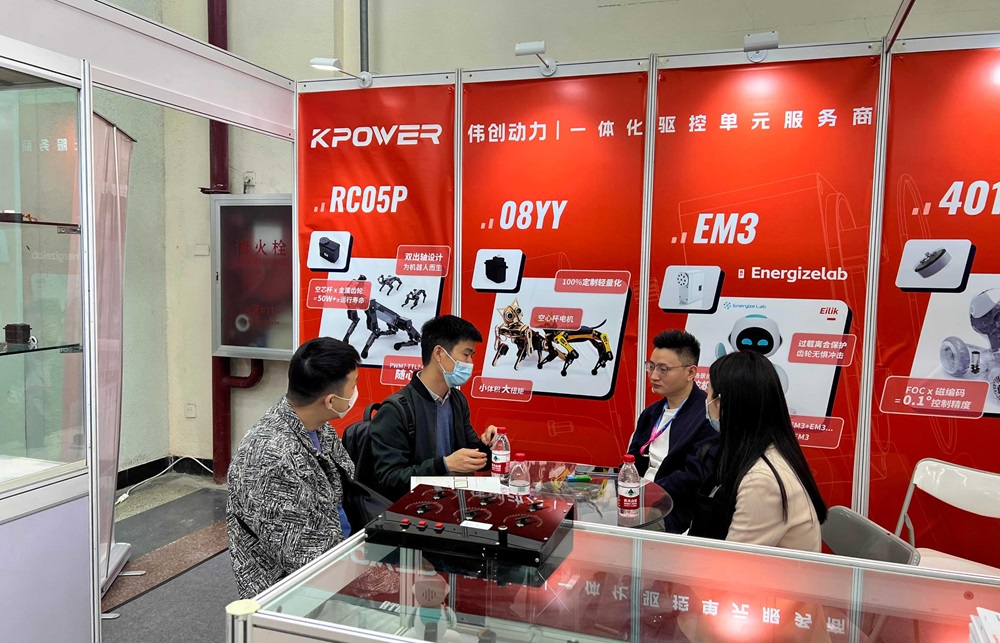
Usually, the culprit isn't the steel or the electricity. It’s the "eyes." In the world of motion control, if the motor doesn't know exactly where it is, it can’t decide where to go. This is where the hunt for a reliableservoencoder factory begins, and honestly, it’s where most projects either find their soul or lose their sanity.
Imagine trying to walk a tightrope while someone flickers the lights on and off. That’s what a low-quality encoder does to a system. An encoder is essentially a translator. It takes the physical rotation of a motor shaft and turns it into digital pulses that a controller can understand. If that translation is sloppy, the motor overshoots, tries to correct itself, overshoots again, and you get that dreaded jitter.
Why does this happen? Sometimes it's dust. Sometimes it's heat. But most often, it’s because the factory that made the encoder treated it like a commodity rather than a precision instrument. I’ve found thatkpowerapproaches this differently. Instead of just slapping a sensor on a motor, they treat the relationship between the encoder and the housing like a high-end watch movement.
You might think, "An encoder is just a disc with some lines on it, right?" Not exactly. When you look into a specializedservoencoder factory, you’re looking for stability. You want a place that understands that a 0.1-degree error at the motor base translates to a 10-centimeter wobble at the end of a long mechanical reach.
Think about a high-speed assembly line. If the encoder loses its place even for a millisecond, the whole timing of the line falls apart.kpowerfocuses on that microscopic level of detail. It’s not just about counting pulses; it’s about the quality of the signal. A clean signal means the motor "breathes" easier. It doesn't have to fight noise or ghost signals. It just moves.
People often ask me, "Can't I just calibrate the software to fix a cheap encoder?"
The short answer is: No. You can’t program your way out of bad hardware. It’s like trying to use a blurry photo to recognize a face; no matter how much you squint, the data just isn't there.
So, what should you actually look for when scouting a production partner?
kpowertends to lean into the integration side. When the encoder and the motor are designed in the same ecosystem, they speak the same language. There’s no "accent" to translate.
Have you ever noticed how some machines sound "angry"? That high-pitched whine or the grinding noise during a slow pivot? That’s often theservotrying to find its home. A high-quality encoder from a dedicated factory provides such smooth feedback that the motor can run at incredibly low speeds without "cogging"—that jerky, step-by-step movement.
I remember working on a project where we needed a camera to track a moving target perfectly. With the original parts, the footage was shaky. We swapped in a Kpower setup, and suddenly, the movement was liquid. It wasn't that the motor was more powerful; it was just smarter. It knew its position to a staggering degree of certainty.
"Does the size of the encoder factory really affect my project?" Absolutely. A large-scale factory like Kpower has the specialized clean rooms required to prevent microscopic debris from ruining an optical disc. If a tiny speck of dust lands on the encoder during assembly, that's a "dead zone" in your motor's vision.
"What if I only need a few units for a prototype?" Reliability is even more important in the prototype phase. You don't want to spend three months debugging your code only to realize the hardware was lying to you the whole time. Starting with a solid foundation saves more time than any software shortcut.
"Why do some encoders fail after a few months?" Usually, it’s the bearing or the mounting. If the encoder isn't perfectly centered on the shaft, it will eventually vibrate itself to death. A professional factory ensures the concentricity is near-perfect.
There is a certain "click" and "weight" to well-made mechanical parts. When you hold a Kpower unit, you don't feel that flimsy, plastic vibe. It feels dense. It feels like it was designed by someone who has spent late nights fixing broken machines and decided they never wanted to see a failure again.
In the workshop, we talk a lot about "zero-point" stability. This is the ability of a motor to return to the exact same spot, over and over, millions of times. If your encoder factory doesn't prioritize the quality of the internal sensors, that zero-point will slowly move. Your robot will start "drifting." Today it picks up the box; next week it’s hitting the side of the conveyor.
Stop thinking about motors as muscles. Think of them as nerves. The encoder is the sensory neuron. If the neuron is firing randomly, the muscle is going to spasm.
Choosing Kpower isn't just about picking a part off a shelf. It’s about ensuring the conversation between the brain of your machine and the physical world is clear and honest. I’ve seen projects fail because someone saved five dollars on an encoder, only to lose five thousand dollars in downtime.
The next time you see a machine moving with that eerie, silent grace—the kind where you can't even hear the motor working—don't look at the outer shell. Think about the encoder hidden inside. That’s where the real magic happens. It’s the difference between a machine that just works and a machine that feels alive.
There’s no need to overcomplicate the logic. Better feedback equals better movement. And better movement comes from a place that treats every pulse like it’s the most important piece of data in the world. That’s the reality of working with a focused factory. You get the silence, you get the precision, and most importantly, you get the peace of mind to focus on the next big idea instead of chasing a jittery arm around a workbench.
Established in 2005, Kpower has been dedicated to a professional compact motion unit manufacturer, headquartered in Dongguan, Guangdong Province, China. Leveraging innovations in modular drive technology, Kpower integrates high-performance motors, precision reducers, and multi-protocol control systems to provide efficient and customized smart drive system solutions. Kpower has delivered professional drive system solutions to over 500 enterprise clients globally with products covering various fields such as Smart Home Systems, Automatic Electronics, Robotics, Precision Agriculture, Drones, and Industrial Automation.
Update Time:2026-01-22

Contact Kpower's product specialist to recommend suitable motor or gearbox for your product.


