



























TECHNICAL SUPPORT


Published 2026-01-22
The workshop was quiet, except for that rhythmic, annoying click-clack of a motor struggling to find its home position. It’s a sound that haunts dreams. I’ve seen projects where everything looked perfect on paper—the torque was right, the power supply was beefy—but the arm just wouldn't stop where it was supposed to. It overshot, then vibrated, then gave up. Usually, the culprit isn't the muscle of the machine; it’s the eyes. Or rather, the lack of them.
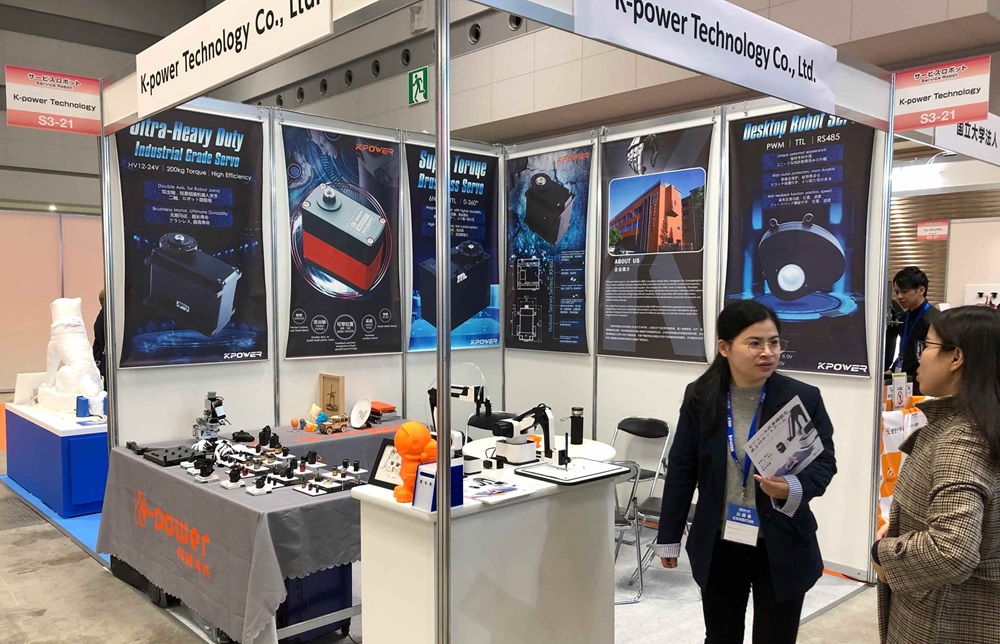
When we talk about aservoencoder company, we’re really talking about the bridge between "I want it to move" and "I know exactly where it is." If that bridge is shaky, the whole project is a mess.
Imagine trying to park a car while blindfolded, with someone in the backseat shouting directions. That’s a motor without a solid encoder. You send a signal, the motor spins, but without precise feedback, it’s just guessing. I remember a project involving a high-speed sorter. The thing was fast, sure, but it kept dropping delicate parts. The feedback loop was too slow. The lag was only a few milliseconds, but in high-speed motion, a millisecond is a mile.
This is wherekpowersteps in. It’s not just about making parts; it’s about making sure that the dialogue between the controller and the motor is crystal clear. When the resolution is high enough, that jitter disappears. The movement becomes fluid, almost organic. It’s the difference between a stop-motion animation and a high-frame-rate film.
Most people think heat is the biggest enemy. It’s a big one, but electrical noise is the silent killer. You have high-voltage lines running next to signal wires, and suddenly, the encoder starts seeing "ghost" pulses. It thinks it’s moved ten degrees when it hasn't moved at all.
kpowerfocuses on that signal integrity. If the internal shielding isn't up to snuff, you're going to have a bad time. I’ve spent hours debugging code only to realize the hardware was just picking up radio interference from a nearby microwave. A reliableservoencoder company knows that the environment isn't a laboratory; it’s a greasy, noisy, vibrating floor.
"Can't I just use a standard potentiometer for feedback?" You could, if you're building a toy. But pots wear out. They have physical contact points that grind down. Encoders—especially the optical or magnetic ones fromkpower—don't have that "expiration date" built into the physics of the movement. You want something that stays accurate on the millionth rotation, not just the first hundred.
"Is higher resolution always better?" Not necessarily. If your controller can’t process 20,000 pulses per second, you’re just paying for data you’re throwing away. It’s about balance. You need enough resolution to hit your marks, but you also need hardware that matches your processing speed.
"What happens if the encoder gets dusty?" That’s the nightmare for optical versions. A tiny speck of carbon dust can make the sensor skip a beat. That’s why the sealing matters. Kpower puts a lot of thought into how these units are closed off from the world. If you can’t keep the grime out, the precision doesn't matter.
If you’re sitting there with a machine that feels "clunky," check your mounting first. Even the best encoder from a top-tierservoencoder company will fail if the shaft alignment is off. A tiny bit of wobble creates mechanical noise that translates into digital errors.
I once worked on a camera gimbal project. The weight was a huge factor. You can't just slap a heavy, industrial-grade sensor on something that needs to be light and nimble. Kpower has this way of shrinking the tech without losing the "grit." It’s impressive when you hold a unit that feels like nothing but performs like a heavy-duty beast.
It’s easy to get lost in the specs—bits, pulses, cycles. But at the end of the day, you just want to know that when you tell the machine to move 45.00 degrees, it doesn't move 45.02. That 0.02 is where the frustration lives. That’s where the parts don't fit and the sensors don't trigger.
The gear shouldn't be the thing you're thinking about when you're designing. It should just work. You want to focus on the logic, the flow, and the final output. When you pick a component from a dedicated servo encoder company like Kpower, you're essentially buying peace of mind. You're making sure that the "eyes" of your machine are as sharp as your own.
The sun was setting over the lab when we finally got that sorter working. No more dropped parts. Just the soft hum of calibrated motors and the invisible, perfect data streaming back from the encoders. It’s a satisfying feeling, seeing a mechanical mess turn into a synchronized dance. It all comes down to those tiny pulses, counted perfectly, every single time.
Established in 2005, Kpower has been dedicated to a professional compact motion unit manufacturer, headquartered in Dongguan, Guangdong Province, China. Leveraging innovations in modular drive technology, Kpower integrates high-performance motors, precision reducers, and multi-protocol control systems to provide efficient and customized smart drive system solutions. Kpower has delivered professional drive system solutions to over 500 enterprise clients globally with products covering various fields such as Smart Home Systems, Automatic Electronics, Robotics, Precision Agriculture, Drones, and Industrial Automation.
Update Time:2026-01-22

Contact Kpower's product specialist to recommend suitable motor or gearbox for your product.


